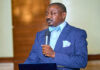
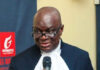
Renowned constitutional lawyer and Senior Advocate of Nigeria (SAN), Professor Mike Ozekhome, has reacted to former military president, General Ibrahim Badamosi Babangida’s (IBB) recent public remorse over the annulment of the June 12, 1993, presidential election. In a statement released on Friday, Ozekhome commended Babangida for finally accepting responsibility and apologizing for the controversial decision that altered Nigeria’s democratic trajectory.

Ozekhome acknowledged that it takes great courage for a former leader to admit past mistakes publicly. He described Babangida’s confession as a significant step toward healing the wounds inflicted by the annulment, which many Nigerians still regard as the country’s most credible electoral process.
“I have carefully read and listened to former Nigerian military president, General Ibrahim Badamosi Babangida’s public remorse and regrets over the atrocious annulment of the June 12, 1993, presidential elections. He did this 32 whopping years later. I want to very quickly say that it takes a man with strong guts and balls and a man who has become repentant, born again, and has seen the face of God to publicly recant his earlier wrongful deeds and offer a public apology to the entire nation. This was no doubt meant to heal gaping wounds and balm wounded and bruised hearts,” Ozekhome stated.
Recalling the events that followed the annulment, Ozekhome noted that the decision plunged Nigeria into chaos, leading to widespread protests, violent clashes, and the eventual resignation of Babangida. The annulment also paved the way for the Ernest Shonekan-led Interim National Government, which was soon overthrown by General Sani Abacha.
“The polls, the best, most transparent, and credible elections ever held in Nigeria till date, were meant to end decades of military dictatorship. The annulment threw Nigeria into turmoil and widespread unrest, protests, maimings, and killings. This forced Babangida to ‘step aside,’ the enthronement of Ernest Shonekan’s Interim Government, and the arrest and detention of Chief Moshood Abiola, the presumed winner who later died in Aso Villa in questionable and suspicious circumstances. Of course, General Sani Abacha, who was his second in command, later sacked Shonekan in a bloodless coup.”
Ozekhome also highlighted how Babangida had previously justified the annulment as being in Nigeria’s best interest. However, the former military leader, in his recently published memoir, A Journey in Service, admitted regret, acknowledging that Abiola won the election fairly.
“On Thursday, the 21st of February, 2025, Babangida, during the presentation of his memoirs, pointedly regretted in the public: ‘I regret June 12. I accept full responsibility for the decisions taken, and June 12 happened under my watch. Mistakes, missteps happened in quick succession. That accident of history is most regrettable. The nation is entitled to expect my expression of regret.’ And wait for it: he acknowledged for the first time that Abiola won the elections fair and square, trouncing his major opponent, Alhaji Bashir Tofa.”
Praising Babangida’s admission, Ozekhome emphasized that true leadership requires accountability. He pointed out that although Babangida’s administration successfully introduced electoral reforms such as Option A4, his annulment of the election remains a historical blunder.
“To me, that he has come out to open up to doing something wrong and egregious to a bleeding nation should be appreciated. I believe that Nigerians should forgive him because to err is human and to forgive is divine (Ephesians 4:32). I personally have now forgiven him because I was also a victim of the June 12 crisis. It threw up all manners of challenges to me as a person. In my thirties, I found myself marching on the streets of Lagos every day—from Ikeja bus stop roundabout to Ikorodu road; up to Tejuosho market; from there to Ojuelegba, Surulere; to Mushin; to Shomolu and Igando, Alimosho.”
He recounted the suffering he and many others endured during the period, including arrests, detentions, and economic hardships. Despite this, Ozekhome reiterated his belief in forgiveness, asserting that Babangida’s confession should pave the way for national healing.
“Every day, we were on the streets, protesting the mindless annulment. Some of us were killed in the process; some were lucky enough to escape abroad on self-exile. But some of us—very few indeed—refused to flee our dear country; we stayed back. We stared at the military eyeball to eyeball. We challenged authority and spoke truth to power. We challenged impunity and repression. I suffered several detentions across different detention centres. I virtually could not find means of livelihood for my youthful family because I was profiled, my phones bugged, and no briefs were coming in. But I personally forgive him because it takes tons of guts to make public confession of having erred and atone for same as he has now done.”
Ozekhome further stressed that confession leads to penance, which in turn results in restitution and forgiveness. He expressed his belief that Babangida’s public remorse would earn him divine forgiveness and national reconciliation.
“If Babangida were to die today, I believe that he will see the face of God because he has prayed God to forgive him; and he has prayed Nigerians to forgive him. Beyond that historic and epochal mistake of the annulment of the June 12 election which constitutes his original sin, let me place it on record that Babangida is one of the greatest presidents that Nigeria ever had in terms of his ingenuity, rulership mantra; ideas for national resurgimento; ideas that contributed greatly to nation-building.”
He credited Babangida for the establishment of the Federal Capital Territory and the foundation of many infrastructural projects in Abuja. Despite past economic policies such as the Structural Adjustment Programme (SAP), Ozekhome maintained that Babangida’s administration was marked by intellectual leadership and significant national contributions.
“Babangida it was who gave birth to the Federal Capital Territory and laid the solid foundation for virtually everything you see there today. His government was peopled by intellectuals and not by half-illiterates and quacks. He recognized and used intellects. He was luminous, and he built bridges of understanding, friendship, and brotherhood across Nigeria.”
Concluding his statement, Ozekhome urged Nigerians to accept Babangida’s confession in good faith and move forward as a united nation.
“Nigerians, please, accept IBB’s confession and forgive him his sin of annulling the June 12, 1993, elections. Let the wounds heal; let the heart melt; and let the spirit of national triumphalism prevail.”
[A MUST HAVE] Evidence Act Demystified With Recent And Contemporary Cases And Materials

Available now for NGN 40,000 at ASC Publications, 10, Boyle Street, Onikan, Lagos. Beside High Court, TBS. Email publications@ayindesanni.com or WhatsApp +2347056667384. Purchase Link: https://paystack.com/buy/evidence-act-complete-annotation
______________________________________________________________________ “Enhance Legal Practice With Authoritative Reports” — Alexander Payne Offers Comprehensive Law Reports, Spanning Over A Century Of Nigerian Jurisprudence Interested buyers are encouraged to place their orders and enquiries via:
0704 444 4777, 0704 444 4999, 0818 199 9888
Website: www.alexandernigeria.com
Interested buyers are encouraged to place their orders and enquiries via:
0704 444 4777, 0704 444 4999, 0818 199 9888
Website: www.alexandernigeria.com