The United States military’s plan to livestream the firing squad execution of convicted Fort Hood gunman Nidal Malik Hasan has drawn condemnation from human rights advocates and religious leaders, while raising questions about the legality and implications of publicly broadcasting an execution.

The Pentagon confirmed on Thursday that Hasan’s execution would be livestreamed, following remarks by Defence Secretary Pete Hegseth that the public would be able to watch it. The former Army psychiatrist was convicted over the 2009 shooting at Fort Hood, Texas, which killed 13 people and injured 32 others.
The Army has scheduled the execution for December 3, 2026, at 1 p.m. Central Standard Time at Fort Hood, the military installation where the attack occurred.
In an official announcement issued on October 7, Army Public Affairs said Acting Secretary of the Army Adam Telle directed the execution by firing squad on October 6. The announcement stated that President Donald Trump approved Hasan’s death sentence on October 2, following completion of the military appellate process.
The planned execution would be the first carried out by the US military since 1961. An Army legal publication identifies the last military prisoner executed as Private John Bennett, who was hanged at Fort Leavenworth, Kansas.
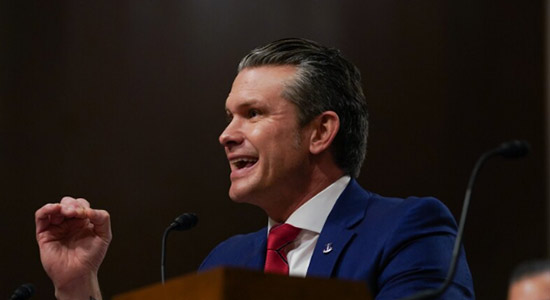
Hegseth defended making Hasan’s execution public as a way of demonstrating the consequences of such crimes.
“We’ll make sure that people are able to watch it, that it’s public,” he said.
A Pentagon official subsequently confirmed the livestream plan, although the authorities had not disclosed the platform or detailed viewing arrangements.
Hasan was sentenced to death by a court-martial on August 28, 2013. According to the Army’s latest announcement, the US Supreme Court denied his request to review his court-martial conviction on March 31, 2025.
The Army explained that the president has sole authority to approve a military prisoner’s death sentence. Under Army Regulation 190-55, the Secretary of the Army must select an execution date between 60 and 150 days after presidential approval.
However, the decision to broadcast the execution has generated objections extending beyond the method of execution itself.
Amnesty International USA’s Deputy Director of Research, Justin Mazzola, condemned the announcement, arguing that publicly transmitting an execution would deepen the cruelty of capital punishment.
“Livestreaming the taking of a life by firing squad would only compound the cruelty of the death penalty,” Mazzola said.
He maintained that public executions were incompatible with international human rights protections against cruel, inhuman or degrading treatment or punishment. He also rejected the suggestion that capital punishment offers a unique deterrent effect and urged US authorities to abolish the death penalty.
The President of the United States Conference of Catholic Bishops, Archbishop Paul S. Coakley, also called on the government to reconsider.
While stressing that Hasan’s actions could not be condoned, Coakley described the proposed broadcast as “a barbaric promotion of a culture of death”.
He said publicly executing someone who had committed grave harm would further damage the country’s moral fabric, rather than justify the taking of another life.
Legal specialists have meanwhile raised questions about the proposed broadcast, including the dignity of the condemned prisoner, who would be permitted to watch and the government’s purpose in making the execution publicly accessible.
Elisabeth Semel, co-director of the Death Penalty Clinic at the University of California, Berkeley, questioned the motivation behind a government-initiated broadcast. However, Fordham University law professor Deborah Denno suggested that public viewing could make the execution process more transparent and improve understanding of what capital punishment entails.
The planned livestream also differs from a restricted broadcast to victims’ families. In 2001, a court rejected an internet company’s request to livestream the execution of Oklahoma City bomber Timothy McVeigh, although the Justice Department provided closed-circuit viewing for survivors and victims’ relatives. That history does not, by itself, settle the legality of the Pentagon’s proposed public broadcast.
Military law specialist Eugene Fidell said Hasan could seek review in a civilian court through a habeas petition, potentially delaying the execution. Whether Hasan would pursue further proceedings remained unclear in the reports reviewed.
[A MUST HAVE] Evidence Act Demystified With Recent And Contemporary Cases And Materials

Available now for NGN 40,000 at ASC Publications, 10, Boyle Street, Onikan, Lagos. Beside High Court, TBS. Email publications@ayindesanni.com or WhatsApp +2347056667384. Purchase Link: https://paystack.com/buy/evidence-act-complete-annotation
______________________________________________________________________ “Enhance Legal Practice With Authoritative Reports” — Alexander Payne Offers Comprehensive Law Reports, Spanning Over A Century Of Nigerian Jurisprudence Interested buyers are encouraged to place their orders and enquiries via:
0704 444 4777, 0704 444 4999, 0818 199 9888
Website: www.alexandernigeria.com
Interested buyers are encouraged to place their orders and enquiries via:
0704 444 4777, 0704 444 4999, 0818 199 9888
Website: www.alexandernigeria.com