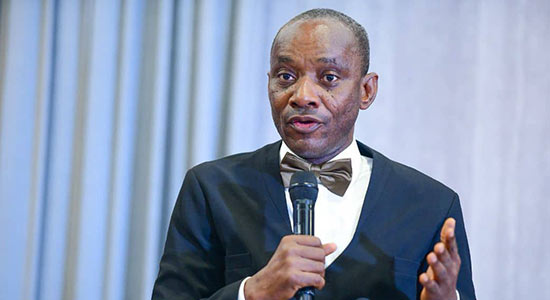
Dr. Sam Amadi, Director of the Abuja School of Social and Political Thought, has accused the Independent National Electoral Commission (INEC) of rigging the 2024 Edo State governorship election and criticized the judiciary for consistently certifying fraudulent electoral outcomes.

In a press conference on May 30, 2025, Amadi described Nigeria’s democracy as failing, citing INEC’s deliberate manipulation and the courts’ failure to uphold electoral integrity as existential threats to democratic governance. His remarks, delivered at an event honoring a late courageous leader, underscore growing public distrust in Nigeria’s electoral and judicial systems.
Amadi labeled INEC as the “greatest single threat” to Nigerian democracy, asserting that the electoral body has a history of “flagrant” rigging without pretense. He specifically referenced the Edo governorship election on September 21, 2024, claiming INEC rigged the process to favor the All Progressives Congress (APC) candidate, Monday Okpebholo, declared the winner over the Peoples Democratic Party (PDP) candidate. “It was an election that INEC itself rigged,” Amadi stated, emphasizing that the electoral umpire’s actions undermine the incentive for politicians to respond to voters. He argued that a captured electoral process, where incumbents face no threat of being unseated, fuels defections and erodes democratic accountability.
Amadi’s claims align with his earlier statements on the 2023 general elections, where he accused INEC of deliberately switching off servers to compromise results, despite having resources for a transparent election. He reiterated that low voter turnout, which dropped from 41% in 2019 to 27% in 2023 despite increased voter registration, reflects public disillusionment with a rigged system. “If we continue this way, we might get to 15% turnout in the next election,” he warned, highlighting a 10% annual decline in voter participation.
Amadi sharply criticized the judiciary for enabling electoral fraud by sanctifying INEC’s declared results, regardless of procedural irregularities. He cited the Edo Governorship Election Tribunal’s April 2, 2025, judgment, which dismissed the PDP’s petition alleging rigging, as a “metaphor for Nigeria’s democratic decline.” He argued that the courts’ jurisprudence creates an impression that declared results cannot be overturned, discouraging electoral challenges. “The courts have been very clear in promoting the idea that once INEC declares a result, we will sanctify it,” he said, referencing the Kogi election case where tribunal evidence was disregarded on appeal.
He further criticized judicial rulings that allow INEC to bypass its own guidelines, such as the 2022 Electoral Act’s requirement for biometric accreditation and electronic result transmission. Amadi, a law professor, expressed shame that courts, including the Supreme Court, have upheld INEC’s non-compliance, undermining administrative law principles of legitimate expectation and detrimental reliance. “I’m ashamed that the court affirmed INEC could just walk away from the law,” he stated, calling for judicial reform to nullify fraudulent elections and deter manipulation.
Amadi framed Nigeria’s democratic crisis as multifaceted, involving unresponsive leadership and a lack of statesmanship among elites. He argued that democracy fails when elected leaders use democratic forms to undermine democratic values, a trend he sees globally but acutely in Nigeria. Economic stagnation, insecurity, and ritual killings exacerbate public disenchantment, further reducing faith in democracy. He emphasized that without electoral reform, politicians lack incentives to serve citizens, as “the process of getting to power is now captured.”
He advocated for a popular movement to drive electoral reform, involving labor unions, civil society, and political parties. “Until you make electoral reform an industrial crisis, a street fight, it will not work,” he urged, criticizing low-energy, elitist approaches to reform. Amadi also called for political parties to develop clear development agendas addressing nationality, religion-state relations, and economic challenges, rather than focusing solely on party unity.
[A MUST HAVE] Evidence Act Demystified With Recent And Contemporary Cases And Materials

Available now for NGN 40,000 at ASC Publications, 10, Boyle Street, Onikan, Lagos. Beside High Court, TBS. Email publications@ayindesanni.com or WhatsApp +2347056667384. Purchase Link: https://paystack.com/buy/evidence-act-complete-annotation
______________________________________________________________________ “Enhance Legal Practice With Authoritative Reports” — Alexander Payne Offers Comprehensive Law Reports, Spanning Over A Century Of Nigerian Jurisprudence Interested buyers are encouraged to place their orders and enquiries via:
0704 444 4777, 0704 444 4999, 0818 199 9888
Website: www.alexandernigeria.com