
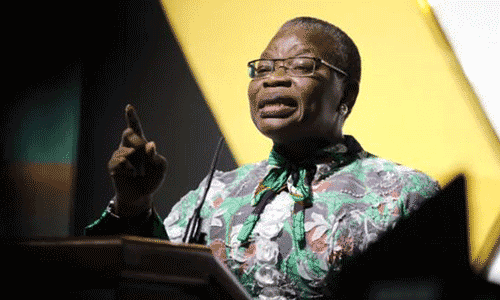
Former Minister of Education, Dr Obiageli Ezekwesili, has declared that Nigeria cannot conduct credible general elections in 2027 under the current leadership of the Independent National Electoral Commission (INEC), calling for an independent investigation into alleged manipulation of the preliminary voter register.

Ezekwesili demanded the immediate establishment of an independent Citizens’ Electoral Rescue Team to oversee the examination and clean-up of the register, warning that allowing INEC to investigate alleged wrongdoing involving its own officials would further undermine public confidence in the electoral process.
The former minister, who is also the founder of #FixPolitics, made the demand in an open memorandum dated November 3, 2026, following disclosures by INEC’s Director of Information and Communication Technology, Dr Lawrence Bayode, concerning suspected artificial intelligence-generated photographs, duplicate registrations and other irregularities in the commission’s voter database.
In the memorandum, Ezekwesili called on the National Assembly to urgently enact legislation under what she described as a “Doctrine of Necessity” to establish an independent mechanism capable of investigating the alleged irregularities and restoring confidence in the electoral register ahead of the 2027 general elections.
She maintained that the integrity of the voter register was fundamental to credible elections, arguing that the discovery of questionable records introduced through the commission’s own registration system raised serious concerns about its ability to guarantee a transparent electoral process.
According to Ezekwesili, the disclosures made by Bayode during television appearances on October 30 and November 1, 2026, showed that the irregularities were not merely the result of external interference or technological failures.
She said the revelations pointed to alleged misconduct by registration officers who used their authorised access to introduce suspicious records into the preliminary register.
Bayode had explained that some registration officers across several states used their official login credentials to introduce questionable entries, including photographs suspected to have been generated through artificial intelligence.
The INEC official disclosed that the commission’s Automated Biometric Identification System (ABIS) detected irregularities during the examination of registration records.
He also acknowledged that the controversy had seriously affected public confidence in the electoral body, stating that “the trust is on ground zero.”
Reacting to the disclosures, Ezekwesili described the development as an internal compromise of an institution entrusted with protecting Nigerians’ electoral rights.
“This is sabotage from within the very institution to which the Nigerian people entrusted the register of our sovereignty,” she stated.
“The people paid to protect the list of citizens manufactured phantom citizens… INEC cannot investigate INEC. Impossible.”
She argued that the alleged manipulation went beyond ordinary errors in voter registration and required an investigation independent of the institution whose officers had been implicated.
The former minister expressed concern that INEC had not publicly identified the states and local government areas involved or provided sufficient details about the specific officers allegedly responsible for the questionable entries.
She also questioned whether appropriate disciplinary and law enforcement measures had been taken against those implicated.
According to Ezekwesili, the lack of comprehensive public disclosure made it difficult for Nigerians to determine the extent of the irregularities and whether the commission could independently address the problem.
She maintained that repeating assurances about transparency and credibility would not be sufficient to restore public confidence without verifiable action.
“The question of whether Nigeria can conduct a credible 2027 election is already answered. Nigeria cannot conduct a credible 2027 election under the leadership of INEC,” she declared.
Ezekwesili warned that an internal investigation conducted solely by the electoral commission could leave Nigerians uncertain about the integrity of the final voter register.
She argued that the danger was not limited to the presence of suspicious photographs or duplicate entries but also extended to the possibility of questionable registrations being carried into the final certified register.
The former minister consequently proposed the establishment of an independent Citizens’ Electoral Rescue Team comprising non-partisan professionals and representatives of credible institutions.
According to her, the team should include Nigerian and international experts in data analysis, cybersecurity, digital forensics and biometric verification.
She also proposed the participation of civil society organisations, the Nigerian Bar Association, relevant information technology and accounting professional bodies, academics, faith leaders and traditional institutions.
Ezekwesili maintained that the proposed body must operate independently of INEC’s existing leadership and political interests.
She specifically called for serving and former INEC officials, political officeholders, electoral candidates and political party officials to be excluded from membership of the team.
The former minister said the exclusion was necessary to protect the proposed investigation from conflicts of interest and prevent political actors from exercising control over the clean-up process.
Under her proposal, the team would obtain access to relevant voter registration records, photographs, electronic access logs and audit trails to determine how questionable entries were introduced into the system.
It would also conduct an independent forensic examination of the register, identify irregular records and establish the identities of persons responsible for any confirmed manipulation.
Ezekwesili further proposed that the findings of the investigation should be published and that officials found responsible for wrongdoing should face appropriate disciplinary and legal consequences.
The proposed body would also oversee the removal of fraudulent entries and independently verify the cleaned register before its final certification.
She maintained that the process should be transparent and accessible to Nigerians, with relevant findings made public to demonstrate that the irregularities had been adequately addressed.
The former minister argued that independent scrutiny would help prevent the certification of a compromised register and establish greater public confidence in the electoral process.
“The register of voters is the first ballot. If it is rigged, every ballot that follows is rigged before it is cast,” Ezekwesili warned.
She consequently called on the National Assembly to act urgently rather than leave the matter exclusively to INEC.
According to her, emergency legislation under the proposed Doctrine of Necessity would provide the legal framework for the Citizens’ Electoral Rescue Team to carry out its responsibilities.
She maintained that the arrangement was not intended to abolish the electoral commission but to establish independent oversight of the disputed register clean-up and related electoral transparency measures.
The proposal would, however, require consideration of INEC’s constitutional responsibilities and the legal framework governing the administration of elections in Nigeria.
Ezekwesili also urged civil society organisations, professional associations, religious institutions, traditional leaders and other stakeholders to support the demand for an independent examination of the register.
She maintained that Nigerians must take responsibility for protecting the credibility of the electoral process before the commencement of voting.
The former minister warned that failure to address the allegations transparently could undermine public confidence in the 2027 elections even before ballots were cast.
She called for urgent action while the relevant electronic records and other evidence could still be examined.
“We, the citizens of Nigeria from the North and South; East and West of Nigeria must act NOW, while the evidence is still intact and the clean-up can still be done in the open,” she stated.
Meanwhile, INEC has acknowledged the discovery of questionable records in its preliminary voter register and maintained that investigations and corrective measures are ongoing.
The commission explained that the preliminary register published online on October 26, 2026, was the same version displayed physically across registration areas between October 9 and 15 as part of the statutory display, claims and objections exercise.
It stressed that the online register was not the final certified register and that suspicious entries identified during the review were already being examined.
INEC also explained that its biometric verification system had detected irregular records, including registrations containing suspicious photographs and questionable biometric information.
Bayode disclosed that the commission was compiling evidence concerning the activities of registration officers suspected of abusing their access to the system.
He said the findings would be submitted to the commission for consideration and possible disciplinary action, subject to due process.
The ICT Director also explained that some photographs enhanced by mobile phone software should not automatically be treated as fraudulent, distinguishing them from images generated to create fictitious voter identities.
He maintained that the commission was working to remove confirmed fraudulent records while protecting legitimate registrations.
INEC has said that the necessary verification and clean-up procedures would be completed before the scheduled certification of the final register on December 15, 2026.
However, Ezekwesili insisted that the commission’s internal corrective measures were insufficient to resolve the wider questions surrounding the alleged involvement of its officials.
Her demand places renewed attention on the management of Nigeria’s voter register, the accountability of electoral officials and the need for public confidence in the institutions responsible for conducting the 2027 general elections.
While INEC maintains that it has identified irregularities and commenced corrective action, Ezekwesili is demanding an independent process to examine the extent of the alleged manipulation, determine responsibility and verify the integrity of the final register.
She maintained that the credibility of the forthcoming elections would depend on addressing those concerns before Nigerians proceed to the polls.
[A MUST HAVE] Evidence Act Demystified With Recent And Contemporary Cases And Materials
Available now for NGN 40,000 at ASC Publications, 10, Boyle Street, Onikan, Lagos. Beside High Court, TBS. Email publications@ayindesanni.com or WhatsApp +2347056667384. Purchase Link: https://paystack.com/buy/evidence-act-complete-annotation
______________________________________________________________________ “Enhance Legal Practice With Authoritative Reports” — Alexander Payne Offers Comprehensive Law Reports, Spanning Over A Century Of Nigerian Jurisprudence Interested buyers are encouraged to place their orders and enquiries via:
0704 444 4777, 0704 444 4999, 0818 199 9888
Website: www.alexandernigeria.com