The Federal Ministry of Education has announced some new measures that it believes could stem the rising cases of examination malpractices in schools particularly in the Senior Secondary School Examinations (SSCE).

Minister of Education, Dr. Tunji Alausa, in a statement by Folasade Boriowo, director of press and public relations, Federal Ministry of Education, yesterday, indicated that the comprehensive set of measures aimed at eliminating examination malpractices takes effect in the 2026 examination season.
He noted that henceforth, there would be randomisation and serialisation of questions, indicating that while all candidates will answer the same examination questions, the sequencing and arrangement will differ for each candidate, ensuring that every student writes a unique version of the examination and significantly reducing opportunities for collusion.
The minister also announced the introduction of a unique Examination Learners’ Identity Number for all candidates that will enable effective tracking of learners throughout the examination process, strengthen monitoring and accountability, and support long-term reforms in assessment, certification, and data management.
Hestated that, henceforth, examination administration will be conducted under strengthened supervision and coordination with relevant examination bodies to ensure strict compliance with established guidelines and ethical standards.
He also emphasised that the measures reflect the Federal Government’s resolve to conduct examinations that are credible, fair, and reflective of global best practices, while addressing Nigeria’s unique educational realities.
The Minister reaffirmed the strict policy prohibiting transfer of candidates at the Senior Secondary School Three (SS3) level, stressing that the directive already communicated through an official circular will be rigorously enforced to prevent last-minute school changes often associated with examination malpractice.
Meanwhile, to further ensure transparency, the Federal Ministry of Education announced that new national Continuous Assessment (CA) guidelines have been developed for immediate implementation.
It asked all examination bodies (WAEC, NECO, NBAIS etc) to strictly follow the standardized submission deadlines for each academic period.
It also announced that submission windows are First Term CA: January; Second Term CA: April; Third Term CA: August. “These timelines are mandatory and designed to ensure consistency, data integrity, and prompt processing of Continuous Assessment (CA) records across the country. The Federal Ministry of Education reaffirmed its commitment to working closely with all examination bodies, state governments, school administrators, parents, and candidates to ensure the successful implementation of these strategies and the smooth conduct of the 2026 examinations nationwide.
 Reimagine your practice with the power of AI “...this is the only Nigerian book I know of on the topic.” — Ohio Books Ltd
Authored by Ben Ijeoma Adigwe, Esq., ACIArb (UK), LL.M, Dip. in Artificial Intelligence, Director, Delta State Ministry of Justice, Asaba, Nigeria.
Bonus:
Get a FREE eBook titled “How to Use the AI in Legalpedia and Law Pavilion” with every purchase.
Reimagine your practice with the power of AI “...this is the only Nigerian book I know of on the topic.” — Ohio Books Ltd
Authored by Ben Ijeoma Adigwe, Esq., ACIArb (UK), LL.M, Dip. in Artificial Intelligence, Director, Delta State Ministry of Justice, Asaba, Nigeria.
Bonus:
Get a FREE eBook titled “How to Use the AI in Legalpedia and Law Pavilion” with every purchase.
How to Order: 📞 Call, Text, or WhatsApp: 08034917063 | 07055285878 📧 Email: benadigwe1@gmail.com 🌐 Website: www.benadigwe.com
Ebook Version: Access directly online at: https://selar.com/prv626
______________________________________________________________________ "You Don't Need To Be Rich, You Just Need To Start" — Victoria Ezeigwe, Esq Launches Investment Handbook For Nigerians Starting With ₦5,000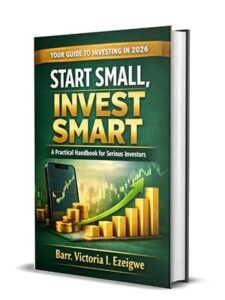
Get your copy today and take the first step toward financial growth:
_______________________________________________________________________ [A MUST HAVE] Evidence Act Demystified With Recent And Contemporary Cases And Materials
 _______________________________________________________________________