*Says “Separation Of Powers Should Not Be Mistaken For Institutional Hostility”

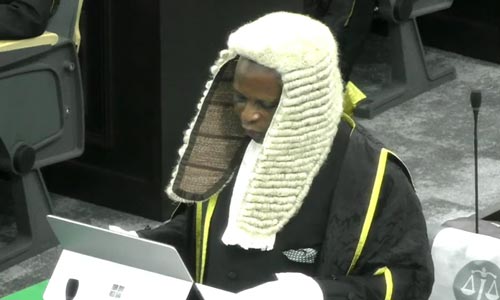
The Attorney-General of the Federation and Minister of Justice, Prince Lateef Olasunkanmi Fagbemi, SAN, has addressed the special session of the Supreme Court of Nigeria marking the commencement of the 2026/2027 legal year and the conferment of the rank of Senior Advocate of Nigeria on 68 legal practitioners.
What follows is his address, as delivered.
Opening with a light aside about his stature as he adjusted the lectern, he recognised the Chief Justice of Nigeria, the first man of the judiciary, the Justices of the Supreme Court, the President and Justices of the Court of Appeal, the Chief Judges and judges of various jurisdictions, the President of the Nigerian Bar Association, the Chairman of the Senate Committee on Judiciary, Human Rights and Legal Matters, the Chairman and members of the Body of Benchers, members of the Inner Bar, the representative of the Body of Senior Advocates of Nigeria, the Chairman and members of the Legal Practitioners Privileges Committee, a former Governor of Osun State, the Registrar of the Supreme Court, members of the secretariat of the Legal Practitioners Privileges Committee, members of the fourth estate of the realm, and the Chairmen of the ICPC and the EFCC.
“We gathered here today in this hallowed chamber of our nation’s apex court to mark the commencement of the 2026/2027 year of the Supreme Court of Nigeria and witness the conferment of the prestigious rank of Senior Advocate of Nigeria on 68 distinguished legal practitioners.”
“These occasions transcend ceremony. It reminds us that the strength of our democracy rests on the integrity of our judicial institutions, the independence of those entrusted with the administration of justice, and the confidence of the people in the rule of law.”
“At this defining juncture in our national history, as Nigeria navigates profound economic, political and social transformations, we must consolidate our achievements, confront our challenges with courage, and renew our collective resolve to ensure that justice remains independent, impartial, accessible and effective.”
ON THE CHIEF JUSTICE AND THE COURT’S YEAR
“My Lord, I commend your courage, foresight, and unwavering commitment to strengthening the administration of justice and positioning our judiciary to meet the demands of a challenging and changing society.”
“Under your leadership, the Supreme Court continues to discharge its constitutional responsibilities with diligence and authority, reinforcing the judiciary’s indispensable role in sustaining our constitutional democracy.”
On the decisions of the year under review:
“The outgoing legal year was particularly significant for the weighty and far-reaching decisions this Court [delivered], which strengthened the foundation of our constitutional order, reaffirmed the supremacy of the Constitution, clarified the limits of the executive and legislative authorities, protected the integrity of the electoral process, and provided vital guidance on federalism, fiscal relations, commercial certainty and the fight against corruption.”
“Collectively, these decisions have advanced constitutional clarity, reinforced domestic stability, and have affirmed the Supreme Court’s pivotal role as the final judicial arbiter in all matters.”
“I also commend the Honourable Justices of this Court for clarifying the proper channel of appeal against directions of the Legal Practitioners Disciplinary Committee, thereby contributing to greater certainty and coherence in the administration of professional discipline within the legal profession.”
“WE CANNOT CONTINUE TO PAY LIP SERVICE”
“My office is concerned about the increasing number of cases of professional misconduct, especially against senior members of the bar.”
“We cannot continue to pay lip service to the need to strengthen our disciplinary processes. As a first step, we need to consider modernising the Legal Practitioners Disciplinary Committee. The disciplinary process for lawyers must be rapid and transparent.”
“[If a] complaint stalls for years, the public concludes that the legal profession is designed to protect its own wrongdoers. That is not the case.”
“We are engaging with relevant stakeholders to address the fallout from the judgment just delivered, and I am confident that we will reach a very sound resolution.”
ON ELECTRONIC FILING, AND WHAT SHOULD FOLLOW IT
“While these judicial pronouncements strengthen the substantive foundation of justice, the effectiveness of the judicial system also depends on the efficiency and integrity of the processes through which cases are brought before the court and determined.”
“It is against that backdrop that I particularly commend the Honourable the Chief Justice of Nigeria on the introduction of the universal electronic filing regime in the Supreme Court.”
“The Supreme Court’s Mandatory Upload of Electronic Copies of Processes, Record of Appeal and Other Matters Practice Directions 2026 marked a significant milestone in modernising the Court’s procedures by transitioning from manual paper-based filing to a fully electronic system.”
“These reforms address systemic vulnerabilities in the handling of processes and appellate records, reduce the risk of physical interference with case files, and minimise delays associated with manual procedures.”
“More importantly, it is expected to accelerate the preparation of appeals for hearing, enable cases to become ripe for determination more promptly, and facilitate the timely dispensation of justice. If effectively implemented, this initiative will enhance efficiency, transparency and accountability, while further strengthening public confidence in the Supreme Court and the administration of justice as a whole.”
“The next step must be to pursue a comprehensive digital transformation of the judiciary through modern courtrooms, automated case tracking, secure digital archives, and virtual hearing capabilities. These measures will digitise the entire life cycle of appeals, eliminate traditional procedural bottlenecks, and further enhance the efficiency, transparency and timely delivery of justice.”
TO THE 68 NEW SENIOR ADVOCATES
“Let me thank the Legal Practitioners Privileges Committee for finding you worthy of this great privilege and honour. I offer you my heartfelt congratulations.”
“Your elevation is a recognition of your intellectual [discipline], professional sacrifice, perseverance, and service to the law. I have no doubt that each of you has passed through significant professional crucibles to attain this distinction.”
“However, while your admission to the Inner Bar is a moment of honour and celebration, it is equally a moment of profound responsibility.”
He said that responsibility was underscored at the induction ceremony held on Saturday by the Body of Senior Advocates of Nigeria, where the resource persons “addressed issues central to your new status, offering valuable insights into the privileges, expectations and obligations that accompany the rank.”
He commended the Chief Justice for her representation at that programme by the second most senior Justice of the Supreme Court, and thanked Hon. Justice Helen Moronkeji Ogunwumiju, CFR, Hon. Justice Amina Augie, CFR, JSC (retired), Hon. Justice Peter Affen, JCA, and Chief Kanu Agabi, CON, SAN, as well as the other resource persons, “for the depth of their contributions and the quality of their presentations.”
“Their collective message was clear: the rank of Senior Advocate of Nigeria confers not only distinction and privilege but also demands exemplary conduct, professional leadership, and a heightened commitment to the public good.”
“THE SILK GOWN IS NOT A COMMERCIAL LICENCE”
“Permit me, therefore, to reinforce the message that is as relevant to the newly elevated Senior Advocates of Nigeria as it is to the members of the Inner Bar who have long borne the silk.”
“Established in 1975, the rank of Senior Advocate of Nigeria was conceived as a mark of exceptional professional distinction modelled on the tradition of [Queen’s] Counsel. Its underlying purpose was to recognise outstanding legal ability and deploy the finest talents of the Bar in advancing Nigerian jurisprudence and strengthening the administration of justice.”
“It is no longer news that Chief [Frederick Rotimi Alade] Williams, of blessed memory, and Dr. Nabo Graham-Douglas, the pioneer recipients, set a formidable standard of intellectual distinction, professional dignity and civic responsibility. Their legacy reminds us that the true worth of the rank lies not merely in the recognition it confers, but in the quality of service it inspires.”
“For decades, the Inner Bar has occupied a central place in the development of our legal system. Its members have defended the rule of law during periods of military rule, contributed to the restoration and consolidation of democratic governance, and shaped the development of our jurisprudence. That legacy deserves both recognition and preservation.”
Then the passage that is likely to be most quoted:
“Yet we must also have the [courage] to confront concerns about the contemporary perception of the rank. There are criticisms or concerns that the pursuit of silk has become increasingly commercialised, and that in some instances the distinction risks being regarded more as a means of economic advantage than as a solemn public trust.”
“These concerns call for honest reflection, not to diminish the honour of the rank, but to safeguard its integrity and restore its foundational purpose wherever necessary.”
“The silk gown is not a commercial licence. It is a mantle of professional, constitutional and social responsibility. The distinction it confers must be matched by the conduct of its owner, the quality of advocacy before the courts, the mentorship offered to younger lawyers, and the contribution made to society.”
“I therefore call on all the newly elevated and more senior advocates of Nigeria, that is those who have been called before now, to see the rank not merely as a mark of distinction but as a call to greater service and responsibility.”
“This entails mentoring younger lawyers, promoting fair remuneration and professional growth, improving judicial efficiency, reducing court congestion, advancing affordable access to justice, defending fundamental rights and the rule of law, and contributing to a modern legal framework that supports investment, innovation and national development.”
“Ultimately, the true measure of a Senior Advocate lies not in the title appended to his name, but in the integrity of his conduct, the excellence of his practice, and the enduring impact of his contributions to the judiciary, the legal profession and society.”
FROM HIS OWN EXPERIENCE
“Permit me to speak on this responsibility from the standpoint of personal experience. I appreciate the fact that we have people, or at least somebody, who has been called to the Inner Bar some 36 years ago. Mine was just 30 years ago.”
“I served on the Independent Appeals Panel Committee as well as being a member of the previous committee, prior to and since my appointment as Attorney-General. I have had the opportunity to observe the standards, traditions and responsibilities that define the rank.”
“I can therefore say without hesitation that elevation to the Inner Bar demands much more than professional competence and distinction.”
“The position calls for a higher standard of discipline, exemplary conduct, respect for court, mutual regard among members of the profession, and sustained advocacy for the independence of the judiciary.”
“In particular, the privilege of the rank must be accompanied by humility and due deference to senior colleagues who have won the silk before us. The Inner Bar must remain a community in which seniority commands respect, experience is valued, and professional relationships are governed by dignity and mutual courtesy.”
THE OBASANJO AND BUHARI ANECDOTE
“Indeed, the importance of discipline and respect for established institutions is not peculiar to the legal profession. It is a defining feature of every institution that values excellence and order.”
“We see this clearly in the Supreme Court itself. The respect accorded to the Honourable the Chief Justice of Nigeria is evident whenever the Chief Justice arrives at an official or private function and other Justices rise to receive [her] in recognition of the office, its leadership and the institution it represents. Such gestures are not empty formalities. They reflect institutional culture, discipline, mutual respect, and recognition of responsibilities. Similar traditions are evident in the military, where respect for rank, seniority and established protocol remains fundamental to professional discipline.”
“I recall in this regard an incident I witnessed during the Sunrise international arbitration proceedings in France, which culminated in an outcome favourable to Nigeria. I am not talking about the award itself, so without diving into the merits of the proceedings, it is particularly noteworthy that two former Presidents and Heads of State of our country, His Excellency Chief Olusegun Obasanjo, GCFR, and the late President Muhammadu Buhari, GCFR, patriotically appeared to give testimony during the hearing.”
“I take this opportunity to acknowledge their contributions and once again to pray that Almighty God grants the soul of President Buhari eternal rest and continues to grant Chief Obasanjo good health.”
“At the proceedings, I observed an instructive display of respect between these two elder statesmen. From a distance of about 10 metres, President Buhari sighted Chief Obasanjo. He immediately stood up and was on his feet. He remained standing as Chief Obasanjo exchanged pleasantries with others in the hall, and did not sit down until Chief Obasanjo had taken his seat.”
“This prolonged standing, which I thought would culminate in a big hug, ended with a simple hand motion from Chief Obasanjo, saying, ‘How are you?’ And that was it.”
“What struck me was not merely the gesture itself but the discipline, patience and regard for seniority it demonstrated. Here were two former Presidents, each having occupied the highest office in the land. Yet the occasion was marked by humility and mutual respect.”
“That is the spirit I urge us to preserve within the Inner Bar: the understanding that eminence should deepen humility, distinction should strengthen discipline, and seniority should inspire respect rather than rivalry. These virtues must above all be reflected in our conduct as officers of the court.”
AN APPEAL TO THE CHIEF JUSTICE ON THE LOWER COURTS
“The Supreme Court provides again a commendable example of the discipline and courtesy expected of the wider judicial system. Where proceedings commence even a few minutes after the scheduled time, this is what I have witnessed, my Lords are always known to acknowledge and apologise for the delay.”
“Where a sitting cannot hold or will not hold for any reason, the registry takes steps to notify counsel on both sides, thereby avoiding unnecessary journeys, inconvenience and waste of valuable time. These practices demonstrate that respect for the bar is indispensable to respect for the administration of justice itself.”
“It is therefore important that these standards should not remain confined to the apex court but should be reflected throughout our judicial system. Regrettably, experiences in some lower courts suggest that delays, inadequate communication, and insufficient regard for counsel’s time remain concerns requiring attention.“
“I respectfully appeal, within the limits of your Lordship’s constitutional and administrative authority, that you encourage the adoption of consistent standards of punctuality, effective communication, and professional courtesy across the courts. Such measures will strengthen judicial discipline, improve the working relationship between the bench and the bar, and reinforce public confidence in the administration of justice.”
“Ultimately, the authority of the judiciary is sustained not only by its judgments but also by the conduct, discipline and mutual respect of everyone who serves within the justice system.”
“As we commence this new legal year, our attention must remain firmly focused on the constitutional responsibilities of the judiciary and the continuing task of strengthening public confidence in the administration of justice.”
“With the 2027 general elections approaching, the world will once again look to Nigeria to demonstrate the integrity of its democratic institutions and electoral processes.”
“I therefore urge your Lordships to remain steadfast, courageous and impartial in the determination of electoral disputes and all other matters that come before the court, guided solely by the Constitution and the rule of law, without fear of favour or political pressure.”
“Judicial decisions may not always enjoy universal approval, and you can hardly expect this to be, but disagreement must never become an excuse for intimidation or attacks on judicial independence.”
He quoted the address delivered at the opening of the legal year in the United Kingdom, which he said he attended with the President of the Nigerian Bar Association on 1 October 2026, by the Right Reverend Barry Morgan:
“It is not presumptuous. I want to thank you as judges for all that you do to uphold the rule of law in this country, often under enormously difficult working conditions, lack of resources, and verbal attacks from people who ought to know better when they disagree with some of your judgments.”
“These words, although directed at judges of England and Wales, resonate equally with our judiciary and reinforce the need to protect the dignity and independence of the bench. The authority of the court rests not on popular approval but on the courage, integrity, impartiality and consistency with which the rule of law is upheld.”
“The independence of the judiciary must, however, be matched by institutional accountability, excellence, and a constructive relationship between the three arms of government.”
“The Constitution assigns distinct responsibilities to the executive, legislature and judiciary, and respect for those boundaries is indispensable to constitutional democracy.”
“Separation of powers should not, however, be mistaken for institutional hostility. Each arm must discharge its mandate independently while cooperating within constitutional limits to advance good governance and serve the Nigerian people.”
“This commitment to excellence must begin with judicial appointments, which are matters of national importance and concern, with implications for national security, economic stability and public confidence.”
“Appointments to the bench must be transparent, rigorous and merit-based, attracting individuals of the highest intellectual calibre, disciplined character and integrity. Appropriate systems of judicial performance evaluation are equally necessary to promote accountability, sustain professional excellence, and uphold objective standards of service.”
“Beyond strengthening the criteria for appointment, however, we must consider broadening the pool of candidates from which judicial officers are drawn.”
“I am of the firm view that consideration should be given to enriching the bench by appointing qualified, highly principled Senior Advocates of Nigeria, academic professors and brilliant legal practitioners directly to the High Court, Court of Appeal and Supreme Court benches.“
“These institutional priorities align with the vision consistently articulated by His Excellency President Bola Ahmed Tinubu, GCFR, that justice must be swift, fair, technologically enabled and accessible to all.”
“Justice is not merely a constitutional obligation. It is also an economic asset. Where disputes are resolved promptly, fairly and predictably, confidence grows, investment is encouraged and economic activity expands.”
“Judicial reform is therefore an essential component of national development, and the bench and the bar have complementary responsibilities in ensuring that our judicial system responds effectively to the needs of the citizen, business and the nation.”
“The Federal Ministry of Justice continues to support this objective through legislative and institutional reforms designed to modernise our legal framework, strengthen access to justice, and protect the national interest.”
He listed the key initiatives:
- The Legal Practitioners Bill, “which seeks to strengthen the regulatory framework of the legal profession”.
- The revision and consolidation of the laws of the Federation, through a committee to review the consolidated and archaic laws of the Federation under the chairmanship of Olawale Fapohunda, SAN, “addressing the need to update the last comprehensive consolidation undertaken in 2004“.
- A review of the administration and alternative dispute resolution framework. In February of this year he inaugurated the National Committee on the Review of the Arbitration and Mediation Act 2023 and the National Policy on Arbitration 2024, “to address the implementation challenges, align our framework with international best practices, and position Nigeria as a leading hub for international arbitration and dispute resolution”.
- A committee to review the Public Procurement Act 2007, “to strengthen transparency, accountability, value for money and clarity in public procurement”.
- In the energy sector, a Legal Audit Committee on agreements and memoranda of understanding for a gas development project, “reviewing historical and existing gas-related agreements to identify legal vulnerabilities and problems [and] protect Nigeria against substantial financial liabilities”.
- Criminal justice reform, continuing to focus on “effective prosecution, the protection of fundamental rights, the reduction of impunity, and the fair and efficient administration of criminal justice, including the diligent prosecution of terrorism and terrorism-related offences as part of our support for national security”.
“Our responsibility to protect the national interest also extends to defending the Federal Government against predatory claims and unjustified contractual demands.”
“The favourable outcome of the Sunrise arbitration proceedings stands among Nigeria’s significant legal victories in recent times, helping to avert substantial financial exposure and protect the nation’s interests in critical electricity assets.”
“This experience demonstrates that effective legal representation is not merely a litigation function. It is an instrument of economic protection, national security and responsible governance.”
“As we mark the commencement of this legal year and welcome 68 distinguished legal practitioners into the Inner Bar, I urge the newly elevated Senior Advocates of Nigeria, as well as their more senior colleagues including myself, to see these reforms as a call to renew professional responsibility.”
“The success of our justice system depends not only on sound laws, effective institutions and timely judgment, but also on the integrity of those who interpret, administer and practise the law.”
“I have always said that it is better to have bad laws administered by good men than to have good laws administered by bad men.“
“The Bar must therefore remain a committed partner in reforms that promote ethical advocacy, improve the administration of justice, expand access to justice and legal services, and strengthen public confidence in the court.”
“May I seize this occasion to acknowledge with particular satisfaction that three of our Attorneys-General from the states or sub-nationals have been elevated to the Inner Bar. They are from Plateau, Kano and Kebbi.”
“Congratulations to you, your Excellencies, for giving them the enablement to work. We are very grateful to you. I commend your Excellencies for providing them with the opportunity and support to obtain these distinguished ranks.”
“I also urge our Governors, particularly as we approach the 2027 general election, to seek and give due consideration to the legal advice of their respective Attorneys-General.”
“Sound legal advice is indispensable to lawful governance, the protection of public interests, and the avoidance of actions that may expose government to unnecessary legal challenges.”
“Ultimately, our collective responsibility is to build a justice system in which constitutional rights are protected, disputes are resolved fairly and efficiently, and the rule of law remains the firm foundation of our democracy and national development.”
He extended special congratulations to senior members of the Inner Bar, Chief Ajibola Aribisala, SAN, and Mr. Oba Adelogun, “whose [wards] also join this rank today.”
“My noble Lord, the Honourable the Chief Justice of Nigeria, my Lords, Honourable Justices of the Supreme Court, distinguished ladies and gentlemen, I wish you renewed strength, wisdom and clarity of purpose for a successful legal year.”
“Your Excellencies, my Lords, distinguished colleagues and invited guests, I want to thank you for listening to me. May God bless the Federal Republic of Nigeria.”
[A MUST HAVE] Evidence Act Demystified With Recent And Contemporary Cases And Materials

Available now for NGN 40,000 at ASC Publications, 10, Boyle Street, Onikan, Lagos. Beside High Court, TBS. Email publications@ayindesanni.com or WhatsApp +2347056667384. Purchase Link: https://paystack.com/buy/evidence-act-complete-annotation
______________________________________________________________________ “Enhance Legal Practice With Authoritative Reports” — Alexander Payne Offers Comprehensive Law Reports, Spanning Over A Century Of Nigerian Jurisprudence Interested buyers are encouraged to place their orders and enquiries via:
0704 444 4777, 0704 444 4999, 0818 199 9888
Website: www.alexandernigeria.com
Interested buyers are encouraged to place their orders and enquiries via:
0704 444 4777, 0704 444 4999, 0818 199 9888
Website: www.alexandernigeria.com