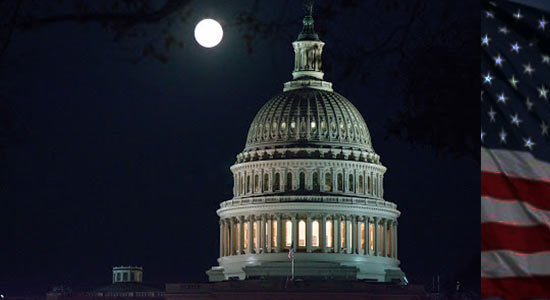
The United States House of Representatives has overwhelmingly passed bipartisan legislation aimed at preventing households and small businesses from bearing the electricity and infrastructure costs associated with the rapid expansion of artificial intelligence data centres.

The House approved the Ratepayer Protection Act, H.R. 9340, by a vote of 417-3 on Wednesday, September 16, 2026, as lawmakers responded to growing concerns that the power demands of large data centres could translate into higher electricity bills for existing consumers.
The measure, sponsored by Republican Representative Gabe Evans of Colorado and co-sponsored by Democratic Representative Kathy Castor of Florida, would amend the Public Utility Regulatory Policies Act of 1978 by establishing a federal standard for state utility regulators to consider when determining how the costs of connecting very large electricity users to the grid should be allocated.
Under the proposal, state public utility commissions would be required to consider rules under which large-load customers such as major data centres cover the full incremental cost of new generation, transmission or distribution infrastructure required specifically to serve them. The bill defines covered large-load customers as non-residential users with peak electricity demand of at least 100 megawatts at a single site or campus.
The legislation also contemplates financial assurances from such customers before utilities undertake major infrastructure upgrades, a provision intended to protect existing ratepayers if a data-centre operator later reduces operations, abandons a project or leaves the electricity system after new infrastructure has already been built.
Importantly, the legislation would not automatically impose one nationwide electricity tariff on every data centre. Rather, it requires state regulators to consider the federal standard, while state public utility commissions retain significant authority over their own rate-setting decisions.
Evans said the goal was to allow the United States to expand the electricity infrastructure needed for AI development without transferring the resulting costs to ordinary consumers.
“We cannot accelerate this growth on the back of Americans working hard to pay their electric bills at the end of the month,” Evans said during the debate, according to the Associated Press.
When introducing the legislation, Evans and Castor argued that new data-centre development could require substantial investment in power generation, transmission lines and other grid infrastructure and that those creating the additional demand should bear the associated costs.
The bill had earlier secured unanimous backing in the House Energy and Commerce Committee, which approved it 52-0 in July before sending it to the full House.
The House vote comes amid growing national debate over the expansion of AI infrastructure and its potential effects on electricity prices, water use and local communities.
An Associated Press-NORC poll cited after the vote found that nearly two-thirds of Americans surveyed were extremely or very concerned about the effect of data centres on energy prices, while 57 per cent expressed the same level of concern about their impact on water supplies.
Support for the legislation nevertheless cut across party lines. Some lawmakers who backed the measure described it as only an initial response to broader concerns surrounding data-centre growth and artificial intelligence.
Representative Frank Pallone, the ranking Democrat on the House Energy and Commerce Committee, said the legislation should not be regarded as Congress’ final action on the matter.
“I promise that this bill is not the end of our focus on these issues. It’s only the beginning,” Pallone said.
The debate also reflected differing views on the economic impact of data centres. House Majority Leader Steve Scalise cited a data-centre development in Louisiana which he said had generated additional local tax revenue, while other lawmakers have raised concerns about energy prices, environmental impacts and whether communities have sufficient control over large projects.
The measure also fits into a broader federal effort addressing the cost of the rapid expansion of AI-related infrastructure. Earlier in 2026, President Donald Trump promoted a “Ratepayer Protection Pledge” under which participating technology companies committed to paying the energy and infrastructure costs associated with new data centres rather than shifting them to consumers. The House legislation seeks to incorporate key elements of that approach into federal law.
The House bill must still clear the Senate before it can become law.
A companion measure, S. 5028, sponsored by Republican Senator Jon Husted of Ohio, was introduced on July 16 and referred to the Senate Committee on Energy and Natural Resources. As of the latest official legislative record, the Senate measure remains at the committee stage.
The House passage therefore represents a significant legislative step, but the proposed protections will not take effect unless the legislation completes the remaining congressional process and is enacted into law.
[A MUST HAVE] Evidence Act Demystified With Recent And Contemporary Cases And Materials

Available now for NGN 40,000 at ASC Publications, 10, Boyle Street, Onikan, Lagos. Beside High Court, TBS. Email publications@ayindesanni.com or WhatsApp +2347056667384. Purchase Link: https://paystack.com/buy/evidence-act-complete-annotation
______________________________________________________________________ “Enhance Legal Practice With Authoritative Reports” — Alexander Payne Offers Comprehensive Law Reports, Spanning Over A Century Of Nigerian Jurisprudence Interested buyers are encouraged to place their orders and enquiries via:
0704 444 4777, 0704 444 4999, 0818 199 9888
Website: www.alexandernigeria.com
Interested buyers are encouraged to place their orders and enquiries via:
0704 444 4777, 0704 444 4999, 0818 199 9888
Website: www.alexandernigeria.com