*Slams Police Crackdown On Protesters

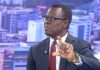
The human rights lawyer and former Chairman of the National Human Rights Commission (NHRC), Prof. Chidi Odinkalu, dissected key issues in Nigerian jurisprudence, electoral integrity, and regional security. Odinkalu, speaking virtually on Channels Television’s Politics Today, emphasized that politically sponsored cult groups, rather than the proscribed Indigenous People of Biafra (IPOB), pose the gravest security challenge in Nigeria’s South-East region. He also addressed the ongoing trial of IPOB leader Nnamdi Kanu, the recent appointment of Prof. Josiah Amupitan as INEC Chairman, and the broader of presidential pardons.
Odinkalu began by clarifying the legal implications of a defendant, such as Nnamdi Kanu, opting to represent themselves in court. Dismissing any notion of ignorance of Nigerian law with humor, “I don’t know any law in Nigeria so I can’t help you sir. I’m sorry. You want us to withdraw your law certificates?” he rooted his explanation in foundational principles.
“In the version of law that I was taught, the relationship between a lawyer and the client is a relationship of agent and principal with the client being the principal and the lawyer being the agent,” Odinkalu stated. “And if the principal withdraws the instruction, it is withdrawn. At which point the lawyer is obliged to cease representing the client.”
He noted that in criminal proceedings, the matter then shifts to the judge and the accused, who is entitled under constitutional protections to self-representation or counsel of their choice. “The terms of the constitutional protection entitle an accused person to represent themselves or through legal representatives of their own choice,” he added, subject to the lawyer being a Nigerian citizen. Odinkalu viewed Kanu’s decision as a valid exercise of these prerogatives.
Turning to protests advocating for Kanu’s release, framed in the context of President Bola Tinubu’s recent clemency grants to over 100 convicts, Odinkalu affirmed the protesters’ constitutional rights to free expression, assembly, and association. However, he sharply criticized police actions on October 20, describing them as “terroristic.”
“You cannot kettle an entire city the way they did just for the sake of precluding a protest,” he said. “The idea of imprisoning an entire city just so that you terrorize an entire community sufficiently to preclude a protest is unlawful in my view, manifestly terroristic and irresponsible.”
Odinkalu condemned the use of tear gas and reportedly live bullets against peaceful demonstrators, calling it a “deliberate effort by law enforcement to inflame the protesters.” He dismissed police claims of acting on a court order restricting protest areas, pointing out that arrests, including those of activist Aloy and others charged with conspiracy, did not align with contempt of court proceedings. “What they’re saying is manifestly indefensible, without basis in the facts,” he asserted. He also decried the “hijacking” of journalist Shaware from a courtroom, labeling it an extension of unlawful policing that fuels suspicion toward institutions like the Inspector General of Police.
Odinkalu, a longtime acquaintance of the newly sworn-in Independent National Electoral Commission (INEC) Chairman Prof. Josiah Amupitan, whom he knew from law school and bar admission, offered cautious optimism. “Josh is a person of basic decency and integrity, bright as hell,” he said, expressing hope that Amupitan would leave office unchanged after his tenure.
However, he warned of INEC’s treacherous terrain: “INEC is also a territory ruled by a lot of principalities. Every staff in INEC is accounted for. Every politician owns a lot of stuff inside.” Describing the role as “a very lonely position” and “thankless job,” Odinkalu advised Amupitan to prioritize precluding dominant negative influences over personal desires.
In a pointed critique of Amupitan’s predecessor, Mahmood Yakubu, Odinkalu accused him of eroding electoral credibility. “Josh will not administer an election like in Edo State in which there are four results. He will not do that,” he declared. “Mahmud Yakubu perfected the art of producing elections in which there are four results. That’s criminal.”
Citing statistics to underscore the decline:
- In 2007 (under Maurice Iwu), 86.35% of contested elections ended in court.
- By 2011 (under Jega), this dropped to 51%, a 35% reduction.
- In 2015 (also Jega), it fell further to 44%.
- Under Yakubu, it rose to 56.34% in 2019 and 83% in 2023.
“He brought elections in Nigeria into disrepute. He brought INEC into disrepute,” Odinkalu charged, urging Amupitan to pursue incremental reforms to avoid a repeat of 2007’s judicial overload.
Odinkalu expressed fears that the “system might fail” Amupitan, potentially tarnishing his reputation amid pervasive political interference. If advising his friend, he quipped: “I’m not a spectacularly churchy person, but I’ll tell him that because he is the person, I’ll be praying for him. He’s living amongst demons.”
On the prospects for free and fair 2027 elections, Odinkalu acknowledged challenges but saw glimmers of hope, including Adamu Adamu’s apparent shift against rigging. “If Adamu, who is responsible for the line that ‘unless you have suffered rigging, you will not understand what it is to be a politician in Nigeria,’ is now against rigging, you never know. Damascus may be headed to Nigeria.”
He advised Amupitan to prioritize upcoming off-cycle governorship elections in Anambra (November 8), Kogi, and Bayelsa as “electoral laboratories” to test reforms and build toward 2027. “He’s got barely two weeks to address that. People are not going to be giving him any free passes.”
Addressing calls for Kanu’s pardon amid fears of South-East insecurity, Odinkalu highlighted Tinubu’s expansive use of clemency: “President Tinubu has pardoned everybody that can be pardoned. Cocaine importers, gun runners, human traffickers, drug traffickers, all manner of traffickers, murderers whose sentences have been confirmed by the Supreme Court but spent less than a few years in detention.”
He noted the graduation of 308 repentant Boko Haram members from a Gombe deradicalization program as emblematic of Nigeria’s “second chance” ethos. Under Section 175 of the Constitution, the President can exercise prerogative of mercy proactively, even pre-trial, without the Attorney General’s involvement. Odinkalu lambasted the AGF’s office for a “disreputable” handling of the pardon list: “It stinks. There’s no other way to say it.”
“Who says [Kanu] cannot be pardoned? Why not?” he asked, stressing the constitutional right to repentance.
Odinkalu, drawing from his three years chairing Anambra State’s Truth, Justice, and Reconciliation Commission on South-East violence, including personal family losses, challenged the narrative blaming IPOB for all regional unrest. “Unquestionably, there is an IPOB issue, but the IPOB issue is overblown,” he said. Citing examples like Obosi in Anambra and Aba incidents, he argued IPOB’s influence is limited and exaggerated.
“The biggest single issue in security terms confronting the South-East, I regret to disappoint you, is not IPOB. It is one word: cults, financed by politicians,” Odinkalu asserted. “The cults are the biggest single issue, and you don’t have a clue how terrible the problem of cults in the South-East is at this particular time.”
While acknowledging possible overlaps, he insisted: “Cults financed by politicians, that is the biggest single security challenge confronting the South-East at this time.” He urged security agencies and policymakers to target this politically motivated violence amid rising attacks on security posts and civilians.
Odinkalu concluded the interview with light-hearted banter, rejecting the host’s label of “former lawyer”: “Once a lawyer, you have to come back and take a bow out in front of the Supreme Court to say ‘I now de-enroll myself from being a lawyer.'”
[A MUST HAVE] Evidence Act Demystified With Recent And Contemporary Cases And Materials

Available now for NGN 40,000 at ASC Publications, 10, Boyle Street, Onikan, Lagos. Beside High Court, TBS. Email publications@ayindesanni.com or WhatsApp +2347056667384. Purchase Link: https://paystack.com/buy/evidence-act-complete-annotation
______________________________________________________________________ “Enhance Legal Practice With Authoritative Reports” — Alexander Payne Offers Comprehensive Law Reports, Spanning Over A Century Of Nigerian Jurisprudence Interested buyers are encouraged to place their orders and enquiries via:
0704 444 4777, 0704 444 4999, 0818 199 9888
Website: www.alexandernigeria.com