Cooking gas prices in Nigeria have remained at punishing levels, hovering around ₦2,500 per kilogramme, as a widening gap between domestic supply and rising demand threatens years of progress in clean energy adoption and pushes many households back to firewood and charcoal.

The price, which has more than doubled in about three years, reflects deep structural problems in the liquefied petroleum gas market, including inadequate infrastructure, foreign exchange volatility, limited storage capacity, high transportation costs and a gas export regime that has historically prioritised foreign buyers over domestic consumers.
Across the country, households are already adjusting to the pressure by cutting down on the quantity of gas they buy or switching partly to cheaper but dirtier cooking fuels.
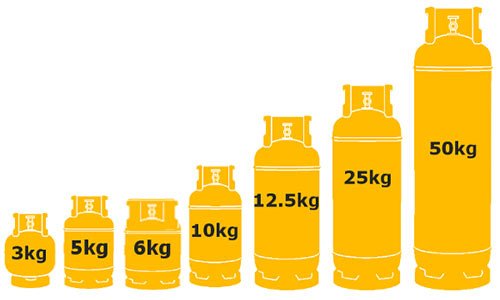
“I used to refill my 12.5kg cylinder every month, but now it is too expensive,” said Folake Afolabi, a resident of Agege in Lagos. “We have gone back to using charcoal for most of our cooking because it is what we can afford.”
Another Nigerian, identified as Olowookere, said on X that he had to buy only 2kg of gas in his 12kg cylinder because he could not expose his asthmatic wife to the health risks of charcoal smoke.
“I had to buy 2kg of gas inside my 12kg cylinder because I cannot risk the life of my asthmatic wife in the name of using charcoal for cooking,” he said.
In Akure, Ondo State, an interior decorator, Toheeb Agbabiaka, said he was surprised to see some LPG retailers selling charcoal alongside cooking gas, an indication that consumers are increasingly combining both fuels to survive rising energy costs.
“The last time I went to refill my cylinder, I saw the fuel station attendant also selling charcoal,” Agbabiaka said.
“Many Akure residents now buy charcoal to make up for the shortfall in the quantity of gas they can afford. Instead of filling an entire cylinder, they buy smaller quantities of gas and supplement with charcoal.”
Agbabiaka said he had also increased his use of an electric cooker to reduce dependence on LPG, although unstable power supply had created another burden.
“I wake up at midnight sometimes to cook for the day because power supply is also not stable,” he said.
Data obtained from the Nigerian Upstream Petroleum Regulatory Commission showed that in the first two months of the year, about 62 percent of Nigeria’s total gas output was exported, leaving only about 38 percent for the domestic market.
Industry operators say the imbalance has become more damaging because Nigeria’s domestic LPG market has expanded significantly, with millions of urban and semi-urban households now relying on cooking gas for daily meals.
An industry analyst, who asked not to be named because of regulatory sensitivities, said Nigeria’s export-first gas structure was created at a time when many households were not using LPG for cooking.
“This lopsided supply structure was in place during the years when most Nigerians were not using gas for cooking,” the analyst said. “But those days are gone. The domestic market has grown significantly, and the same export-first bias is now destabilising prices and access for ordinary consumers.”
According to an industry report titled Nigeria LPG Production & Supply Matrix (2023–2026), national consumption of cooking gas rose by 20 percent from 1.5 million metric tonnes in 2023 to an estimated 1.8 million metric tonnes in 2026.
However, estimated national supply stood at only between 1.55 million and 1.65 million metric tonnes within the same period, creating a gap of at least 150,000 metric tonnes. The shortfall is now being absorbed through higher prices rather than increased supply.
The Dangote Petroleum Refinery, which entered the LPG supply chain in recent years, has added meaningful domestic output and helped shift the market away from historic dependence on imports and Nigeria LNG Limited.
The report noted that the LPG market had undergone a major structural transformation between 2023 and 2026, with growing contributions from domestic gas-processing plants, inland gas processors and NNPC-linked facilities.
Despite these improvements, the additional supply has not been enough to bring down retail prices because distribution infrastructure remains a major bottleneck in the downstream energy sector.
The report identified persistent constraints, including bottlenecks at marine terminals, rising trucking costs, inadequate cylinder penetration, limited storage capacity and exchange-rate volatility affecting imported LPG components.
Industry leaders say many producers still prefer export markets, especially LNG off-take agreements, because they provide dollar-denominated revenue and more predictable pricing than the domestic market.
“Many producers prefer exporting gas through LNG projects because export markets offer more attractive pricing and stable foreign exchange earnings than the domestic market,” one industry leader said. “As a result, domestic consumers often struggle to access sufficient supply.”
The source also blamed Nigeria’s weak gas-gathering and transmission network for the domestic shortage, saying the country lacks adequate infrastructure to move gas efficiently from production fields to end users.
“Nigeria lacks adequate gas gathering, processing, storage and transmission infrastructure needed to move gas efficiently from production fields to consumers,” the source said. “Large volumes of gas produced in remote oil fields cannot be evacuated due to insufficient pipelines, processing plants and distribution networks.”
Regulatory data from the NUPRC and the Nigerian Midstream and Downstream Petroleum Regulatory Authority also point to other structural problems affecting supply, including pipeline vandalism, insecurity, inadequate investment across the value chain, regulatory inconsistency and continued gas flaring.
The Nigerian Association of Liquefied Petroleum Gas Marketers has also raised the alarm over the rising cost of cooking gas, warning that depot prices have become prohibitive for marketers and consumers.
In a formal statement, the association said its members were paying between ₦25.2 million and ₦26.2 million for a 20-metric-tonne consignment of cooking gas, a cost that is passed on to retail consumers.
“This sad situation has brought untold hardship to millions of Nigerian households, small businesses, food vendors, and low-income families who rely on LPG for daily cooking and livelihood,” the association said.
The association warned that sustained price pressure could collapse small-scale LPG retail businesses and worsen food inflation as energy costs rise for food vendors and small businesses.
Its national president, Barrister Edu Inyang, and executive secretary, Bassey Essien, appealed to the Ministry of Petroleum Resources, the NMDPRA and NNPC Ltd to take urgent steps to improve LPG availability, increase domestic allocation, streamline importation and storage logistics, and invest in critical distribution infrastructure.
The crisis also threatens Nigeria’s clean energy transition. Over the past decade, government policy encouraged households to move away from kerosene, charcoal and firewood in favour of LPG, a shift that delivered environmental and public health benefits.
Marketers, however, warned that those gains are now at risk as vulnerable households return to firewood and charcoal because they can no longer afford cooking gas.
“Households cannot refill cylinders, small businesses are struggling to survive, and vulnerable households are returning to firewood and charcoal,” the association said.
They added that the consequences include deforestation, respiratory health risks and setbacks to Nigeria’s climate commitments.
Analysts say resolving the crisis will require more than temporary interventions. They argue that Nigeria must rebalance its gas export and domestic supply priorities, invest heavily in midstream and distribution infrastructure, expand storage capacity and create a pricing framework that makes the domestic market competitive with export alternatives.
Until those structural issues are addressed, millions of Nigerian households may continue to face high cooking gas prices, while the country’s clean cooking gains risk being reversed.
[A MUST HAVE] Evidence Act Demystified With Recent And Contemporary Cases And Materials

Available now for NGN 40,000 at ASC Publications, 10, Boyle Street, Onikan, Lagos. Beside High Court, TBS. Email publications@ayindesanni.com or WhatsApp +2347056667384. Purchase Link: https://paystack.com/buy/evidence-act-complete-annotation
______________________________________________________________________ “Enhance Legal Practice With Authoritative Reports” — Alexander Payne Offers Comprehensive Law Reports, Spanning Over A Century Of Nigerian Jurisprudence Interested buyers are encouraged to place their orders and enquiries via:
0704 444 4777, 0704 444 4999, 0818 199 9888
Website: www.alexandernigeria.com
Interested buyers are encouraged to place their orders and enquiries via:
0704 444 4777, 0704 444 4999, 0818 199 9888
Website: www.alexandernigeria.com