*Say “Some Elderly Voters Could Not Complete Accreditation Because The System Failed To Capture Their Biometric And Facial Information”

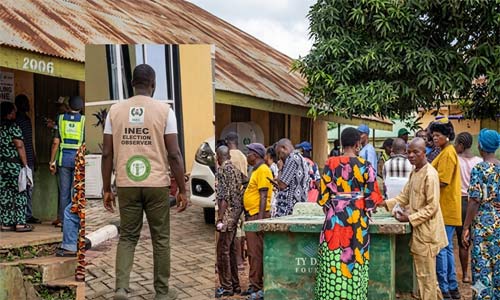
The Nigerian Bar Association Election Working Group has reported that the Osun State governorship election held on Saturday, 15 August 2026 was generally peaceful, orderly and well managed in the locations its observers covered, while identifying the performance of the Bimodal Voter Accreditation System as the most significant operational problem of the exercise.
The preliminary report, dated 16 August 2026, is signed by Festus Okoye, Esq., Chairman of the NBA Election Working Group.
Who Observed
The Association deployed an Election Observation Group to the state in furtherance of what the report describes as its longstanding commitment to democracy, constitutionalism, the rule of law, human rights and credible electoral processes.
The Group was led by Okoye and by Dr Mobolaji Ojibara, Esq., General Secretary of the NBA. Other members of the Working Group who took part were Khalid A. Khalid, Esq., Amah Lawal, Esq., Chika Henry Eze, Esq., and John Opaoluwa, Esq.
They were supported by officials of the National Secretariat, namely Oti Edah, Esq., Head of the Programmes Department, Stella Charles Akupue, Esq., Communications Officer, and Chioma Onyeje, Programme Officer, with support from members of the NBA branches in the state led by their chairmen.
Observers were organised into seven teams. Team One covered Osogbo, Olorunda, Egbedore, Irepodun, Orolu, Ede North and Ede South. Team Two covered Ifelodun, Boripe, Odo-Otin, Ila, Ifedayo and Boluwaduro. Team Three covered Ilesa East, Ilesa West, Oriade and Obokun. Team Four covered Atakunmosa East and Atakunmosa West. Team Five covered Ife Central, Ife East, Ife North and Ife South. Team Six covered Ejigbo, Iwo and Ola-Oluwa. Team Seven covered Ayedaade, Ayedire, Irewole and Isokan.
The report states that its observations are limited to the locations visited and should be understood within the scope of that coverage.
The Numbers Behind The Poll
The election took place across the 30 local government areas of the state, with 332 registration areas or wards and 3,763 polling units. The total number of registered voters stood at 2,339,233, while permanent voter cards collected numbered 1,906,390.
The report notes that the tenure of the incumbent Governor expires on 27 November 2026, and that the poll, originally set for 8 August 2026, was rescheduled to 15 August by the Independent National Electoral Commission following the re-enactment of the Electoral Act, as set out in the revised timetable issued on 26 February 2026.
Before The Poll
Ahead of the election, the President of the Association, Mazi Afam Osigwe, SAN, led a delegation to secure commitments from stakeholders.
The delegation first visited the Resident Electoral Commissioner in the state, Mrs Oluwatoyin O. Babalola. The NBA President urged her to remain a worthy ambassador of the legal profession by fulfilling her constitutional responsibilities with integrity, impartiality and courage. She assured the delegation that the Commission was fully prepared, noting that extensive training had been conducted for election personnel to minimise human error.
The delegation also met the Deputy Inspector-General of Police, DIG Mohammed Ishaku, and other senior officers overseeing election security. He assured them that comprehensive security arrangements were in place, and disclosed that a large-scale deployment of police personnel had begun, with additional officers expected before election day.
At a press conference at the NBA Osogbo Bar Centre, the NBA President called on all institutions and individuals involved in the process, including electoral officials, security agencies, political actors and public office holders, to remain strictly neutral and to refrain from using their offices, powers or influence in favour of any candidate or party. He appealed to political actors to place the interests of the state above partisan considerations, warning that Osun must not be allowed to go up in flames and that no life should be lost in the pursuit of political power.
Deployment And Opening Of Polls
The Group received generally positive reports on the deployment of officials and materials, particularly from the teams covering Ede North and Ede South.
Officials were reported to have arrived at several polling units early, some as early as 7:30 a.m., and materials were delivered promptly and generally available. In most locations covered, electoral activities commenced between about 8:30 a.m. and 9:00 a.m., with no significant reports of prolonged delays caused by late arrival of officials or unavailability of materials.
One exception is recorded. At PU 013, Agbala, near the cooperative building in Ede North, with 626 registered voters, the election commenced late at about 9:45 a.m. because the BVAS had difficulty booting.
The Group described early deployment as a positive development and encouraged the Commission to sustain it.
“The Most Significant Operational Issue”
The report states plainly that “the BVAS’s performance emerged as the most significant operational issue identified by the Group.”
In Olorunda, observers reported that the system was slow to process accreditation and struggled to capture the fingerprints and facial images of some voters.
At St George’s Primary School, PU 006 in Egbedore, with 1,114 registered voters, accreditation began at 8:30 a.m. but was slowed by a faulty device. The report states: “The Group observed that some voters could not complete accreditation because the BVAS failed to capture their fingerprints or facial images. As a result, the affected voters could not proceed to vote.”
At a polling unit in Ifetedo, the process remained peaceful but the device stopped functioning after processing several voters, temporarily disrupting accreditation.
At Alajuweto, PU 005 in Ede South, with 1,134 registered voters, the system encountered significant difficulties, functioning at times but performing poorly and slowly.
At Okunni, Olosunsogbo/Ofatedo, PU 003, Ward 010, the device had problems with exporting. At Ataoja “E”, PU 019, Ward 05, Okin Street behind the Capital Hotel in Egbedore, with 1,271 registered voters, some elderly voters could not complete accreditation because the system failed to capture their biometric and facial information. At Anuolu Junction, PU 008 in Ede South, with 632 registered voters, the device had difficulty capturing voter details, which agitated voters as they waited for it to be restored.
The team covering Ifelodun, Boripe, Odo-Otin, Ila, Ifedayo and Boluwaduro reported that the system functioned effectively in approximately 90 per cent of the locations observed, but that voter volume at some units placed considerable pressure on accreditation.
In Boripe, some polling units reportedly had more than 1,000 registered voters. The report notes that in those locations the principal concern was not complete technical failure but the system’s capacity and the availability of personnel to process large numbers of voters within a reasonable period.
In Ede North and Ede South the system was generally functional but slow at some units, with a few locations reporting limited network problems.
A recurring concern across affected units was difficulty capturing the fingerprints and facial images of elderly voters.
Turnout
Participation was described as varying but generally encouraging. Turnout at St George’s Primary School, PU 006, was assessed as moderate to good. At Ajaoju E, PU 02, Ward 05 in Osogbo, turnout was described as impressive, while some units in Obokun recorded low turnout.
The team covering Ede North and Ede South described turnout as particularly impressive, recording strong participation at Ajajue II in Ede South. Turnout was also impressive at Ilesa Grammar School, PU 007 in Ilesa East, with both male and female voters participating in large numbers. The participation of young voters was particularly noticeable, and elderly voters also took an active part.
The Group received reports of significant turnout in Ifetedo, particularly around Onide Junction, with over 1,000 voters, where the concentration of voters and election activity disrupted normal movement and traffic.
Party Agents, Security And Voter Conduct
Party agents were present at most observed units and were generally reported to have behaved appropriately, with no significant reports of disputes, confrontations or disruptions attributable to them. The Group commended their conduct.
The overall security situation was deemed satisfactory. Personnel from the Nigeria Police Force, the Armed Forces and the Nigeria Security and Civil Defence Corps were visibly present at several units. In parts of Odo-Otin, Ifelodun and Boripe, security personnel were reported to have worked effectively with election officials and party agents.
The Group did not receive reports of any major security incident in the locations covered. It records one minor disruption at Olode, Iyana Igboro, PU 15 in Ife South, which security personnel were able to calm.
The conduct of voters was generally peaceful and orderly, with voters largely complying with instructions and no significant reports of violence or major disruption attributable to voter behaviour.
Vote Buying And Inducement
The Group received reports of vote buying, voter inducement and other electoral malpractices.
It records specifically that at Elepo Square, PU 004, Olofun in Orolu Local Government Area, “some individuals followed eligible voters without disabilities to the voting cubicles and assisted them to vote.”
On interference more broadly, the Group did not observe significant interference with electoral activities in the units covered, and reports that officials generally carried out their duties without substantial external interference.
The Eight Challenges Identified
The report lists the principal challenges as slow BVAS processing causing delays in accreditation; biometric authentication difficulties with fingerprint and facial recognition; challenges affecting elderly voters, particularly in Egbedore, Olorunda and Ede, some of whom were unable to complete accreditation; a temporary complete stoppage of the device at at least one unit in Egbedore; high voter volumes, with some units in Boripe carrying more than 1,000 registered voters; insufficient personnel to operate the equipment and process voters efficiently; limited network difficulties at a few locations, though not the dominant challenge; and polling units sited in markets and in front of people’s houses.
The Group states that these challenges did not result in widespread disruption in the locations observed, but that they have implications for the efficiency, inclusiveness and accessibility of future elections.
The Recommendations
The Group recommends comprehensive pre-election testing of all devices well in advance of election day, covering not only basic functionality but biometric capture, facial recognition, network connectivity, battery performance, processing speed and capacity to handle expected volumes. Ahead of the 2027 general election, it says, the Commission must consider upgrading the machines to meet contemporary technological standards.
It recommends that deployment of devices account for the number of registered voters assigned to each unit, so that units with exceptionally high numbers have sufficient capacity to prevent bottlenecks.
On polling unit size, it urges the Commission to investigate why some units have more than 2,000 registered voters despite the creation of additional units nationwide, and states that ahead of 2027 “no polling unit should have more than 500 registered voters,” with additional equipment and personnel deployed to those slightly above that figure.
On siting, it says units in unsuitable locations should be removed, noting that some are located inside markets, in derelict buildings, in the corridors of people’s houses and in other places that are inaccessible, vulnerable and difficult to manage for crowd control. It cites Open Space Dagbolu III, Registration Area Olobu A in Irepodun Local Government Area, with 966 registered voters, as being located in a market square.
Further recommendations cover the deployment of trained technical support personnel and a rapid-response mechanism for equipment failure; enhanced, scenario-based training for Presiding Officers covering failed fingerprint and facial recognition, malfunctions and network interruptions, with an express caution that trained personnel must not be replaced by untrained personnel; particular attention to elderly and vulnerable voters so that technical difficulties do not prevent otherwise eligible voters from voting; adequate staffing of high-volume units; institutionalising early deployment of officials and materials; strengthening contingency arrangements and clear escalation procedures; and continued structured post-election reviews among the Commission, parties, civil society and professional bodies.
Conclusion Of The Group
The Group commended voters, officials, security personnel, parties, candidates, agents and civil society for the generally peaceful conduct of the election in the locations observed, and noted encouraging voter participation.
It stated that the recurring operational challenges associated with the BVAS require urgent attention, and that of particular concern were reports of elderly voters unable to complete accreditation due to biometric authentication difficulties.
“The integrity of an electoral system depends not only on the availability of technology but also on its reliability, accessibility and ability to facilitate the effective exercise of the right to vote,” the report states.
It encourages the Commission to conduct a comprehensive post-election review of the conduct of the election and particularly of the performance of the BVAS, reaffirms the Association’s commitment to democratic governance, constitutionalism, the rule of law, human rights, electoral integrity and peaceful political participation, and urges all political actors to pursue any post-election grievances through lawful, constitutional and judicial channels.
[A MUST HAVE] Evidence Act Demystified With Recent And Contemporary Cases And Materials

Available now for NGN 40,000 at ASC Publications, 10, Boyle Street, Onikan, Lagos. Beside High Court, TBS. Email publications@ayindesanni.com or WhatsApp +2347056667384. Purchase Link: https://paystack.com/buy/evidence-act-complete-annotation
______________________________________________________________________ “Enhance Legal Practice With Authoritative Reports” — Alexander Payne Offers Comprehensive Law Reports, Spanning Over A Century Of Nigerian Jurisprudence Interested buyers are encouraged to place their orders and enquiries via:
0704 444 4777, 0704 444 4999, 0818 199 9888
Website: www.alexandernigeria.com
Interested buyers are encouraged to place their orders and enquiries via:
0704 444 4777, 0704 444 4999, 0818 199 9888
Website: www.alexandernigeria.com