The Body of Benchers has announced plans to regulate the number of law graduates called to the Nigerian Bar annually, warning that universities which persistently admit students beyond their approved quotas may be sanctioned or stripped of accreditation.

The apex regulatory body for the legal profession also expressed concern over the growing number of unemployed lawyers who, after being called to the Bar, allegedly operate without offices, solicit briefs around magistrates’ courts or wait at police stations for clients, a practice commonly described as “charge-and-bail” lawyering.
The Body of Benchers stated its position during the three-day 2026 Call to Bar ceremonies held in Abuja from July 7 to 10, at which 6,010 new lawyers were admitted to practise in Nigeria.
The latest admission further increased the number of lawyers in the country, previously estimated at about 250,000 practitioners.
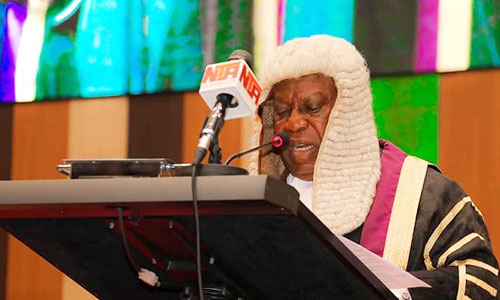
In an address delivered by its Chairman and Life Bencher, His Royal Majesty Albert Akpomuje, SAN, the body said it was increasingly concerned about the quality, character and professional standards of persons admitted to practise law in Nigeria.
It attributed the sharp increase in the number of law graduates partly to the deliberate admission of students beyond the quotas allocated to some accredited university law faculties.
The Body of Benchers disclosed that it had established a committee to examine the increasing number of persons seeking admission into the profession and recommend an appropriate benchmark for the number to be called to the Bar annually.
According to the body, the continuous rise in the number of law graduates, without corresponding employment opportunities, has contributed to declining professional standards and the emergence of lawyers who struggle to establish sustainable practices.
“The Body of Benchers cannot afford to produce lawyers when there are not enough jobs to accommodate them, hence the need to regulate and put a benchmark on those to be called in any given year,” it said.
“This will also take care of situations where members of the Bar, after call, tout for briefs with no office, at the Magistrate Courts, waiting at the police stations, and earn the embarrassing name popularly known as charge-and-bail lawyers.”
The body maintained that admission into the legal profession must not become an all-comers affair, warning that an uncontrolled increase in the number of practitioners could reduce the standards expected of lawyers.
“As a regulatory body, we owe a duty to the government, the people of this country and, in particular, the noble profession of law, to ensure that admission into this honourable profession does not become an all-comers affair, as this will inevitably have the propensity to reduce the standard expected from this noble profession,” it stated.
It said its responsibility extended beyond merely calling qualified candidates to the Bar, stressing that the quality, learning and character of those admitted were equally important.
“Apart from just calling persons to the Bar, the Body of Benchers is very concerned with the quality and standard of those admitted to the Bar to practise law in Nigeria,” the chairman said.
He described law as a leading profession and said persons seeking admission to the Bar must demonstrate excellence both academically and in character.
“For those of us already privileged to practise law, and by extension those of you being accorded the rare honour today of being called, we are very much aware of the fact, with no iota of apology, that our noble profession is number one in the world,” he said.
“As such, it is expected that aspirants to the Bar must be the best of the best and further ensure that, after being called, that standard of being the best is maintained either in character or in learning.”
Akpomuje said information gathered by the committee, particularly from the Nigerian Law School, showed that a major challenge arose from accredited university law faculties admitting students beyond their approved quotas.
He described the practice as an affront to the authorities responsible for regulating legal education and an act of indiscipline by institutions expected to set proper examples for prospective lawyers.
“The Body of Benchers has observed, from the committee set up to address this issue of the astronomical increase in the numbers of those wishing to be admitted to the Bar as lawyers, and from information gathered particularly from the Nigerian Law School, that the greatest challenge stems from the deliberate act of the faculties of law of some of the universities accredited to graduate law students, exceeding the maximum quota of students allocated to the university that can be admitted to read law,” he said.
“With all due respect, this is an affront to the constituted authority that prescribed the quota for admission, but, worse still, it is an act of indiscipline on the part of those who are required to show good example to the students who aspire to be members of this noble profession of law.”
The body said the consequences of excessive admissions included falling academic standards and a backlog of graduates unable to secure places at the Nigerian Law School.
According to it, some law graduates wait for three years or longer before gaining admission into the Law School because the institution lacks sufficient space to accommodate candidates admitted beyond the universities’ approved quotas.
It explained that the Nigerian Law School, working with the Body of Benchers, had introduced two admission streams in an effort to reduce the backlog, despite the additional financial and logistical burdens and the pressure placed on lecturers.
“The backlash or consequence of some of the universities not keeping within the limit of their quota has resulted not only in lowering the standard expected of the students admitted but also in causing a backlog of students not getting into the Nigerian Law School after graduation,” it said.
“Some of them wait up to three years or more before gaining admission into the Nigerian Law School due to lack of space to accommodate them in the school, based on the quota of all the universities wherein provision is made by the Law School to admit students.
“In sympathy with some of the students, the Law School, in collaboration with the Body of Benchers, had to bend over backwards to have two streams of admission into the Nigerian Law School, with lecturers overstretched beyond limit, apart from the financial and logistical implications associated with it.”
The body rejected claims that qualified students were deliberately being denied admission to the Nigerian Law School.
It said the principal difficulty arose from universities exceeding their quotas and, in some cases, institutions producing law graduates before obtaining the necessary accreditation.
“The distinguished body wishes to clarify a misconception and notify the general public and Nigerians that the Body of Benchers will not deliberately deny qualified students admission to the Law School,” it stated.
“The problem, as highlighted earlier, is that some of the universities admit over the quota allocated to them, and some universities not yet accredited produce law graduates even before applying to be so accredited.”
The Body of Benchers argued that professional bodies ordinarily regulate the number of persons admitted into their professions based on societal needs.
It said the Body of Benchers and the Council of Legal Education considered the country’s need for legal services, available facilities and the capacity of university law faculties when determining admission quotas.
“For the legal profession, the Body of Benchers and the Council of Legal Education are guided by the needs for legal services in the country, which form the basis of the quota allocated to universities, including the facilities on ground and the ability of the faculty of law to produce law students of the highest standard to be called to the Bar by the Body of Benchers,” Akpomuje said.
He disclosed that the body would begin keeping detailed records of the number of law students admitted by each university annually and strictly monitor compliance with approved quotas.
He warned that any institution which continued to exceed its quota after the monitoring measures were introduced could be sanctioned.
“After all these measures have been put in place, and any university still exceeds the prescribed quota, it will not be out of place to wield the big stick or hammer by way of sanctions against any university that wilfully flouts or refuses to keep within the prescribed quota,” he said.
“The body may be compelled to direct that such universities be de-accredited from producing law graduates for call to the Bar, either permanently or for a number of years.”
The Body of Benchers also advised prospective students and their parents to verify the accreditation and admission status of university law programmes to avoid becoming victims of excessive admissions and prolonged delays in entering the Nigerian Law School.
The body’s position comes amid protests by more than 4,000 law graduates of the National Open University of Nigeria over their continued exclusion from the Nigerian Law School.
The affected graduates petitioned the Attorney-General of the Federation and Minister of Justice, Lateef Fagbemi, SAN, describing their exclusion as discriminatory and a violation of their constitutional rights.
The petition, signed by the group’s President, Adefowora Adedeji, and Secretary-General, Samuel Udofia, argued that the 2018 amendment to the National Open University of Nigeria’s Establishment Act recognised their law degrees for professional legal training.
They maintained that the amendment enabled an earlier set of NOUN graduates to gain admission into the Nigerian Law School and questioned why subsequent graduates remained excluded.
“This has become a national crisis. Law graduates from other Nigerian universities are given the right of admission to the Nigerian Law School, while we are excluded. This is against the constitutional principles of equality, fairness and justice,” the petition stated.
“We have equal rights to legal education as other Nigerian university law graduates. This is against our rights enshrined in Section 42 of the Constitution of the Federal Republic of Nigeria 1999, as amended. This is a pure state of discrimination.”
The petitioners said more than 4,150 NOUN law graduates were awaiting admission into the Bar Part II programme of the Nigerian Law School.
They claimed many had waited for an average of more than five years, while some had died and others had become advanced in age without being admitted.
“However, it is pertinent to inform you, Sir, that we are over 4,150 NOUN law graduates currently awaiting admission into Bar Part II, Nigerian Law School,” the petition read.
“Many among us have waited an average of more than five years, while many have sadly passed away, and the majority of us are now advanced in age.”
The graduates asked the Attorney-General to intervene and persuade the Council of Legal Education and the Nigerian Law School to introduce an urgent admission plan capable of accommodating the affected candidates within the shortest possible period.
The controversy over admission numbers and the structure of professional legal training also featured prominently at the 2026 Legal Education Summit organised by the Nigerian Bar Association in May.
At the summit, senior lawyers expressed differing views over a proposal to abolish the Nigerian Law School or substantially restructure its functions.
The Vice-Chancellor of Imo State University, Prof. Uchefula Chukwumaeze, SAN, argued that the Nigerian Law School had outlived its usefulness under the present legal education system.
He proposed that the Council of Legal Education should focus on setting standards and requirements for the Call to Bar, while accredited university law faculties should be permitted to undertake the professional training of prospective lawyers.
However, the proposal was opposed by the Chairman of the Council of Legal Education, Chief Emeka Ngige, SAN, and the Director-General of the Nigerian Law School, Dr Olugbemisola Odusote.
The NBA President, Mazi Afam Osigwe, SAN, supported reforms to legal education but proposed reducing the duration of law studies rather than abolishing the Nigerian Law School.
“The imperativeness of a system of legal education that can produce lawyers with the necessary skills and capacity to meet the evolving needs of society has always been emphasised,” Osigwe said.
“The practical and focused content of university education will achieve better results even if it lasts for three years.
“The increasing number of law graduates, coupled with the inability of the Law School to admit them, may force a review of the system.”
As the Body of Benchers moves towards regulating annual admissions and sanctioning institutions that violate approved quotas, it is expected to confront the challenge of balancing the protection of professional standards with the right of qualified law graduates to pursue professional legal training and admission to the Bar.
[A MUST HAVE] Evidence Act Demystified With Recent And Contemporary Cases And Materials

Available now for NGN 40,000 at ASC Publications, 10, Boyle Street, Onikan, Lagos. Beside High Court, TBS. Email publications@ayindesanni.com or WhatsApp +2347056667384. Purchase Link: https://paystack.com/buy/evidence-act-complete-annotation
______________________________________________________________________ “Enhance Legal Practice With Authoritative Reports” — Alexander Payne Offers Comprehensive Law Reports, Spanning Over A Century Of Nigerian Jurisprudence Interested buyers are encouraged to place their orders and enquiries via:
0704 444 4777, 0704 444 4999, 0818 199 9888
Website: www.alexandernigeria.com
Interested buyers are encouraged to place their orders and enquiries via:
0704 444 4777, 0704 444 4999, 0818 199 9888
Website: www.alexandernigeria.com