The new religious accommodation guidelines make it easier for Sikh and Muslim personnel to seek religious waivers.

The U.S. Air Force last week updated its dress code, making it easier for personnel to seek religious accommodations for beards, hijabs and turbans.
The move follows a similar policy instituted by the Army and has drawn praise from Sikh and Muslim religious organizations.
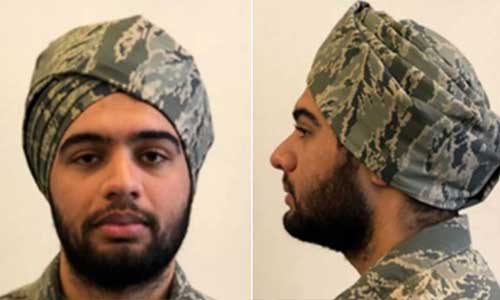
Under the guidelines released Feb. 7, Muslim women will be allowed to wear hijabs, Islamic head scarves, while Sikh men will be allowed to wear turbans and uncut hair. The new guidelines also allow religious or medical exemptions to grow beards up to 2 inches long.
According to the memo, approved religious garments must not interfere with the operation of weapons or other military equipment.
“No Sikh American should have to choose between their religious beliefs and their career ambitions,” Giselle Klapper, an attorney with the Sikh Coalition, said. “Sikhs have served honorably and capably in the U.S. Armed Forces and other militaries around the world, and while we are eager for a blanket proclamation that all observant Sikh Americans can serve in every branch of the military without seeking accommodations, this policy clarification is a great step forward towards ensuring equality of opportunity and religious freedom in the Air Force.”
In 2018 Lt. Maysaa Ouza became the first Air Force JAG Corps officer authorized to wear hijab, and in 2019 Airman 1st Class Sunjit Singh Rathour became the first Sikh American to complete Air Force training in a turban but had to do so with the help of lawyers and advocacy organizations. The new regulations clarify the process.
“We support these new guidelines as a step toward religious accommodation and inclusion for military personnel of all faiths,” Ibrahim Hooper, communications director for the Council on American-Islamic Relations, said in a statement. “Thousands of American Muslims and members of other minority faiths serve in our nation’s military and should be able to practice their faith while serving.”
The guidelines say turbans and hijabs must closely match the color of assigned uniforms and can be worn in place of traditional headgear. Designs other than camouflage patterns are prohibited.
The guidelines also lower the standard for religious exemption approval and raises the standard for denial. Exemptions can now be approved by Wing Commanders or higher-ranked personnel and denials must further a “a compelling governmental interest” and be “the least restrictive means of furthering that compelling governmental interest,” according to an Air Force memo.
The beard regulation applies to all religions. According to the Air Force Times, at least two Norse Heathen airmen wear approved beards.
[A MUST HAVE] Evidence Act Demystified With Recent And Contemporary Cases And Materials

Available now for NGN 40,000 at ASC Publications, 10, Boyle Street, Onikan, Lagos. Beside High Court, TBS. Email publications@ayindesanni.com or WhatsApp +2347056667384. Purchase Link: https://paystack.com/buy/evidence-act-complete-annotation
______________________________________________________________________ “Enhance Legal Practice With Authoritative Reports” — Alexander Payne Offers Comprehensive Law Reports, Spanning Over A Century Of Nigerian Jurisprudence Interested buyers are encouraged to place their orders and enquiries via:
0704 444 4777, 0704 444 4999, 0818 199 9888
Website: www.alexandernigeria.com
Interested buyers are encouraged to place their orders and enquiries via:
0704 444 4777, 0704 444 4999, 0818 199 9888
Website: www.alexandernigeria.com