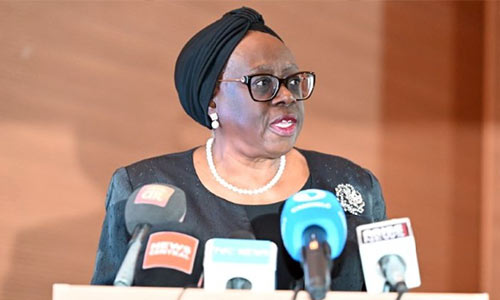
Chief Justices and other judicial leaders from across Africa have resolved to collaborate on creating an efficient, reliable and predictable dispute-resolution system capable of supporting the implementation of the African Continental Free Trade Area.

The judicial leaders agreed to explore the harmonisation of dispute-resolution mechanisms across the continent to make the handling of cross-border commercial disputes faster, easier and more consistent.
The resolutions were reached at the third Africa Chief Justices’ Alternative Dispute Resolution Summit held in Nairobi, Kenya, from June 18 to 19, 2026.
The summit brought together Chief Justices, heads of judiciaries, judges, ADR practitioners, scholars, development partners and legal professionals to examine how alternative dispute resolution and alternative justice systems could improve access to justice and promote economic growth across Africa.
According to a statement by the Special Assistant on Media to the Chief Justice of Nigeria, Tobi Soniyi, participants acknowledged that commercial confidence depends substantially on legal certainty and the availability of institutions capable of resolving disputes fairly and promptly.
They maintained that properly structured ADR mechanisms could strengthen commercial justice, protect the business environment, reduce transaction costs and support the objectives of AfCFTA.
Chief Justice of Nigeria, Justice Kudirat Kekere-Ekun, called on African judiciaries to prepare proactively for the new categories of disputes expected to arise from increased trade and economic integration across the continent.
Justice Kekere-Ekun served as co-chair of the session titled, “Financial Sector Disputes, Tax Certainty and ADR: Building Commercial Confidence in Africa.”
She described AfCFTA as one of the most ambitious economic integration initiatives in modern history but warned that its success would not depend solely on trade protocols, tariff reductions and economic policies.
According to her, the strength, predictability and reliability of the institutions supporting commercial activities would also determine whether businesses and investors could confidently engage in transactions across African borders. (Vanguard News)
The CJN urged African judiciaries, central banks, tax authorities and ADR institutions to work together to reduce uncertainty, prevent disputes, strengthen investor confidence and support the implementation of AfCFTA.
She predicted that increased intra-African trade would generate disputes involving cross-border taxation, foreign exchange transactions, banking and payment systems, digital commerce, regional supply chains, recognition of foreign judgments and enforcement of arbitral awards.
“African judiciaries must proactively prepare for these emerging realities,” she said.
Justice Kekere-Ekun also urged judicial leaders to devote greater attention to dispute-prevention mechanisms rather than concentrating only on resolving disagreements after they had escalated.
She argued that the strongest commercial systems should not be judged by the volume of litigation they produce but by their ability to prevent disputes and resolve emerging disagreements before commercial relationships break down.
“The most successful commercial systems are not those that generate the highest volumes of litigation but those that reduce the need for litigation,” the CJN stated.
She cautioned against treating ADR merely as a secondary procedure to be deployed after conventional litigation has failed.
According to her, ADR should be regarded as a strategic commercial tool capable of reducing transaction costs, preserving business relationships, strengthening investor confidence, easing court congestion, improving the business environment and promoting commercial certainty.
Sharing Nigeria’s experience, Justice Kekere-Ekun cited the Supreme Court’s recent decision in Emerging Markets Telecommunications Services Limited v. AFDIN Ventures Limited and Others (2026).
She said the decision reaffirmed important principles supporting commercial certainty, including respect for arbitration agreements, recognition that consent to arbitration may be inferred from a party’s conduct and the importance of finality in arbitral awards.
The Supreme Court held in the case that a party that participated in and benefited from a commercial transaction could not necessarily escape an arbitration arrangement merely because it did not sign the underlying agreement.
The apex court also discouraged attempts to reopen the merits of disputes already determined through arbitration, reinforcing the limited and supportive role courts are expected to play in arbitral proceedings.
Justice Kekere-Ekun said the judgment strengthened Nigeria’s reputation as a jurisdiction supportive of arbitration and the enforcement of commercial agreements.
She also identified the timely determination of tax disputes as essential to commercial certainty and recommended Nigeria’s tax dispute-resolution framework as a model that other African countries could examine.
The CJN particularly highlighted the Tax Appeal Tribunal, describing it as one of Nigeria’s significant institutional innovations for resolving tax disagreements and reducing uncertainty for businesses and government agencies.
Soniyi said the CJN’s central message to the summit was the need to build an African commercial environment in which investors, businesses, regulators and citizens could conduct cross-border transactions with confidence that their rights would be protected and their obligations fairly enforced.
Participants unanimously resolved to work towards harmonising dispute-resolution mechanisms and jurisprudence across Africa while developing common standards for recognising judgments and enforcing arbitral awards.
The summit also advanced the objectives of the African Chief Justices’ Alternative Dispute Resolution Forum, which seeks to encourage judicial cooperation, strengthen ADR institutions and create more predictable standards for resolving commercial disputes across the continent.
On the final day of the summit, Justice Kekere-Ekun was nominated by Kenya’s Chief Justice and subsequently confirmed by the forum as Vice-Chairperson of the Africa Chief Justices’ ADR Forum.
Her appointment is scheduled to take effect on August 1, 2026.
[A MUST HAVE] Evidence Act Demystified With Recent And Contemporary Cases And Materials

Available now for NGN 40,000 at ASC Publications, 10, Boyle Street, Onikan, Lagos. Beside High Court, TBS. Email publications@ayindesanni.com or WhatsApp +2347056667384. Purchase Link: https://paystack.com/buy/evidence-act-complete-annotation
______________________________________________________________________ “Enhance Legal Practice With Authoritative Reports” — Alexander Payne Offers Comprehensive Law Reports, Spanning Over A Century Of Nigerian Jurisprudence Interested buyers are encouraged to place their orders and enquiries via:
0704 444 4777, 0704 444 4999, 0818 199 9888
Website: www.alexandernigeria.com
Interested buyers are encouraged to place their orders and enquiries via:
0704 444 4777, 0704 444 4999, 0818 199 9888
Website: www.alexandernigeria.com