
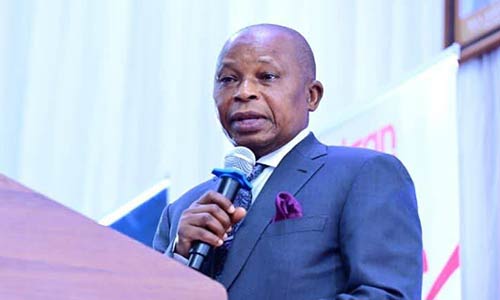
The Attorney-General of the Federation and Minister of Justice, Lateef Fagbemi, SAN, has called on the Nigerian Copyright Commission (NCC) to intensify its enforcement against online piracy, strengthen its capacity to address emerging challenges posed by artificial intelligence (AI), and ensure transparency and accountability in the collection, management and distribution of copyright royalties and levies.
Fagbemi maintained that Nigeria’s creative economy could not achieve its full potential without effective copyright protection, stronger enforcement mechanisms and a transparent system that guarantees creators receive the financial benefits of their intellectual property.
The Attorney-General made the call in Abuja while delivering an address as the special guest of honour at the opening of the NCC’s four-day Performance Review and High-Level Strategic Retreat 2026.
The retreat, themed “Consolidating the Gains, Sustaining the New Copyright Narrative through Strategic Management,” was organised to review the Commission’s operations from January 2019 to October 2026 and develop strategies for improving its performance.
Addressing participants, Fagbemi stressed the need for the NCC to strengthen the implementation of existing copyright laws, particularly provisions designed to combat piracy in the digital environment.
He urged the Commission to “intensify the implementation of the Copyright Act 2022, particularly its provisions addressing online piracy”.
According to the minister, the Copyright Action Plan concluded in September must move beyond policy formulation to practical enforcement measures capable of producing measurable results.
He maintained that the plan “must be translated into coordinated interagency operations, effective intelligence sharing, stronger enforcement, and measurable reduction in piracy”.
Fagbemi explained that effective copyright enforcement required stronger cooperation among relevant institutions, intelligence-driven operations and sustained action against individuals and networks involved in the unlawful distribution and exploitation of copyrighted works.
He also called for the expansion of public awareness programmes to promote respect for intellectual property rights, lawful access to creative works and legitimate licensing arrangements.
The Attorney-General further identified artificial intelligence as an emerging challenge requiring the Commission to develop new skills and strengthen its institutional capacity.
He stated that the NCC “must also develop the institutional capacity to address emerging questions relating to artificial intelligence and the future of human creativity”.
Fagbemi maintained that technological developments made it necessary for copyright regulators to anticipate new challenges and ensure that the protection of intellectual property remained effective as digital tools evolved.
Turning to the administration of royalties and copyright levies, the minister stressed that the Commission must establish stronger supervision and accountability mechanisms to ensure that funds intended for copyright owners were properly managed and distributed.
“There must be transparency, accountability, and effective supervision in the collection, management, and distribution of royalties and other benefits intended for right holders,” he declared.
He emphasised that protecting the financial interests of creators was essential to building confidence in Nigeria’s copyright administration system.
According to him, music, films, publishing, broadcasting, software and digital content represent important economic assets capable of creating employment, attracting investment, generating wealth and contributing to national prosperity.
Fagbemi described these sectors as “valuable economic assets with enormous potential for employment generation, wealth creation, export, and national prosperity”.
He, however, warned that weak enforcement and inadequate protection of intellectual property could undermine the growth of the creative industries.
“Without effective copyright protection and enforcement, the creative economy cannot realize its full potential,” he stated.
The Attorney-General stressed that the effectiveness of copyright administration should no longer be measured solely by regulatory activities but also by the economic benefits delivered to creators and the wider society.
He maintained that the Commission’s performance “must increasingly be measured by its contribution to creative enterprise, investment, employment, and sustainable income for creators and their families”.
On institutional modernisation, Fagbemi called for improvements to the NCC’s electronic copyright registration system to make its services easier and more efficient for creators and other stakeholders.
He said the system should become “faster, more accessible, and transparent, with defined service standards, predictable turnaround times”.
The minister explained that modernising the Commission’s operations would help improve service delivery, reduce administrative delays and make copyright registration more accessible.
He also emphasised the importance of continuous staff training, retraining, welfare and incentives to equip officers with the professional skills required for effective copyright administration and enforcement.
Fagbemi warned that the Commission’s strategic retreat must produce practical outcomes rather than merely generate recommendations that would not be implemented.
“This retreat must not end with another impressive report that is left on the shelf.
“It must produce an actionable program of work backed by clear responsibilities, firm timelines, and measurable results,” he said.
The Attorney-General directed attention to the need for evidence-based performance assessment across the Commission’s departments and state commands.
He said every department and state command should be able to account for its achievements, outstanding responsibilities and progress towards the Commission’s statutory objectives.
To strengthen accountability, Fagbemi recommended monthly performance reviews and quarterly progress reports to the Federal Ministry of Justice.
He also welcomed the proposal to make the NCC’s strategic retreat an annual exercise, stressing that subsequent meetings should evaluate the implementation of commitments made during previous sessions.
According to him, “each subsequent retreat should begin with a frank assessment of commitments made at the previous one”.
The minister commended the Commission’s Distinguished Command Trophy initiative for encouraging professionalism, excellence and healthy competition among its officers and commands.
He also paid tribute to the pioneer Director-General of the NCC, Moses F. Ekpo, and other former heads of the Commission for their contributions to the development of copyright administration in Nigeria.
Fagbemi praised the Commission for recognising the services of its former Director-General and retired directors, noting the importance of acknowledging institutional contributions.
Reaffirming the Federal Government’s commitment to supporting the Commission, he pledged continued policy guidance and institutional assistance from the Ministry of Justice.
“The Federal Ministry of Justice will continue to provide policy guidelines and institutional support. In return, we expect discipline, integrity, accountability, prudent resource management, and visible improvement in service delivery,” he stated.
He urged the NCC to “protect creativity more effectively, serve right holders more efficiently, enforce law more decisively, manage public resources more responsibly, and demonstrate the economic value of copyright to our dear nation”.
Fagbemi further challenged the Commission to ensure that its performance in the coming year reflected the commitments made during the retreat.
“Let the commission’s performance in 2027 provide convincing evidence that this retreat was a turning point,” he said.
The Attorney-General reminded officers that institutional success depended not merely on past achievements but on the standards maintained and the impact of their work.
“Above all, let every officer understand that the strength of an institution is measured not merely by the achievement it celebrates, but by the standards it sustains and the legacy it leaves behind,” he added.
Speaking at the event, the Director-General of the Nigerian Copyright Commission, Dr. John Asein, explained that the retreat was intended to go beyond the presentation of performance reports.
According to him, the exercise would provide an opportunity to examine operational challenges encountered by the Commission’s state commands and identify practical measures for addressing them.
Asein pledged that the outcome of the four-day retreat would be presented to the Federal Ministry of Justice for consideration and implementation.
He said that at the conclusion of the programme, “a full report and a clear direction of the way we want to go will be submitted to the ministry”.
The Director-General also assured participants that the management of the Commission would work towards delivering on the commitments and targets arising from the retreat.
Asein particularly acknowledged the role of the Ministry of Justice in facilitating the implementation of the copyright levy.
He described the development as “a fresh breath to all the creative sectors,” particularly the literary, music and film industries.
[A MUST HAVE] Evidence Act Demystified With Recent And Contemporary Cases And Materials
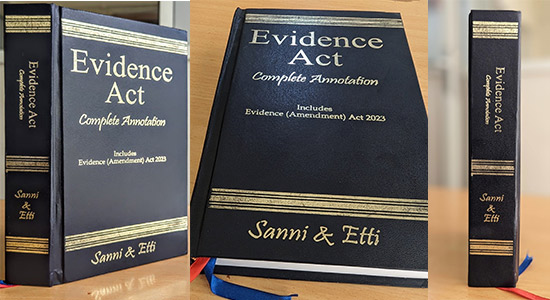
Available now for NGN 40,000 at ASC Publications, 10, Boyle Street, Onikan, Lagos. Beside High Court, TBS. Email publications@ayindesanni.com or WhatsApp +2347056667384. Purchase Link: https://paystack.com/buy/evidence-act-complete-annotation
______________________________________________________________________ “Enhance Legal Practice With Authoritative Reports” — Alexander Payne Offers Comprehensive Law Reports, Spanning Over A Century Of Nigerian Jurisprudence Interested buyers are encouraged to place their orders and enquiries via:
0704 444 4777, 0704 444 4999, 0818 199 9888
Website: www.alexandernigeria.com
“A Comprehensive Guide To Evidence Law” — Releases Second Edition In Three Volumes, Covering 4,051 Cases
For enquiries and orders, contact: 08035526491 Email: jerryamadisilk@gmail.com
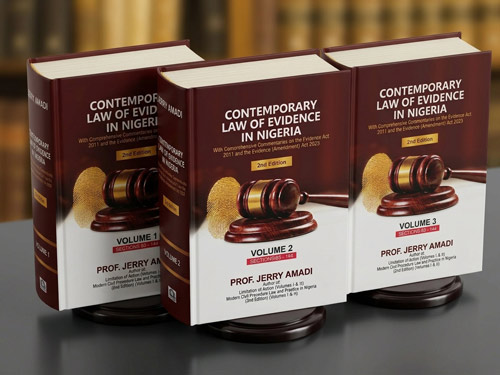 Prof. Jerry Amadi’s Evidence Law, Second Edition (2026), contains 3,314 pages in three volumes, covering the Evidence Act 2011, its 2023 amendment, and 4,051 Nigerian and English cases.