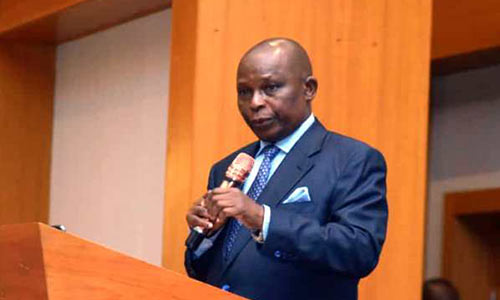
Attorney-General of the Federation and Minister of Justice, Lateef Fagbemi, has said Nigeria has yet to fully implement the provisions of the Administration of Criminal Justice Act, 2015, more than 11 years after its enactment.

Fagbemi said the country’s criminal justice system continued to face delays in criminal proceedings, poor investigations, prolonged pretrial detention, overcrowded correctional facilities and weak coordination among institutions responsible for the administration of justice.
Speaking at the 8th Annual Criminal Law Review Conference organised by the Rule of Law Development Foundation in Abuja on Monday, he said the challenge was no longer necessarily the absence of laws, but the failure to implement existing legislation.
He called for stronger institutional compliance, improved case management, continuous professional training and clear accountability standards to address the gaps in the system.
According to the Attorney-General, effective criminal justice administration depends on cooperation among investigators, prosecutors, courts and correctional institutions, warning that weaknesses in one institution could undermine the work of others.
“Where investigations are poorly conducted, prosecutions suffer. Where prosecutors are inadequately prepared, proceedings are unnecessarily prolonged,” he said.
Fagbemi called for closer cooperation between investigators and prosecutors, particularly in cases involving terrorism, corruption, money laundering, cybercrime and organised crime.
He said early prosecutorial guidance during investigations could help identify evidential gaps, improve case preparation and reduce delays during trials.
He, however, stressed that such cooperation must respect the constitutional and statutory responsibilities of each institution without compromising judicial independence or prosecutorial discretion.
The minister also called for greater use of non-custodial sentencing options provided under the ACJA, including community service, to reduce unnecessary imprisonment and promote rehabilitation.
He questioned whether courts were consistently applying such measures and whether adequate structures existed to supervise offenders serving non-custodial sentences.
Fagbemi also said technological developments, including artificial intelligence, cybercrime and digital financial offences, were creating new challenges for investigators, prosecutors and the judiciary.
According to him, criminal justice institutions needed the technical capacity, knowledge and legal tools required to respond to these developments while upholding the presumption of innocence, the right to fair hearing and due process.
He said the effectiveness of the criminal justice system should be assessed by the ability of Nigerians to access justice and obtain fair and timely outcomes rather than by the number of laws enacted.
Fagbemi cited Section 174 of the 1999 Constitution, as amended, which empowers the Attorney-General of the Federation to institute, take over or discontinue criminal proceedings, subject to considerations of public interest, the interest of justice and the prevention of abuse of legal process.
He also called for improved protection of victims and witnesses, particularly in cases involving terrorism, sexual violence and other serious offences.
According to him, justice should extend beyond the conviction of offenders, with provisions for restitution and compensation implemented to provide victims with redress.
On children’s access to justice, Fagbemi said the Federal Ministry of Justice had developed guidelines for handling cases involving children who come into contact or conflict with the law.
He said the guidelines provided for legal assistance, diversion, alternatives to detention and rehabilitation, with the best interests of the child as a guiding principle.
Fagbemi added that the National Policy on Justice, 2024, recognises justice for children as a dedicated thematic area, while the ongoing review of the Child Rights Act, 2003, provides an opportunity to address gaps in child protection, including online exploitation.
He stressed that children should not be detained in adult custodial facilities and urged police officers, prosecutors and judicial officers to implement existing safeguards.
The Attorney-General said the Federal Government would continue to pursue reforms aimed at improving prosecution, strengthening cooperation with law enforcement agencies and expanding access to justice.
He, however, said responsibility for improving the criminal justice system extended beyond the Federal Government to state governments, the judiciary, the Nigerian Bar Association, law enforcement agencies and civil society organisations.
The conference was held under the theme, “The Future of the Nigerian Criminal Justice System: Institutional Synergy, Policy Reforms and Judicial Readiness.”
[A MUST HAVE] Evidence Act Demystified With Recent And Contemporary Cases And Materials

Available now for NGN 40,000 at ASC Publications, 10, Boyle Street, Onikan, Lagos. Beside High Court, TBS. Email publications@ayindesanni.com or WhatsApp +2347056667384. Purchase Link: https://paystack.com/buy/evidence-act-complete-annotation
______________________________________________________________________ “Enhance Legal Practice With Authoritative Reports” — Alexander Payne Offers Comprehensive Law Reports, Spanning Over A Century Of Nigerian Jurisprudence Interested buyers are encouraged to place their orders and enquiries via:
0704 444 4777, 0704 444 4999, 0818 199 9888
Website: www.alexandernigeria.com
“A Comprehensive Guide To Evidence Law” — Releases Second Edition In Three Volumes, Covering 4,051 Cases
For enquiries and orders, contact: 08035526491 Email: jerryamadisilk@gmail.com
 Prof. Jerry Amadi’s Evidence Law, Second Edition (2026), contains 3,314 pages in three volumes, covering the Evidence Act 2011, its 2023 amendment, and 4,051 Nigerian and English cases.