
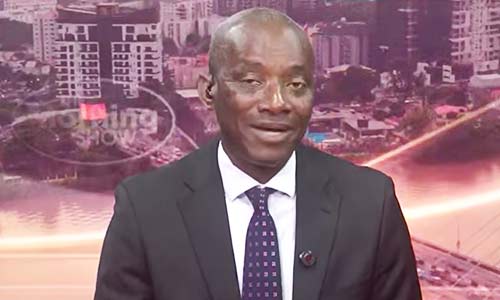
*As Jega Warns Against Opposition Exclusion Ahead Of 2027 Elections

Political analyst, Professor of Law and Director of the Abuja School of Social and Political Thought, Dr Sam Amadi, has maintained that the leadership dispute involving the African Democratic Congress (ADC) is not necessarily an internal party matter beyond judicial intervention, particularly where allegations of violations of the party’s constitution and the Electoral Act are raised.
Amadi, however, cautioned against concluding that the Federal High Court judgment nullifying the leadership of the ADC under former Senate President David Mark and the presidential nomination of Atiku Abubakar was either right or wrong without examining the legal issues involved.
He warned that prolonged litigation over the leadership and presidential candidacy of a major opposition party could create uncertainty for voters and undermine confidence in Nigeria’s electoral process ahead of the January 2027 presidential election.
Speaking during a review of the week’s major political and economic developments on Arise Television, alongside political analyst and former Chairman of the Editorial Board of Daily Trust, Mahmoud Jega, Amadi argued that the judiciary must strike a balance between enforcing electoral laws and protecting the democratic rights of political parties and voters.
The discussion followed the judgment delivered by Justice Peter Lifu of the Federal High Court in Abuja on Thursday, November 5, 2026, which nullified the David Mark-led leadership of the ADC and decisions taken under its authority, including the presidential primary that produced Atiku as the party’s candidate.
The judgment arose from a suit instituted by former ADC Deputy National Chairman, North-East, Nafiu Bala Gombe, who challenged the procedure through which Mark and other members of the party’s caretaker leadership assumed office.
Gombe maintained that the leadership arrangement violated the ADC constitution and applicable electoral provisions.
The ruling has generated controversy, particularly over its implications for the opposition party’s participation in the 2027 general elections and the existence of other judicial decisions concerning the ADC leadership.
Addressing the controversy, Amadi explained that judgments delivered by courts of coordinate jurisdiction could differ because the facts, issues and reliefs presented before them were not necessarily identical.
“Of course, courts of coordinate jurisdiction, Nigerian jurisprudence can take different views,” he said.
However, he emphasised that judges of equal jurisdiction could not exercise appellate authority over one another.
“But they don’t sit on appeal,” he added.
According to him, judicial craftsmanship requires courts to take cognisance of relevant decisions already delivered in related proceedings, particularly where similar legal questions have been considered.
He acknowledged that the existence of earlier Federal High Court decisions apparently recognising the Mark-led leadership had generated debate about whether Justice Lifu’s judgment conflicted with those decisions.
Amadi explained that the earlier proceedings involved preliminary issues, while another aspect of the dispute had reached the Supreme Court before being returned to the trial court for determination.
He maintained that the fact that a dispute concerned political party leadership did not automatically deprive the court of jurisdiction to examine alleged breaches of the law.
“People say it’s internal. It’s not internal,” Amadi stated.
“If a chairman of a party claims that he has lost control contrary to the rules of the party and the Electoral Act, it’s a matter that is judicially manageable.”
The legal scholar explained that where the leadership of a political party was challenged on grounds involving its constitutional procedures and statutory obligations, the court could be called upon to determine whether those requirements had been complied with.
He therefore cautioned against dismissing the ADC litigation solely as an internal political disagreement that should never have been entertained by the judiciary.
According to him, the party needed to approach the dispute with greater legal seriousness because the questions raised were more complex than some public commentary suggested.
“This is not as dismissive as public commentary would want to look like,” he said.
Nevertheless, Amadi declined to endorse or condemn the substantive judgment, stressing that the appellate courts would ultimately determine its correctness.
“The outcome, I can’t say is right or wrong. It’s going to go to appeal,” he stated.
He maintained that the more immediate concern was the uncertainty the litigation could create for the electoral process.
According to him, Nigerians should not approach the final weeks before an important election without knowing which candidates would appear on the ballot.
“We shouldn’t allow these uncertainties to undermine democracy,” he warned.
Amadi explained that judicial decisions were a necessary part of constitutional government and that judges could reach conclusions that were subsequently affirmed or overturned on appeal.
He argued, however, that the democratic consequences of unresolved electoral litigation extended beyond the parties involved in the court proceedings.
According to him, voters needed certainty about the political choices available to them before election day.
“The problem is not about judges taking decisions, because a judge must make a decision, sometimes wrong, sometimes right,” he said.
He warned against a situation in which Nigerians could reach December 30 or the first week of January without knowing whether the ADC would present Atiku or another candidate for the presidential election.
“There’s got to be a cutoff point,” Amadi insisted.
He consequently challenged the leadership of the judiciary, particularly the Chief Justice of Nigeria and the President of the Court of Appeal, to consider how electoral jurisprudence and case management could provide greater certainty concerning candidates before elections.
According to him, the judiciary must ensure that the resolution of electoral disputes does not unnecessarily prolong uncertainty or undermine the rights of voters.
On the ADC’s decision to challenge Justice Lifu’s judgment, Amadi maintained that an appeal was the appropriate legal response.
“Well, that’s the only option open for them,” he said.
He explained that once a court delivers a judgment, the decision carries legal consequences unless altered, suspended or overturned through the appropriate judicial process.
According to him, a judge does not necessarily need to take additional steps to ensure that a judgment affects the parties, because judicial pronouncements can produce immediate legal and political consequences.
He described the situation as particularly difficult for a political party already conducting a nationwide election campaign.
Amadi compared the uncertainty to having a sword hanging over the party’s political activities, warning that an eventual adverse Supreme Court ruling could have far-reaching consequences.
He recalled previous electoral disputes involving Rivers, Zamfara and Plateau states, where judicial decisions affected the emergence or continued recognition of political candidates and elected officials.
The legal scholar maintained that those experiences demonstrated the serious consequences that electoral litigation could have for political parties.
He urged the ADC to continue its campaign while pursuing its appeal, stressing that political confidence and sound legal strategy were both necessary.
According to him, the party should move beyond public political statements and ensure that its legal arguments were carefully coordinated.
He observed that some legal practitioners considered litigation to involve substantial strategic planning alongside knowledge of the law.
Amadi suggested that certain earlier decisions taken by the ADC might have been less effective than they should have been and advised the party to adopt a clearer and more consistent legal approach.
He expressed hope that the Court of Appeal and Supreme Court would consider not only the technical legal questions but also the broader democratic implications of their eventual decisions.
According to him, the courts should examine what democracy requires in circumstances where the outcome of litigation could determine whether a major political party participates in an election.
He argued that Nigeria’s electoral jurisprudence had not always sufficiently reflected the democratic consequences of decisions involving candidates and political parties.
The legal scholar predicted that the approaching election could generate further controversies because of the unresolved legal and political questions.
He warned that the country could face considerable uncertainty if those issues remained unsettled close to election day.
Also speaking, Mahmoud Jega expressed concern that the growing number of legal disputes affecting opposition parties was creating a public perception that the judiciary was being used to weaken political competition.
Jega, who acknowledged that he was not a lawyer and would not attempt a detailed legal interpretation of the judgment, said the wider political implications deserved attention.
According to him, a perception was gaining ground that certain political actors were attempting to eliminate opposition candidates through legal proceedings before voters had an opportunity to make their choices.
He described it as a perception “that there is an orchestrated plot to knock the opposition out of the election beforehand.”
Jega maintained that the controversy surrounding the ADC was not an isolated development.
He referred to earlier leadership disputes within the Peoples Democratic Party (PDP), arguing that judicial interventions had contributed to uncertainty over the party’s recognised leadership.
According to him, many PDP supporters had aligned with the faction associated with Kabiru Tanimu Turaki, which held a convention in Ibadan with the participation of party governors.
He criticised subsequent legal developments affecting the party’s leadership and alleged that some political actors were seeking to weaken the opposition for the benefit of the ruling All Progressives Congress (APC).
Jega also referred to disputes involving the Labour Party and another opposition party, maintaining that the cumulative effect of such controversies was creating suspicion about the fairness of political competition.
He argued that the timing of the ADC judgment was particularly troubling because the 2027 presidential election was approaching.
According to him, the ruling APC was facing dissatisfaction among voters in parts of northern Nigeria, where Atiku’s candidature could attract support from citizens unhappy with the government’s performance.
Jega suggested that removing Atiku from consideration could reduce the electoral options available to dissatisfied voters.
He also questioned the sudden prominence of Nafiu Bala Gombe in the ADC leadership controversy.
“I have been reporting politics in Nigeria for more than 30 years, I never heard of him,” Jega stated.
He alleged that Gombe appeared to be receiving support from influential interests, although he did not provide independently verifiable evidence establishing political sponsorship of the litigation.
Jega contrasted Gombe’s emergence with the support he believed the David Mark-led ADC had attracted across the country.
According to him, the judgment’s implications extended beyond Atiku because it affected decisions and nominations made under the disputed leadership.
He argued that if the judgment remained effective, it could affect ADC candidates for legislative and governorship elections, as well as the presidential election.
Jega warned that the exclusion of candidates through prolonged court disputes could create a perception among ordinary Nigerians that electoral outcomes were being determined before voting commenced.
“The impression that you are giving the ordinary Nigerians is that the elections have been rigged beforehand,” he said.
He cautioned that such perceptions could produce widespread disenfranchisement, political frustration and other complications.
The political analyst also drew lessons from Nigeria’s history, arguing that leaders had previously considered the wider consequences of decisions affecting political participation.
He recalled an account attributed to former military Head of State Olusegun Obasanjo concerning the registration of the Peoples Redemption Party (PRP) during the transition programme of the late 1970s.
According to Jega, the Supreme Military Council had considered the consequences of excluding a party with strong support in Kano, despite concerns about its compliance with the relevant registration requirements.
He also referred to the registration of the Alliance for Democracy during the transition to civilian rule under General Abdulsalami Abubakar in 1999.
Jega maintained that political decisions affecting the participation of parties with substantial public support could have serious consequences in a country with Nigeria’s ethnic and regional sensitivities.
“These things have consequences,” he warned.
The programme subsequently examined concerns surrounding INEC’s preliminary voters’ register, following the identification of questionable voter registration records through biometric screening.
The electoral commission had disclosed that its Automated Biometric Identification System flagged approximately 1.5 million registration records for further examination, with more than 1.2 million confirmed invalid and removed, while hundreds of thousands required additional verification.
Reacting to the development, Jega argued that the manipulation of voter registration records was largely driven by politicians seeking electoral advantages rather than by INEC acting as an institution.
According to him, local political actors had historically attempted to inflate voter numbers by registering fictitious individuals or facilitating multiple registrations.
He explained that politicians determined to deliver particular wards or local government areas sometimes employed fraudulent registration practices to increase their perceived electoral strength.
Jega recalled that during the 2011 biometric voter registration exercise, approximately two million cases of multiple registration were identified.
However, he said only about 200 people were prosecuted because INEC had indicated that it lacked sufficient capacity to pursue all the cases.
According to him, modern biometric screening technology had improved the ability of the electoral commission to identify suspicious registrations.
He maintained that the discovery of questionable records was disturbing but should not automatically be treated as proof that INEC itself had deliberately created them.
“Personally, I don’t think it is the fault of INEC. It is the shenanigan of the politicians, especially the local ones,” he said.
Amadi, however, disagreed with Jega’s assessment, arguing that the irregularities raised serious questions about INEC’s internal controls, independence and capacity to protect the integrity of the electoral process.
Asked whether the discoveries demonstrated effective verification or exposed deeper weaknesses in the registration system, Amadi said he was more concerned about how the questionable entries entered the database in the first place.
“I think it’s the latter,” he stated.
He suggested that the nature of some of the suspicious records, including images described as artificial intelligence-generated, indicated a more systematic process than conventional attempts by politicians to inflate voter numbers manually.
According to him, the use of digitally manipulated information raised questions about the security and reliability of INEC’s registration system.
“As a former regulator, I always blame the regulator,” Amadi said.
He maintained that the electoral commission had the responsibility to anticipate and prevent attempts by politicians and other actors to compromise its systems.
Recalling an earlier conversation with the INEC Chairman, Amadi said he had warned that the Commission would have to confront politically influential individuals seeking to undermine electoral integrity.
He also alleged that dishonest conduct could occur among personnel within the electoral institution itself.
The legal scholar criticised what he described as INEC’s defensive response to concerns about the voters’ register.
According to him, the Commission should have been more transparent about the problems identified, the measures taken to correct them and the safeguards being introduced to prevent a recurrence.
He argued that the responsibility of the electoral regulator was to demonstrate independence, transparency and accountability rather than defend the government or political interests.
“It’s not INEC’s job to defend government,” Amadi stated.
He maintained that the Commission should openly acknowledge irregularities and explain the steps being taken to address them.
Amadi also criticised what he considered delays in the publication of the electoral timetable and the handling of previous controversies concerning voter information.
He referred to a past incident involving the disclosure of a voter’s details and questioned whether INEC’s public responses had adequately demonstrated a commitment to protecting its processes.
According to him, the growth in the number of registered voters from approximately 93 million to 103 million also required careful examination.
He maintained that the credibility of the registration database should be assessed through independent professional verification.
Amadi consequently called for an international professional audit of INEC’s technological systems before the 2027 general elections.
He said the audit should examine the reliability of the registration infrastructure, the integrity of voter data and the safeguards against fraudulent entries.
The legal scholar also advocated professional certification of the electoral commission’s systems and sustained engagement with political parties to address concerns.
According to him, INEC should reassure stakeholders through transparent procedures rather than adopt an approach that could be perceived as defensive or dismissive.
The discussion later turned to President Bola Tinubu’s request for fresh external borrowing of approximately $7.7 billion from the National Assembly.
Jega criticised the repeated requests for external loans, describing the latest development as damaging to the government’s public image.
“It is a public relations disaster,” he said.
He argued that borrowing additional funds while Nigerians continued to face severe economic hardship could raise questions about the government’s management of public finances.
Drawing on cultural attitudes towards indebtedness in northern Nigeria, Jega said excessive borrowing was often viewed negatively because of the burden it placed on borrowers.
He questioned why the Federal Government continued to seek additional loans despite the removal of petroleum subsidies, which had been presented as a measure intended to improve public finances.
According to him, Nigerians expected the savings associated with the subsidy removal to reduce the need for repeated borrowing.
He warned that loans must eventually be repaid with interest and that the obligations could extend over many years.
Jega maintained that the financial consequences would ultimately be borne by Nigerians, including future generations.
Amadi also questioned the borrowing request, although he acknowledged that governments could legitimately argue that additional debt was necessary to finance development.
He explained that an assessment of Nigeria’s debt burden should go beyond the debt-to-Gross Domestic Product ratio.
According to him, greater attention should be paid to the relationship between government revenue and debt servicing obligations.
He argued that Nigeria’s debt-service-to-revenue position remained a serious concern.
Amadi identified two central issues in evaluating the proposed borrowing: the sustainability of the debt and the purposes for which borrowed funds would be used.
He referred to the Debt Management Office Act and the Fiscal Responsibility Act, maintaining that the National Assembly was expected to exercise effective oversight over proposed borrowing.
According to him, lawmakers should examine the projects to be financed and the relevant cost-benefit analyses before approving additional debt.
He criticised what he considered inadequate legislative scrutiny and argued that borrowing proposals should clearly identify the expected economic and social returns.
Amadi also expressed concern about the level of implementation of previous budgets, alleging that performance over three budget cycles had been approximately 10 per cent or less in the areas he was discussing.
He questioned whether the public was receiving sufficient value from government expenditure and borrowing.
According to him, while vehicles and other visible political activities were becoming prominent ahead of the elections, Nigerians were not seeing corresponding improvements in public transportation and other essential services.
The legal scholar warned that borrowing without efficient implementation of development projects would impose costs on future generations without delivering the expected benefits.
“We are incurring debts for the future but also wasting the resources. So it’s a double whammy for the future,” Amadi said.
“You’re borrowing more, you’re going to pay more, but you are getting less.”
The discussion highlighted differing perspectives on the legal and political challenges confronting Nigeria ahead of the 2027 elections.
While Amadi maintained that courts could properly intervene in party leadership disputes involving alleged violations of electoral laws, he warned against prolonged uncertainty over candidates and urged the judiciary to give greater consideration to the democratic consequences of electoral litigation.
Jega, on the other hand, expressed concern that repeated court interventions affecting opposition parties were strengthening public perceptions of political interference and could undermine confidence in the electoral process.
Both analysts also questioned aspects of Nigeria’s electoral and economic governance, although they differed on whether INEC or political actors should bear greater responsibility for irregularities in the voters’ register.
[A MUST HAVE] Evidence Act Demystified With Recent And Contemporary Cases And Materials
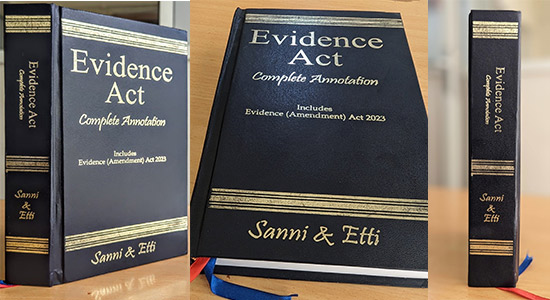
Available now for NGN 40,000 at ASC Publications, 10, Boyle Street, Onikan, Lagos. Beside High Court, TBS. Email publications@ayindesanni.com or WhatsApp +2347056667384. Purchase Link: https://paystack.com/buy/evidence-act-complete-annotation
______________________________________________________________________ “Enhance Legal Practice With Authoritative Reports” — Alexander Payne Offers Comprehensive Law Reports, Spanning Over A Century Of Nigerian Jurisprudence Interested buyers are encouraged to place their orders and enquiries via:
0704 444 4777, 0704 444 4999, 0818 199 9888
Website: www.alexandernigeria.com