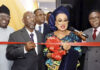
Nigerian-British international law scholar, Professor Dapo Akande, has been elected a judge of the International Court of Justice (ICJ), the principal judicial organ of the United Nations, marking a major milestone in his legal career and drawing congratulations from Nigeria and the United Kingdom.

Akande, a Professor of Public International Law at the University of Oxford, emerged successful in the election conducted on Tuesday, November 3, 2026, by the United Nations General Assembly and Security Council.
The Nigerian-born legal scholar was nominated by the United Kingdom and will serve a nine-year term beginning on February 6, 2027, and ending in February 2036.
His election restores the United Kingdom’s presence on the 15-member Court after nearly a decade without a British judge, while also drawing attention to the growing international recognition of legal professionals of Nigerian origin.
Akande currently holds the prestigious position of Chichele Professor of Public International Law at the University of Oxford. He is also a Fellow of All Souls College, Oxford, and an elected member of the United Nations International Law Commission.
Reacting to his election, Akande expressed gratitude to the countries that supported his candidature and pledged to uphold the principles of judicial independence, impartiality and faithful application of international law.
“I am deeply honoured to be elected to the International Court of Justice,” he said.
“I am incredibly grateful to all the states that have put their faith in me. I pledge to serve with independence and to deciding cases on the basis of a faithful and impartial application of the law. I look forward to contributing to the ICJ’s vital work in helping to resolve disputes by peaceful means, alongside the other colleagues elected today.”
The professor’s election follows an international legal career spanning nearly three decades, during which he has distinguished himself in legal scholarship, international litigation and advisory work for governments and international organisations.
Akande obtained his Bachelor of Laws degree from the University of Ife, now Obafemi Awolowo University, in 1992 and qualified as a barrister and solicitor in Nigeria in 1993.
He subsequently pursued postgraduate studies at the London School of Economics and Political Science, obtaining a Master of Laws degree in 1994, before developing an academic and professional career in the United Kingdom.
Over the years, Akande has held academic appointments at leading universities and established himself as a specialist in public international law, international criminal law, international humanitarian law and the settlement of disputes between states.
His professional experience includes advising governments and international organisations and participating in proceedings before several international courts and tribunals.
He has acted as counsel, adviser and expert in matters before the International Court of Justice and other international judicial bodies, bringing practical litigation experience alongside his academic expertise.
Akande is also a member of the United Nations International Law Commission, the body responsible for promoting the progressive development and codification of international law.
His election to the ICJ represents a transition from his previous roles as an international law scholar, advocate and adviser to serving as an independent member of the world’s principal intergovernmental judicial institution.
Reacting to the development, Nigeria’s Permanent Representative to the United Nations, Ambassador Jimoh Ibrahim, congratulated President Bola Ahmed Tinubu on Akande’s emergence.
Ibrahim described the election as an important achievement for Nigeria’s international standing and recognition within the United Nations system.
The ambassador said the development demonstrated the contributions of Nigerian professionals to international institutions and strengthened the country’s reputation in global legal and diplomatic affairs.
He also stated that Nigeria had only one major objective left in what he described as its ambition to achieve full representation and influence within the United Nations system.
According to him, securing membership of the United Nations Security Council remained the outstanding milestone in what he termed Nigeria’s 100 per cent UN ambition.
Although Akande’s Nigerian background has attracted celebrations in Nigeria, his candidature was formally supported by the United Kingdom. As an ICJ judge, he will serve independently and will not act as a representative of either government.
The election also represents a diplomatic achievement for the United Kingdom, which had intensified efforts to secure the return of a British judge to the Court.
Britain had been without a judge on the ICJ since 2017, when Sir Christopher Greenwood failed to secure re-election after losing to an Indian candidate.
The outcome ended Britain’s longstanding presence on the Court and generated discussions about the country’s diplomatic standing and influence within international institutions.
Almost nine years later, Akande’s successful election restores the British presence on the ICJ bench.
The United Kingdom’s Lord Chancellor and Justice Secretary, Alex Norris, had actively supported Akande’s candidature, including through diplomatic engagement with United Nations member states.
Ahead of the election, Norris described Akande as a highly qualified international lawyer whose experience, independence and judgment would strengthen the Court.
“At a moment when international law is under pressure, Professor Akande brings the independence, legal rigour, judgment and breadth of perspective that the court needs.
“He would make a formidable contribution to its work,” Norris said.
The British official also reaffirmed his country’s commitment to international judicial institutions and the peaceful settlement of disputes through international law.
He maintained that judicial institutions must be able to exercise their responsibilities independently and impartially without interference.
Norris further emphasised that the United Kingdom had accepted the compulsory jurisdiction of the International Court of Justice and encouraged other countries to consider accepting the Court’s jurisdiction in accordance with its Statute.
The International Court of Justice, headquartered in The Hague, Netherlands, is composed of 15 judges elected for nine-year terms by the United Nations General Assembly and Security Council.
To secure election, a candidate must obtain an absolute majority of votes in both organs, which conduct their voting independently.
The Court is responsible for resolving legal disputes submitted by states in accordance with international law and issuing advisory opinions on legal questions referred to it by authorised United Nations organs and agencies.
Unlike domestic courts, the ICJ primarily addresses disputes between sovereign states, including matters involving territorial sovereignty, treaty obligations, diplomatic relations and the interpretation of international law.
The Court has attracted international attention through proceedings concerning conflicts, territorial disputes and the legal responsibilities of states.
Among the matters that have brought the ICJ into global focus are proceedings relating to the occupied Palestinian territories and the longstanding dispute over the Chagos Islands in the Indian Ocean.
The Chagos dispute involved the United Kingdom and Mauritius, with the ICJ issuing an advisory opinion in favour of completing the decolonisation of Mauritius.
The dispute subsequently became the subject of negotiations between the two countries, although the implementation of their agreement has faced further political and legislative challenges.
The Court’s role in such matters underscores the importance of judicial independence and the application of international law in resolving disputes that may have substantial diplomatic and geopolitical consequences.
Against this background, Akande’s election comes at a time when international judicial institutions are facing increased scrutiny over their ability to address complex disputes involving states.
His previous appearances as counsel and adviser before international courts provide him with professional experience in proceedings of the kind he will now be expected to determine as a judge.
The Oxford professor’s election has consequently been welcomed as recognition of his longstanding contributions to international legal scholarship and practice.
For Nigeria, the development has also highlighted the international achievements of legal professionals who began their education and careers in the country’s legal system.
Akande’s journey from the University of Ife and the Nigerian Law School to the University of Oxford and the International Court of Justice reflects a career spanning Nigerian legal education, international academia and global judicial practice.
With his nine-year tenure scheduled to begin on February 6, 2027, Akande will join the judges responsible for interpreting international law and adjudicating disputes between states.
He has pledged to discharge those responsibilities independently, impartially and in accordance with the law, while contributing to the peaceful resolution of international disputes.
[A MUST HAVE] Evidence Act Demystified With Recent And Contemporary Cases And Materials

Available now for NGN 40,000 at ASC Publications, 10, Boyle Street, Onikan, Lagos. Beside High Court, TBS. Email publications@ayindesanni.com or WhatsApp +2347056667384. Purchase Link: https://paystack.com/buy/evidence-act-complete-annotation
______________________________________________________________________ “Enhance Legal Practice With Authoritative Reports” — Alexander Payne Offers Comprehensive Law Reports, Spanning Over A Century Of Nigerian Jurisprudence Interested buyers are encouraged to place their orders and enquiries via:
0704 444 4777, 0704 444 4999, 0818 199 9888
Website: www.alexandernigeria.com