*Warns Of Electoral Manipulation Ahead Of 2027

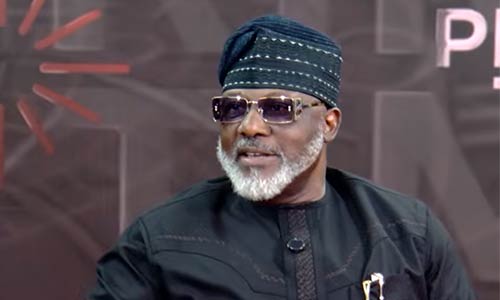
Former Kogi West Senator and chieftain of the African Democratic Congress (ADC), Dino Melaye, has accused the Independent National Electoral Commission (INEC) of secretly creating 453 additional polling units and failing to address alleged irregularities in the preliminary voters’ register ahead of the 2027 general elections.
Melaye alleged that the register contained repeated photographs attached to different names and unexplained increases in registered voters in certain polling units, describing the developments as possible signs of what he called “anticipatory rigging.”
Speaking during an interview on Arise Television, the former lawmaker questioned INEC’s credibility, accused the ruling All Progressives Congress (APC) of intimidating opposition members and criticised the National Assembly over what he described as its failure to exercise effective oversight of President Bola Tinubu’s administration.
He also raised concerns about the Federal Government’s servicewide vote allocations, which he said amounted to more than ₦26 trillion between 2024 and 2026.
Melaye, who was identified during the interview as Deputy Director-General of the ADC Campaign Council, argued that an electoral body entrusted with enforcing electoral laws must demonstrate strict compliance with those laws.
He accused INEC of breaching provisions of the Electoral Act concerning the publication of the voters’ register, insisting that such alleged violations raised questions about the commission’s ability to conduct credible elections.
“When you have an organization that is a law-breaker, you have an institution that has broken the very law she is supposed to implement, that institution has an integrity question,” he said.
“If INEC already has contravened the provisions of our laws, what integrity does it have to conduct a transparent election?”
Melaye specifically questioned the statutory timeline for publishing the voters’ register, arguing that INEC had failed to comply with what he described as the 90-day deadline.
According to him, the commission could not rely on the ongoing verification and cleanup of the register as justification for failing to meet its legal obligations.
“There is no provision for cleaning up. The law gave 90 days. I’m a lawyer. 90 days is 90 days irrespective of situation, circumstances, even if we are going to the situation of war,” he maintained.
The former senator disclosed that the ADC was considering challenging the alleged violation in court.
“That will be tested in court. I won’t say more than that,” he said when asked whether his party would institute legal proceedings.
However, INEC has maintained that the register currently available for public inspection is preliminary and subject to verification, claims, objections and corrections before certification of the final register.
The commission has also stated that it expects to complete the cleanup exercise and publish the final register on December 15, 2026.
Turning to alleged discrepancies in the voter database, Melaye claimed that a polling unit associated with the Governor of Edo State had recorded an extraordinary increase in the number of registered voters.
He alleged that the polling unit had slightly more than 400 registered voters during the governorship election held about two years earlier but now contained more than 4,000 names in the preliminary register.
According to him, the increase was over 1,000 per cent and required an explanation from INEC.
The former senator argued that the scale of the increase could not easily be explained by population movement or the presence of internally displaced persons in the area.
He said members of his party had examined the entries and subjected photographs attached to the registration records to what he described as a special technological assessment.
According to Melaye, the exercise revealed repeated photographs used for different voter identities.
He alleged that one particular photograph appeared nine times under different names.
“At the end of the day the team failed the integrity test, that is there’s AI imputation by 89%,” he stated.
The former senator maintained that the findings raised questions about the accuracy of the register and the effectiveness of INEC’s identity verification systems.
However, the methodology used by his team to arrive at the claimed 89 per cent figure was not provided in the account of the interview. The allegation that one photograph appeared nine times under different names also requires independent verification.
Melaye accused the commission of failing to prevent questionable entries from entering the voter database.
He acknowledged that INEC had admitted the presence of irregular photographs and was working to remove affected records but argued that the commission should have detected and prevented the problem earlier.
“To allow it happen in the first place shows incapacitation,” he said.
“It shows that there is no capacity to check fraud.”
He maintained that the decision to address the irregularities after public complaints raised concerns about INEC’s technical preparedness.
The allegations come amid controversy surrounding artificial intelligence-generated images and other suspicious entries discovered in INEC’s preliminary Register of Voters.
The commission’s Director of Information and Communication Technology, Dr Lawrence Bayode, had explained that some registration officers allegedly used their authorised access to introduce questionable records into the database.
Bayode said some of the photographs appeared to have been generated using artificial intelligence, while others resulted from poor registration procedures.
He explained that INEC’s Automated Biometric Identification System had identified suspicious entries and that the commission was taking steps to remove invalid records.
In a separate clarification, Bayode disclosed that 268 records had been flagged for suspected AI-generated photographs or other irregularities requiring further examination.
He maintained that genuine photographs merely enhanced by artificial intelligence would not automatically lead to the removal of legitimate voters, while records containing entirely fabricated images would be addressed through the verification process.
The preliminary register was displayed physically between October 9 and 15 before being published online on October 26, allowing members of the public to identify discrepancies.
Melaye also raised a separate allegation concerning the number of polling units nationwide.
He claimed that INEC had secretly created 453 additional polling units without conducting the consultations he considered necessary.
“INEC cannot create polling units in secrecy,” he declared.
According to him, the commission’s officials continued to publicly refer to approximately 176,000 polling units despite the alleged creation of new ones.
“As I speak to you today, INEC staff are still addressing the media and still quoting 176,000 plus polling units. Meanwhile, INEC has created new polling units to the tune of 453,” he alleged.
Melaye contrasted the development with the earlier expansion of polling units, which he said followed consultations involving governors, traditional rulers, labour organisations, farmers’ associations and other stakeholders.
He argued that the establishment of polling units required transparency and public engagement to prevent suspicion concerning their locations and intended purposes.
The former senator further claimed that some INEC personnel he contacted were unaware of the alleged creation of the additional units.
According to him, certain previously created polling units had not been adequately populated with voters.
He cited Kogi State, where he said some units were popularly described as “baby units” because they contained only about 10 to 15 registered voters.
Melaye questioned why additional polling units would be required when some existing units allegedly had very small voter populations.
He also claimed that some of the newly identified locations were concentrated in areas associated with particular individuals, including parts of Lagos and Rivers states.
He suggested that INEC might attempt to justify the changes by referring to Supreme Court decisions concerning constituency restoration.
However, he argued that implementing such decisions would require constituency delineation rather than the secret creation of polling units.
“Why will INEC secretly create polling units if it is not anticipatory rigging that is going on?” he asked.
He added that the ADC would closely monitor INEC and the Federal Government throughout preparations for the elections.
“We are following INEC and this government bumper to bumper,” he declared.
The allegation concerning the creation of 453 additional polling units has not been independently established.
INEC’s published national polling unit database continues to list 176,846 polling units across the 36 states and the Federal Capital Territory.
The commission had previously explained that the major nationwide expansion of polling units increased the number from approximately 119,974 to 176,846, following consultations and the conversion of existing voting points.
No official confirmation of the specific 453 additional polling units alleged by Melaye was established from the information reviewed.
Beyond the voters’ register and polling unit controversy, Melaye accused the APC of orchestrating intimidation and attacks against opposition members.
He alleged that ADC supporters and candidates had faced attacks in different parts of the country, including incidents involving persons associated with the party’s political activities in Sokoto, Kaduna and Kano states.
He claimed that some supporters had been killed, others injured and property destroyed.
The former senator warned that the ADC would not remain passive in the face of further attacks.
“But I want to announce to them that this time around, all die and die,” he stated.
When asked to explain the statement, Melaye said he meant that members of the opposition party would defend themselves against violence.
“It means we will defend ourselves. The ADC will not sit, keep quiet and allow APC to continue,” he said.
He further warned that the opposition would not necessarily limit its response to legal proceedings.
“We are announcing to Tinubu and the APC that this time around we will defend ourselves. Let them not think we are going to court. We will not go to court. We will settle this matter on the streets,” he declared.
The programme’s presenter cautioned against political violence and stressed that no party had the right to attack its opponents.
Responding, Melaye maintained that the ADC was a nonviolent political party and that his remarks concerned the right of individuals to defend themselves against unlawful attacks.
He argued that self-defence was a constitutional right and should not be confused with initiating violence.
The former senator also alleged that his party had received intelligence suggesting that the APC might attempt to prevent ADC aircraft from travelling to Sokoto for political activities.
He did not present independent evidence supporting the allegation during the interview.
“The office of the citizen of the Republic of Nigeria is greater than the office of the president,” he stated.
The allegations of attacks on opposition members, the alleged role of the APC and the claim concerning possible interference with ADC travel arrangements have not been independently established in the material reviewed.
Melaye also criticised the Federal Government’s financial management, particularly the growth of servicewide vote allocations in successive national budgets.
He claimed that more than ₦26 trillion had been allocated to servicewide votes between 2024 and 2026, questioning the level of legislative oversight and public accountability surrounding the funds.
The former senator cited allocations of approximately ₦4 trillion in 2024, ₦9 trillion in 2025 and ₦12 trillion in 2026.
He compared the figures with an allocation of slightly above ₦2 trillion during the administration of former President Muhammadu Buhari.
Melaye argued that the increasing allocations raised concerns about government spending priorities and the extent to which the National Assembly monitored the utilisation of public funds.
“I have not seen a kobo return back to government coffers from the 2024 and 2025 servicewide vote,” he said.
He described the servicewide vote as a special budgetary arrangement that, in his view, provided opportunities for misuse where legislative scrutiny was inadequate.
However, the Budget Office has explained that servicewide votes include provisions for identifiable government obligations, including personnel-related expenditure, pensions, security operations and other centrally managed commitments.
The existence of budgetary allocations does not establish that the entire appropriated sums were released or spent.
Melaye acknowledged the Budget Office’s explanation but maintained that it did not remove the need for proper scrutiny and accountability.
He also questioned the independence of the National Assembly, accusing its leadership of failing to provide the constitutional checks and balances required in a presidential system of government.
According to him, the relationship between the executive and legislative arms had become excessively close.
He described the National Assembly as having become “a parastatal of the Villa” and “a department of the Presidency.”
Melaye contrasted the current legislature with the Eighth National Assembly, in which he served as a senator.
He argued that the leadership of the Eighth Senate exercised greater independence because its principal officers emerged through decisions made by lawmakers rather than presidential influence.
“We rejected ministers during our time and the president was forced to replace those ministers. We rejected ambassadors,” he recalled.
The former senator also criticised the amendment of the Police Act concerning the tenure of the Inspector-General of Police.
He alleged that the legislative process was hurried and questioned whether adequate public participation and scrutiny accompanied the amendment.
He characterised the process as a serious departure from the principles of parliamentary independence.
Melaye further referred to his October 16 ultimatum to the National Assembly, under which he gave lawmakers 14 days to address concerns about legislative oversight or face a proposed “Occupy National Assembly” protest.
He said the ADC was monitoring developments and explained that the period under consideration was tied to the resumption of legislative activities following the National Assembly’s recess.
The former senator also questioned the speed at which some executive borrowing requests had been approved.
He argued that legislative approval of government proposals should follow independent scrutiny rather than automatic acceptance.
Melaye maintained that an ADC administration would respect the independence of the legislature and would not seek to determine who emerged as Senate President.
He said the opposition party would support an arrangement in which the National Assembly exercised its constitutional responsibilities without interference from the executive.
His remarks come as INEC intensifies preparations for the January 16, 2027, presidential and National Assembly elections and the February 6 governorship and State Houses of Assembly elections.
The commission has maintained that it is reviewing objections to the preliminary register and correcting identified irregularities before the final voters’ register is certified.
Although INEC has acknowledged problems involving suspicious photographs and questionable registration records, that acknowledgement does not establish Melaye’s separate allegations of deliberate electoral manipulation, secret creation of 453 polling units or an 89 per cent rate of AI-related irregularities.
The ADC chieftain, however, insisted that the alleged discrepancies and other concerns warranted public scrutiny and possible judicial intervention.
He maintained that the credibility of the 2027 elections would depend on strict compliance with electoral laws, the accuracy of the voters’ register, transparency in polling unit administration and the ability of political parties to participate without intimidation.
[A MUST HAVE] Evidence Act Demystified With Recent And Contemporary Cases And Materials

Available now for NGN 40,000 at ASC Publications, 10, Boyle Street, Onikan, Lagos. Beside High Court, TBS. Email publications@ayindesanni.com or WhatsApp +2347056667384. Purchase Link: https://paystack.com/buy/evidence-act-complete-annotation
______________________________________________________________________ “Enhance Legal Practice With Authoritative Reports” — Alexander Payne Offers Comprehensive Law Reports, Spanning Over A Century Of Nigerian Jurisprudence Interested buyers are encouraged to place their orders and enquiries via:
0704 444 4777, 0704 444 4999, 0818 199 9888
Website: www.alexandernigeria.com