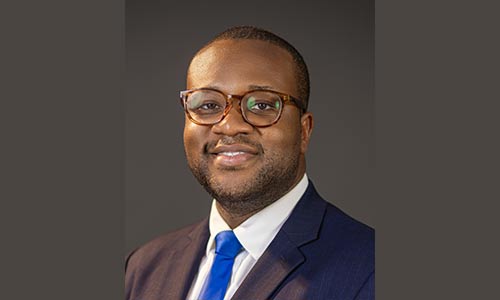
By Joshua Nwachukwu Esq[1]

By now, many of us would have heard of the Bill passed by the Ogun State House of Assembly which, under the guise of reducing maternal morbidity and mortality, seeks to legalise abortion in Ogun State.
For those of us who don’t know what abortion is, abortion is not just the death of an unborn child, it is INTENTIONAL killing of an unborn child either through surgical or non-surgical means, for whatever reason the mother wants. Little wonder, it is not like any other medical procedure.
Upon learning of the Bill, I began searching for a copy. Unfortunately, as is often the case with proposed legislations in Nigeria, it is easier for a camel to pass through a needle’s eye, than for one to get a copy of a proposed bill or passed legislation.
However, after considerable searching, I eventually got a copy.
Having read the Bill analytically several times, I became convinced that the bill requires serious scrutiny, as it raises substantial legal, medical, religious and ethical questions which should prevent Governor Dapo Abiodun from giving his assent.
The Bill’s stated objective of reducing maternal mortality is undoubtedly important. But that objective, however laudable, does not automatically justify every provision contained in the proposed legislation.
In this article, I will focus on one particularly troubling aspect of the Bill: conscientious objection.
One may ask, what is conscientious objection? Conscientious objection is the refusal of a health care professional to provide a legal “medical” service or treatment because of personal or religious grounds.
One of such practice which many physicians object to is abortion.
When a doctor opts out of doing a procedure based on personally held moral principles, they are not making a decision for the patient but rather for themselves and this right is recognised under our laws and several international treaties.
In Nigeria, section 38 of the Constitution of the Federal Republic of Nigeria, protects freedom of thought, conscience and religion. Article 18 of the United Nations’ Universal Declaration of Human Rights (UDHR), provides that “Everyone has the right to freedom of thought, conscience and religion” and “to manifest his religion or belief in teaching, practice, worship and observance.”
It is against this background that section 11 of the Ogun State Safe Termination of Pregnancy Bill, 2026, which provides for conscientious objection must be examined.
At first glance, section 11(1) appears to recognise this constitutional protection. It provides: “No individual health care provider shall be under any legal duty to participate directly in the provision of abortion services if the provider objects on grounds of conscience.”
That sounds reassuring. A doctor who believes, on moral or religious grounds, that deliberately terminating an unborn child’s life is wrong should not ordinarily be compelled to participate in a procedure that violates that conviction.
This protection is still limited, as it does not protect the rights of non-health workers who may be required to be involved in the termination of a pregnancy in an administrative capacity or non-direct way.
But reading the subsequent provisions, and the apparent protection begins to look considerably less reassuring.
Section 11(2) provides that: “The right to conscientious objection shall not apply where the procedure is necessary to save the life of the woman or prevent serious injury to her health.”
Although this sub-section seeks to provide an important distinction between requiring a doctor to participate in an elective abortion and requiring a doctor to provide necessary emergency treatment to a woman whose life is in danger. There is ambiguity as to what it means to “save the life of the woman” and to prevent serious injury to her health” as these cases may not really be medical emergency. What constitutes “serious injury” to a woman’s health? Must the danger be immediate? What clinical threshold must be satisfied? Who determines whether the procedure is necessary, and what happens when medical professionals disagree?
The Bill does not appear to provide sufficient precision on these questions. A provision that limits a constitutionally protected freedom should not leave its boundaries so uncertain that healthcare professionals are unable to determine when their conscientious objection will be respected and when it will expose them to disciplinary consequences.
The next provision is even more troubling.
Section 11(3) states: “A health care provider who objects on grounds of conscience shall, in writing, refer the woman to another provider or facility where such services may be accessed without delay.”
In other words, the doctor who conscientiously objects to participating in an abortion must nevertheless facilitate access to the very procedure to which the doctor objects.
A referral obligation is automatically unconstitutional because it conflicts with a practitioner’s moral convictions.
But it is subsection (4) that raises perhaps the most significant concern.
It provides: “Conscientious objections cannot be exercised by health institutions and all approved public facilities must ensure availability of qualified personnel to provide lawful abortion services.”
Let us pause to consider what this means in practice.
The Bill recognises the conscience of an individual healthcare provider but expressly denies that protection to a healthcare institution. Consequently, a religiously affiliated hospital cannot invoke institutional conscientious objection to decline participation in abortion services.
Consider Sacred Heart Hospital, Lantoro, and tens of other religiously owned or operated healthcare institutions, by this Bill they will be required to carry out abortion. If they don’t provide, will the Government shut them down?
Approved public facilities, meanwhile, would be required to ensure that qualified personnel are available to provide lawful abortion services. There is also a possibility that having conscientious objection may be a litmus tests for employment in government run facilities.
This is not merely a question of whether an individual doctor should be permitted to say no. It is also a question of whether the State may compel an institution to organise its services in a manner that contradicts its deeply held religious convictions.
Why should the conscience of an individual doctor receive express recognition while the religious identity and ethical commitments of the institution in which that doctor works receive none?
The concerns surrounding section 11 do not end with constitutional freedom of conscience. They also invite scrutiny of the professional obligations governing medical practitioners in Nigeria.
The applicable Rules of Professional Conduct for Medical and Dental Practitioners contain provisions relevant to this discussion.
Rule 9(g) provides that practitioners are at liberty to choose whom they will serve, while requiring them to endeavour to render service without discrimination in emergencies, to the best of their ability and according to the prevailing circumstances.
Rule 9(h) provides that practitioners have discretion and authority, free from unnecessary non-medical interference, in determining when to give their services and the nature of care to be given to a patient under their care, and that they must accept responsibility for their actions.
These provisions are relevant because they recognise professional judgment, the practitioner’s responsibility for the care provided and the importance of avoiding unnecessary non-medical interference in clinical decisions.
They do not, by themselves, establish an unlimited right to refuse every medical procedure. But they raise legitimate questions about whether the Bill adequately respects the professional autonomy of medical practitioners and the ethical considerations informing their decisions.
Rule 60 is also relevant. It addresses the professional disciplinary consequences associated with criminal abortion and the improper procurement or attempted procurement of an abortion or miscarriage.
Legalising abortion while restricting the ability of doctors and religious healthcare institutions to act in accordance with their convictions raises a question that the Ogun State House of Assembly and the Governor must answer.
Indeed, these questions underscores the need for the Bill to be evaluated alongside other existing laws and professional codes governing medicine in Nigeria.
Although Nigeria is a secular country, we are majorly a people of faith and a society that takes freedom of conscience and religion seriously cannot recognise that freedom in principle while rendering it ineffective in practice.
Based on the above, I think that not only should Governor Abiodun withhold his assent but he should request for the withdrawal of the bill, because a law meant to protect women should not be built by sacrificing the freedoms of those who care for them.
By Joshua Nwachukwu Esq[1], [1] Nwachukwu is a lawyer and writer.Can be reached at nwachukwujo@gmail.com
[A MUST HAVE] Evidence Act Demystified With Recent And Contemporary Cases And Materials
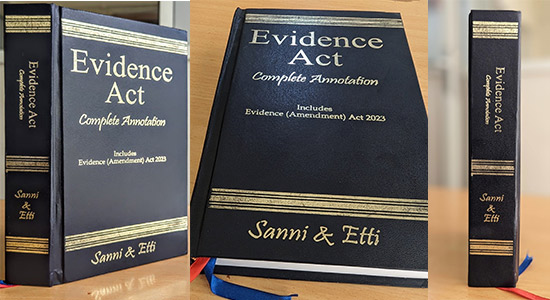
Available now for NGN 40,000 at ASC Publications, 10, Boyle Street, Onikan, Lagos. Beside High Court, TBS. Email publications@ayindesanni.com or WhatsApp +2347056667384. Purchase Link: https://paystack.com/buy/evidence-act-complete-annotation
______________________________________________________________________ “Enhance Legal Practice With Authoritative Reports” — Alexander Payne Offers Comprehensive Law Reports, Spanning Over A Century Of Nigerian Jurisprudence Interested buyers are encouraged to place their orders and enquiries via:
0704 444 4777, 0704 444 4999, 0818 199 9888
Website: www.alexandernigeria.com