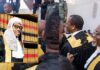
J. S. Okutepa, SAN, has said Nigerians are themselves the architects of the hardship and suffering confronting the country, arguing that years of tolerating wrongdoing, institutional failures, electoral malpractice and greed have produced the conditions citizens now complain about.

Okutepa said Nigerians, including himself, could not entirely distance themselves from the consequences of a system they had collectively tolerated and helped to nurture.
“I do not know why Nigerians, including myself, should be concerned about and complaining of hardships and suffering in the land. There is no nation on earth that has embraced wrongs as a way of life as we do in Nigeria that will not suffer from hardship,” he said.
According to the Senior Advocate, the foundation for the country’s present difficulties was laid when Nigerians began accepting wrongdoing within institutions of governance as normal.
“We started and laid the foundations for these suffering and hardships when, as Nigerians, we accepted and tolerated wrongs in all institutions of governance as ways of governance,” he said.
He argued that a country built on defective foundations would inevitably experience the consequences of the conduct tolerated by its citizens.
“Any nation that lays its foundations on faulty grounds must suffer from the fruits of bad behaviour planted and supplanted by its citizens. That is the calamities befalling us today. As Nigerians, we have individually and collectively created and watered the seeds of suffering and hardships we have today,” he stated.
Okutepa further maintained that those occupying positions of authority did not emerge from outside the country but were products of the same Nigerian society.
“Those lording over us today in the various institutions of government are Nigerians from Nigeria. They grew up in Nigeria and learnt how to do things Nigeria ways,” he said.
Turning specifically to the legal profession, Okutepa said lawyers and judges elsewhere were traditionally expected to serve as guardians of justice, professional integrity and institutional accountability.
“For instance, all over the world, the legal profession is a profession of light, and its members try very hard to ensure and maintain the sanctity and integrity of the profession by ensuring that the streams of justice are not polluted,” he said.
“They ensure that those on the bench are not contaminated by filthy wealth and corruption. Those on the bench maintain far distance from the arena of politics and political conflicts.
“And when any member of the legal profession does anything that has the tendency of lowering the standards and integrity of the profession, either at the Bar or on the Bench, the leadership of the profession will wield the big hammer of discipline.
“That way, the legal profession maintains the strictest standards of discipline and then shows light in darkness for the rest of the society to follow.”
Okutepa, however, argued that Nigeria had departed from those standards because conduct that ought to attract condemnation was frequently tolerated or treated as normal.
“But in Nigeria, many things are condoned and accepted as correct even when they are obviously very wrong. Political leaders in Nigeria do whatever they like with court orders and court proceedings, and nothing happens to those who have allowed themselves to be used by these politicians,” he said.
“So today, we are suffering from the systems we encouraged and nurtured into maturity.”
The Senior Advocate also linked Nigeria’s governance problems to the conduct of elections, arguing that citizens had over time tolerated practices that undermined credible electoral contests.
“During electoral contests, it is we Nigerians that accept the manner politicians imposed themselves on us. We accept to live with it. So Nigerian politicians now accepted and know that the best means of voting in Nigeria is by stuffing ballot papers and writing the results of the elections,” he said.
He added that some voters had become resigned to the system and consequently resorted to accepting inducements during elections.
“Nigerian voters are helpless, and they too have decided to join in collecting peanuts at the polls because they know their votes will not count,” he said.
Okutepa said responsibility for Nigeria’s economic and governance difficulties therefore extended beyond political office holders.
“For me, Nigerians are the architects of the current hardships and sufferings. Those who cut corners and sabotage the programmes and policies of governance are Nigerians,” he said.
He also criticised professionals who, in his view, legitimise conduct that ought to be challenged.
“Those who closed their eyes to obvious wrongs in our electoral process and then give stamps of legitimacy to an otherwise illegitimate electoral process are Nigerians whose code of ethics forbids the stamping of such illegal and illegitimate processes,” he said.
“We are all guilty of the hardships and sufferings we face today.”
Okutepa maintained that the situation would only change when Nigerians collectively reject wrongdoing and insist on accountability.
“The only way these hardships and sufferings will stop is when we all, as Nigerians, decide to do what is right. Until, as Nigerians, we stop promoting and embracing what is wrong and then punish those who have decided to do bad, suffering and hardships will continue,” he warned.
“We have not seen anything yet.”
Despite the criticism, the Senior Advocate said Nigerians deserved good governance founded on respect for the rule of law, stressing that members of the legal profession had a particularly important responsibility in achieving that objective.
“I think Nigerians deserve good governance rooted in the rule of law. In the rule of law regime, members of the legal profession play critical roles. The challenge of Nigeria lies in the determination of the members of the legal profession to do what is right and give direction to the manner politics is played and governance is run,” he said.
Okutepa ultimately identified greed and avarice within government institutions and professional bodies as major factors behind what he described as the erosion of national standards and values.
“There is national greed in most of those heading our institutions in every department of government in Nigeria. There is greed in the various professional callings in Nigeria. Greed and avarice are responsible for the collapse of national ethos and standards. This greed has eaten so deep in so many bodies and institutions of governance in Nigeria,” he said.
[A MUST HAVE] Evidence Act Demystified With Recent And Contemporary Cases And Materials

Available now for NGN 40,000 at ASC Publications, 10, Boyle Street, Onikan, Lagos. Beside High Court, TBS. Email publications@ayindesanni.com or WhatsApp +2347056667384. Purchase Link: https://paystack.com/buy/evidence-act-complete-annotation
______________________________________________________________________ “Enhance Legal Practice With Authoritative Reports” — Alexander Payne Offers Comprehensive Law Reports, Spanning Over A Century Of Nigerian Jurisprudence Interested buyers are encouraged to place their orders and enquiries via:
0704 444 4777, 0704 444 4999, 0818 199 9888
Website: www.alexandernigeria.com
Interested buyers are encouraged to place their orders and enquiries via:
0704 444 4777, 0704 444 4999, 0818 199 9888
Website: www.alexandernigeria.com