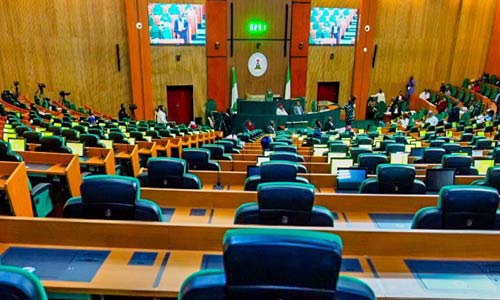
The House of Representatives has called for the strict enforcement of the Child Rights Act, 2003, particularly its provision prohibiting marriage involving persons below the age of 18, as part of renewed legislative efforts to eliminate child marriage and strengthen the protection of girls across Nigeria.

The House also directed five of its standing committees to investigate existing government interventions, identify gaps in the implementation of child protection policies and recommend legislative and budgetary measures to address child marriage and improve investment in the welfare and development of girls.
The resolutions followed the adoption of a motion titled “End Child Marriage and Invest in the Girl Child,” sponsored by the Chairman of the House Committee on Women Affairs and Social Development and member representing Kosofe Federal Constituency of Lagos State, Hon. Kafilat Ogbara, during plenary on Thursday, October 15, 2026.
The motion was considered in commemoration of the International Day of the Girl Child, observed annually on October 11 to promote the rights of girls and draw attention to challenges affecting their education, health, safety and development.
Leading the debate, Ogbara expressed concern over the continued prevalence of child marriage in Nigeria, describing the practice as a violation of children’s fundamental rights and a major obstacle to national development.
She maintained that the effective enforcement of the Child Rights Act and its domestication and implementation across the states were necessary to guarantee equal legal protection for children, irrespective of their geographical location, family background or socioeconomic circumstances.
The lawmaker observed that despite the existence of legal protections against child marriage, girls in vulnerable communities continued to face circumstances that exposed them to early marriage, exploitation and discrimination.
According to her, the practice deprives girls of their childhood, disrupts their education and restricts their access to healthcare, skills acquisition and economic opportunities.
Ogbara further warned that girls married before adulthood face increased risks of early pregnancy, maternal and newborn health complications, gender-based violence and prolonged poverty.
She explained that the consequences of child marriage extend beyond individual victims, affecting families, communities and the country’s broader social and economic development.
The lawmaker stressed that allowing girls to complete their education, acquire useful skills and make informed decisions about their futures would contribute to their economic independence and enable them to participate more effectively in national development.
She argued that protecting girls from harmful practices must be treated as both a human rights obligation and a development priority requiring sustained government intervention.
Ogbara also drew attention to Nigeria’s international obligations under several human rights instruments, including the United Nations Convention on the Rights of the Child, the Convention on the Elimination of All Forms of Discrimination Against Women and the African Charter on the Rights and Welfare of the Child.
She explained that these instruments impose obligations on governments to protect children against harmful traditional practices, exploitation and discrimination while promoting their rights to education, healthcare, dignity and personal development.
The lawmaker maintained that eliminating child marriage would require more than the existence of legislation, stressing the need for effective enforcement mechanisms, public awareness, community participation and sustained investment in programmes designed to protect vulnerable girls.
She called for coordinated action involving the Federal Government, state governments, local government councils, traditional institutions, religious leaders, parents, community organisations, civil society groups and development partners.
According to her, the campaign against child marriage must address the underlying social and economic circumstances that expose girls to the practice, including poverty, limited educational opportunities, discrimination and inadequate access to essential services.
She explained that the theme of the commemoration, “End Child Marriage and Invest in the Girl Child,” underscored the urgency of protecting girls from harmful practices while providing opportunities for them to realise their potential.
Following deliberations, the House urged the Federal Ministry of Women Affairs to collaborate with the Federal Ministries of Education, Health and Social Welfare, Justice and other relevant government agencies to strengthen national programmes aimed at preventing child marriage and protecting girls considered vulnerable to the practice.
The lawmakers also called for improved coordination among government institutions, traditional and religious authorities, civil society organisations and development partners to address the factors contributing to early marriage.
The House emphasised the need to expand girls’ access to quality education, healthcare, vocational training, skills development and other essential services capable of reducing their vulnerability to child marriage.
It further stressed that effective protection of girls would require sustained policy implementation at federal, state and local government levels, particularly in communities where poverty and other social pressures contribute to early marriage.
As part of its oversight responsibilities, the House mandated its Committees on Women Affairs and Social Development, Education, Health, Human Rights and Justice to engage relevant ministries, departments and agencies, civil society organisations and development partners.
The committees are expected to review existing interventions aimed at eliminating child marriage, assess their effectiveness and identify administrative, institutional, legal and financial obstacles affecting implementation.
They are also required to recommend appropriate legislative reforms, policy improvements and budgetary provisions necessary to strengthen child protection and expand investment in the education, health and welfare of Nigerian girls.
The House directed the committees to submit their findings and recommendations within four weeks, setting a timeline for further legislative consideration of measures aimed at addressing the practice.
The resolution also renewed attention to the legal framework governing marriage involving minors in Nigeria.
Section 21 of the Child Rights Act, 2003, prohibits the marriage of a person below the age of 18, while Section 22 prohibits the betrothal of a child. The Act also provides penalties for violations of the relevant provisions.
However, because the Act operates within Nigeria’s federal legal structure, its domestication and effective implementation at the state level remain important to ensuring consistent protection for children across the federation.
The House’s latest intervention therefore places renewed emphasis on the responsibility of state governments and relevant institutions to ensure that child protection laws are not merely enacted but effectively enforced.
The lawmakers also reaffirmed the National Assembly’s responsibility to strengthen legislation, formulate policies and provide appropriate budgetary support for programmes designed to safeguard children’s rights and improve the welfare of girls.
The resolution reflects the House’s position that ending child marriage requires a combination of legal enforcement, educational opportunities, economic support, public sensitisation and cooperation among government institutions and communities.
With the committees expected to report within four weeks, attention will turn to their findings and the legislative and budgetary recommendations proposed to strengthen the protection of girls and address the continued practice of child marriage in Nigeria.
[A MUST HAVE] Evidence Act Demystified With Recent And Contemporary Cases And Materials

Available now for NGN 40,000 at ASC Publications, 10, Boyle Street, Onikan, Lagos. Beside High Court, TBS. Email publications@ayindesanni.com or WhatsApp +2347056667384. Purchase Link: https://paystack.com/buy/evidence-act-complete-annotation
______________________________________________________________________ “Enhance Legal Practice With Authoritative Reports” — Alexander Payne Offers Comprehensive Law Reports, Spanning Over A Century Of Nigerian Jurisprudence Interested buyers are encouraged to place their orders and enquiries via:
0704 444 4777, 0704 444 4999, 0818 199 9888
Website: www.alexandernigeria.com
Interested buyers are encouraged to place their orders and enquiries via:
0704 444 4777, 0704 444 4999, 0818 199 9888
Website: www.alexandernigeria.com