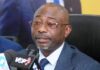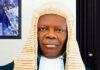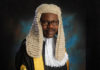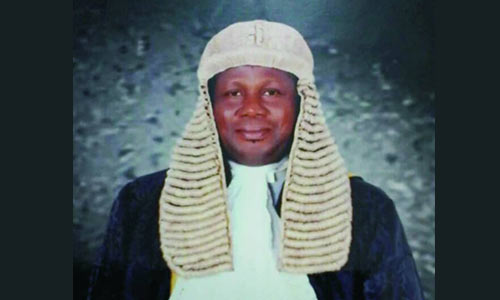
A Paper Presented By Professor Abiodun Amuda-Kannike SAN, FCArb, FCE, LFWLS, FCIAP, FIIHP, ACTI, ACSP, JP; , At The London Judicial Conference, Organized By Civic Enlightenment Organization Of Nigeria (Ceon) On Behalf Of The National Judicial Institute (NJI) Of Nigeria For Judicial Staffs, Which Took Place In London, United Kingdom, On Monday The 10th Day Of August, 2026.

Abstract
This paper examines the crisis of judicial integrity in Nigeria and its implications for the rule of law, tracing the historical roots of judicial complicity in legitimising military rule through the adoption of the Kelsenian grundnorm thesis, analyses the judiciary’s controversial role in electoral disputes in the Fourth Republic, and interrogates the structural factors,including a flawed appointment process, weak disciplinary framework, and fiscal dependence on the executive, that have systematically eroded public confidence in the judiciary. Adopting a doctrinal legal research methodology, the paper undertakes a critical analysis of constitutional provisions, judicial decisions, legislative instruments, scholarly literature, and empirical reports by organisations including the UNODC, Chatham House, and the Hague Institute for Innovation of Law. The major findings reveal that judicial integrity has been systematically undermined through historical complicity in legitimising authoritarian rule, controversial electoral judgments such as the 2007 presidential election and 2020 Imo State governorship decisions, conflicting court orders arising from forum shopping, pervasive corruption, and institutional weaknesses in appointment and disciplinary mechanisms. However, the paper also documents significant instances of judicial courage and integrity, including the Court of Appeal’s acquittal of Justice Walter Onnoghen, the Supreme Court’s nullification of the naira redesign policy, the affirmation of local government financial autonomy, the convictions of former governors Jolly Nyame and Joshua Dariye, the restoration of forfeited assets linked to Godwin Emefiele and Aisha Achimugu, the adoption of virtual hearings during the COVID-19 pandemic, and the Supreme Court’s affirmation of the constitutionality of the EFCC. The paper recommends comprehensive institutional reforms including transparent and merit-based appointment processes, enhanced judicial accountability through effective disciplinary mechanisms, genuine fiscal autonomy for the judiciary, digitisation of court processes, legislative amendments to limit pre-election litigation, and the establishment of independent oversight mechanisms, all of which are essential to restore public confidence and uphold the rule of law in challenging times.
Keywords: Electoral Jurisprudence, Institutional Legitimacy, Judicial Accountability, Judicial Independence, Judicial Integrity, Rule of Law
- Introduction
The judiciary occupies a foundational position in any constitutional democracy, serving as the bulwark against executive overreach and legislative excess. Alexander Hamilton, in The Federalist Papers, famously described the judiciary as the “least dangerous” branch of government, possessing neither the power of the sword nor the purse, but deriving its authority entirely from the public’s perception of its integrity and impartiality.[1] This observation underscores a fundamental truth: judicial power is ultimately dependent on moral authority rather than coercive force. When that moral authority is eroded, the judiciary loses its capacity to function as an effective check on governmental power and as a guarantor of the rule of law.
The Nigerian judiciary, established under the 1999 Constitution of the Federal Republic of Nigeria (CFRN), is constitutionally mandated to adjudicate disputes, interpret the law, and protect the fundamental rights of citizens.[2] Section 6 of the Constitution vests judicial powers in the courts, while Section 36 guarantees the right to a fair hearing. These constitutional provisions envision a judiciary that is independent, impartial, and capable of upholding the rule of law even in the most challenging circumstances. However, the gap between constitutional aspiration and institutional reality has become increasingly apparent in recent decades.
The Nigerian judiciary’s historical trajectory reveals a complex relationship with governance and political power. During the prolonged periods of military rule that punctuated Nigeria’s post-independence history, the courts played a controversial role in legitimising unconstitutional regimes. Through the adoption of the Kelsenian “grundnorm” thesis, Nigerian courts justified military takeovers as successful “revolutions” that created new legal orders, effectively laundering military rule and conferring upon it a veneer of legality.[3] The Supreme Court’s decisions in cases such as Lakanmi v Attorney-General (Western Nigeria) (1971) and subsequent capitulation to Decree No. 28 of 1970, which retroactively validated all military decrees, exemplified this judicial accommodation of authoritarian governance.[4]
The use of “ouster clauses” in military decrees, provisions that stripped courts of jurisdiction to review military actions, further eviscerated the rule of law. Decrees such as the Federal Military Government (Supremacy and Enforcement of Powers) Decree and the State Security Detention Decree (Decree No. 2 of 1984) rendered fundamental rights protections virtually meaningless, as courts were barred from inquiring into the validity of any decree or whether constitutional human rights had been violated.[5] The judiciary’s passive acceptance of these provisions led the Oputa Panel (Human Rights Violations Investigation Commission) to conclude that the courts had become “toothless bulldogs,” unable or unwilling to protect citizens against state repression.[6]
The transition to civil rule in 1999 ushered in the Fourth Republic, raising hopes of a renewed and reinvigorated judiciary committed to democratic values and the rule of law. However, rather than signalling a clean break from the authoritarian past, the Fourth Republic has witnessed the persistence of judicial challenges that have undermined public confidence in the institution. The judiciary’s performance in electoral disputes has been a particularly significant source of concern. The 2007 presidential election, widely condemned by domestic and international observers as deeply flawed, was nevertheless upheld by the Supreme Court in a narrow 4-3 decision.[7] The court’s reasoning that the appellant had not sufficiently proven that irregularities substantially affected the outcome was interpreted by many as prioritising political stability over strict adherence to electoral justice.
More recently, the 2020 Imo State governorship judgment, in which the Supreme Court nullified the election of Emeka Ihedioha and declared Hope Uzodinma, who had come a distant fourth in the results announced by the Independent National Electoral Commission (INEC), as the lawful winner, has been widely cited as emblematic of the judiciary’s compromised role in the electoral process.[8] The judgment was met with widespread shock and criticism, with legal observers describing it as a “sad commentary” on the nation’s democracy.[9]
The crisis of judicial integrity extends beyond electoral jurisprudence. The Nigerian judiciary has been plagued by persistent allegations of corruption, executive manipulation, and institutional weakness. A 2023 report by the United Nations Office on Drugs and Crime (UNODC) found that judges were among the highest recipients of bribes in the justice sector, reinforcing public perceptions of a compromised judiciary.[10] Retiring justices of the Supreme Court, including Justice Musa Dattijo Muhammad, have publicly lamented the “rot” and “lack of judicial integrity” within the institution, with Justice Dattijo describing the Supreme Court as being denigrated as a “voter gaggle of useless, purchasable judicial bandits” in his valedictory speech.[11]
The implications of this judicial integrity deficit are profound. Public trust in the judiciary, which is essential for the effective functioning of the rule of law, has been severely eroded. Chatham House surveys and studies by the Hague Institute for Innovation of Law (HiiL) have documented widespread public scepticism about the judiciary’s impartiality and effectiveness, with many Nigerians expressing reluctance to seek judicial remedies for their grievances.[12] This erosion of trust has implications that extend beyond the judicial system itself, affecting democratic consolidation, economic development, and social cohesion.
Despite its constitutional mandate as the guardian of the rule of law and protector of fundamental rights, the Nigerian judiciary has been beset by a persistent crisis of integrity that has undermined its capacity to function as an impartial and effective institution. This crisis manifests in several interconnected dimensions: the judiciary’s historical complicity in legitimising military rule; its controversial role in validating flawed electoral outcomes; pervasive corruption and allegations of judicial misconduct; and the perception, widely shared among legal scholars, practitioners, and the public, that judicial outcomes are increasingly determined by political pressure rather than legal principle.[13]
The problem is not merely one of perception but is rooted in structural and institutional deficiencies. These include a flawed judicial appointment process that is susceptible to political manipulation, a weak disciplinary framework that fails to hold errant judges accountable, and the judiciary’s financial dependence on the executive, which compromises its independence and exposes judges to undue political influence.[14] The Nigerian Bar Association (NBA) has repeatedly warned that the judiciary lacks fiscal autonomy, with up to 60 to 70 per cent of its budget being withheld by the executive, creating severe operational challenges and compelling judicial authorities to “beg” for funds.[15]
The cumulative effect of these challenges is a judiciary that is increasingly perceived as lacking the “spine” to enforce the rule of law in both peaceful and challenging times. This perception poses a fundamental threat to Nigeria’s constitutional democracy, as the judiciary’s ability to serve as a check on executive power and to resolve disputes impartially is essential for democratic consolidation. As one scholar has observed, “the manifest indiscipline of the present-day Nigeria’s judiciary as epitomized in some of the illustrated cases is directly and indirectly responsible for the weakness of our institutions and democratic instability in Nigeria.”[16]
This paper examines the question of judicial integrity in Nigeria, with a particular focus on the judiciary’s role in upholding the rule of law in challenging times. It examines the factors that have contributed to the erosion of judicial integrity, analyses how the judiciary’s role in electoral disputes has affected its perceived and actual legitimacy, and explores the institutional, structural, and political challenges confronting judicial independence. The study focuses on the Fourth Republic (1999–present), drawing on historical antecedents from the military era to provide necessary context. By examining the structural and institutional factors that have contributed to the erosion of judicial integrity, the paper seeks to identify pathways for reform that can restore public confidence in the judiciary and strengthen its capacity to fulfil its constitutional mandate.
Anchored on Institutional Legitimacy Theory, as developed by Tom R. Tyler and other scholars, this paper posits that judicial authority depends not on coercive power but on public perception of procedural fairness, impartiality, and moral credibility.[17] According to Tyler, legal institutions that are perceived as fair and impartial are more likely to command voluntary compliance and public support, even when their decisions are unpopular. Conversely, when institutions are perceived as corrupt, partisan, or procedurally unjust, their authority is undermined, and the rule of law suffers. This theoretical lens provides a framework for analysing the Nigerian judiciary’s legitimacy crisis and identifying the factors that have contributed to the erosion of public confidence.
- The Judiciary and Military Rule: Historical Complicity
The Nigerian judiciary’s complicity in legitimising military rule represents a foundational moment in the erosion of its institutional integrity. This complicity was not merely passive acquiescence but involved active judicial reasoning that provided legal cover for unconstitutional seizures of power. Understanding this historical trajectory is essential for comprehending the contemporary crisis of judicial legitimacy.
-
- The Doctrine of Revolutionary Legitimacy
Following the January 1966 military coup, the Supreme Court was confronted with the question of how to treat the new regime. Rather than declaring the takeover unconstitutional, the Court adopted the position that the military intervention constituted a successful “revolution” that had replaced the existing legal order. This reasoning, derived from Hans Kelsen’s theory of the “grundnorm” (basic norm), held that a successful revolution creates a new legal foundation, and the courts must recognise the new order as the source of legal authority.[18]
The Supreme Court’s initial resistance to military decrees in Lakanmi v Attorney-General (Western Nigeria) (1971), where it declared that ouster clauses could not oust the courts’ inherent jurisdiction, was short-lived. The military responded swiftly with Decree No. 28 of 1970, which retroactively validated all military decrees and expressly ousted court jurisdiction.[19] The courts subsequently capitulated, accepting the supremacy of military decrees over the constitution. This capitulation established a pattern of judicial deference that would persist throughout successive military regimes.
- Ouster Clauses and the Evisceration of Human Rights
The primary instrument for dismantling the rule of law under military rule was the systematic use of “ouster clauses” in military decrees. These provisions stripped courts of jurisdiction to review military actions, effectively placing military authorities beyond legal accountability. The Federal Military Government (Supremacy and Enforcement of Powers) Decree explicitly barred courts from inquiring into the validity of any decree or whether constitutional human rights had been violated.[20]
The State Security Detention Decree (Decree No. 2 of 1984) allowed for indefinite detention without trial, and courts repeatedly declined to hear habeas corpus applications, citing ouster clauses.[21] The courts’ passive acceptance of these provisions fundamentally altered the relationship between the judiciary and the state. As one commentator observed, the combined effect of ouster clauses meant that the courts “must as of now blow muted trumpets.”[22]
The Abacha era (1993–1998) represented the most egregious period of judicial complicity. Decrees retroactively validated all actions of the regime, and special tribunals largely composed of serving judges were used to try political opponents without due process.[23] The judiciary’s passive acceptance of these tribunals further entrenched the perception of complicity and institutional cowardice.
- The “Toothless Bulldog” Legacy
The Oputa Panel (Human Rights Violations Investigation Commission), established in 1999 to investigate human rights abuses during military rule, formally documented the judiciary’s complicity. In its final report, the Panel concluded that after decades of military rule, the courts and judges had become “toothless bulldogs” unable or unwilling to protect citizens against state repression.[24]
The Panel’s verdict has become a standard reference point in critiques of the judiciary’s historical role. The judiciary’s institutional survival during military rule came at the cost of its independence and moral authority. Crucially, the transition back to civil rule in 1999 proceeded without any meaningful accountability for the judiciary’s past actions, leaving its “baggage of complicity” unaddressed.[25] This created an accountability gap that continues to blight the institution and has serious consequences for the rule of law and democracy.[26]
The historical complicity of the judiciary in legitimising military rule established patterns of judicial behaviour that would persist into the Fourth Republic. These patterns include deference to executive power, reluctance to challenge governmental authority, and a tendency to prioritise institutional survival over principle. Understanding this historical legacy is essential for comprehending the contemporary challenges facing the Nigerian judiciary.
- The Judiciary in the Fourth Republic: Electoral Jurisprudence and Legitimacy Crisis
The transition to civil rule in 1999 raised hopes of a judiciary liberated from the constraints of military authoritarianism. However, the Fourth Republic has witnessed a continuation of judicial challenges that have profoundly damaged public confidence. The judiciary’s role in electoral disputes has been particularly damaging, with a series of controversial decisions reinforcing perceptions of partisanship and corruption.
- The 2007 Elections and the Supreme Court’s Endorsement
The April 2007 elections were widely condemned as deeply flawed. Reports documented widespread voter intimidation, ballot box stuffing, procedural irregularities, and organised rigging.[27] It was meant to mark Nigeria’s first transfer of power between elected civilian leaders, but the process was marred by significant violence and logistical failures.
Despite the manifest irregularities, the Supreme Court, in a narrow 4-3 decision delivered on December 12, 2008, upheld the election of President Umaru Musa Yar’Adua and dismissed the final challenges from the two main opposition candidates.[28] The court’s majority, while acknowledging flaws in the election, accepted the argument that the appellant had not sufficiently proven that the non-serialisation of ballot papers and other irregularities substantially affected the outcome.
The decision was heavily criticised. Justice Niki Tobi, who read the judgment, stated, “We’re not saying that all went well in the conduct of the election,” but placed the blame on the political elite.[29] The 4-3 split verdict is often cited as a key example of the judiciary’s deeply controversial role in the electoral process. The court’s reasoning was interpreted by many as prioritising political stability and “national interest” over strict adherence to electoral justice.[30]
- The 2020 Imo State Governorship Judgment
The Supreme Court’s judgment in the Imo State governorship dispute represents perhaps the most controversial electoral decision of the Fourth Republic. On January 14, 2020, the Supreme Court nullified the election of Emeka Ihedioha of the Peoples Democratic Party (PDP) and declared Senator Hope Uzodinma of the All Progressives Congress (APC)—who had come a distant fourth in the results announced by INEC—as the lawful winner.[31] The court based its decision on the argument that votes from 388 polling units were unlawfully excluded from the final results. With these votes added, the court held, Uzodinma had won the majority of lawful votes cast.[32]
The judgment was met with widespread shock and criticism. Legal observers expressed bewilderment at how a candidate who had come fourth could be declared the winner, calling it a “sad commentary” on the nation’s democracy.[33] Even President Muhammadu Buhari, while commending the court’s “courage,” acknowledged the “long and tortuous” road to justice.[34] The judgment has become a reference point in critiques of the judiciary, cited alongside other controversial decisions as evidence of the “shameful judgments” that have damaged the court’s reputation.[35]
- Conflicting Court Orders and Judicial Chaos
The Fourth Republic has witnessed a proliferation of conflicting court orders, particularly in political disputes. Courts of coordinate jurisdiction frequently issue contradictory rulings on the same subject matter, creating legal uncertainty and administrative paralysis.[36]
The 2025 PDP national convention crisis exemplifies this problem. The Federal High Court in Abuja issued restraining orders stopping the PDP convention and barring INEC from recognising its outcome, while the Oyo State High Court in Ibadan simultaneously issued an order allowing the convention to proceed. The conflicting orders created significant confusion about which directive the party and INEC should obey.[37] The Nigerian Bar Association President publicly queried: “In which country have you heard one court say don’t hold a convention, and another court says do the convention? Which one do you obey?”[38]
Similarly, the Kano emirship tussle, where courts issued contradictory injunctions regarding the appointment of a new emir, created weeks of administrative confusion and heightened political tensions. The phenomenon of “forum shopping” where litigants seek out courts likely to issue favourable rulings has been identified as a significant contributor to this problem.[39]
The Nigerian Bar Association has expressed concern that conflicting judgments are “becoming increasingly difficult for lawyers to advise clients with certainty on what the law is.”[40] The proliferation of conflicting orders has been attributed to judicial corruption, political pressure, and systemic weaknesses in judicial administration.[41]
- Judicialisation of Politics and Pre-Election Litigation
The increasing involvement of the judiciary in political disputes has led to concerns about the “judicialisation of politics.” Nigerian politicians routinely outsource their internal party disputes to the courts, dragging the judiciary into partisan politics.[42] At every election season since 1999, multiple claimants lay competing claims to political party tickets, with the courts and INEC caught in between.[43]
At the 2025 All Nigerian Judges Conference, judges resolved that pre-election matters should be non-justiciable and addressed internally by political parties. The communique noted that “pre-election litigation is one of the challenges currently burdening the Nigerian Judiciary, and it contributes significantly to the backlog of cases before the Courts.”[44] However, implementing this resolution requires legislative amendments to the Electoral Act, as courts currently have jurisdiction over such matters.[45]
- Structural Factors Undermining Judicial Integrity
The erosion of judicial integrity in Nigeria is not merely a matter of individual misconduct but is rooted in structural and institutional deficiencies. Three factors are particularly significant: the flawed appointment process, the weak disciplinary framework, and the overbearing influence of political leadership.
- The Flawed Judicial Appointment Process
The appointment of judges in Nigeria is governed by the 1999 Constitution and involves the National Judicial Council (NJC) and Judicial Service Commissions. However, critics argue that the process is not sufficiently transparent or merit-driven in practice. Persistent allegations of favouritism, patronage, and undue political influence have undermined confidence in the selection process.[46]
A former President of the Court of Appeal, Justice Ayo Salami (retd.), has publicly warned that appointments to the High Court are now often treated as a “promotion avenue for magistrates,” leading to appointees with “limited professional exposure.”[47] This, he argues, undermines the quality of justice delivery and is a major source of the judiciary’s weakness.
Former Vice President Yemi Osinbayo (SAN) previously highlighted a stark contrast with other jurisdictions, noting that in the UK and US, judicial appointments involve rigorous screening, including written examinations, interviews, and thorough background checks. He described the Nigerian process as “one of the least rigorous processes imaginable” for such a critical role.[48]
The appointment system itself is reportedly tainted by corruption. A detailed report on the Abia State judicial recruitment process described it as a “life-and-death contest” for a “meal-ticket for life,” with allegations so severe that a Chief Magistrate reportedly died from stress after failing to secure a nomination for which she had borrowed money to pay bribes.[49] The Court of Appeal has affirmed that a recruitment process “tainted with any form of corruption” can be justifiably cancelled.[50]
Nepotism and lobbying have also been identified as significant problems. The NBA President has noted that “nepotism contributes to a lack of transparency and merit in the appointment and elevation of judges, and a culture of lobbying for position among judges.”[51] These practices undermine the quality of the bench and contribute to the perception that appointments are politically motivated rather than merit-based.
- The Weak Disciplinary Framework
The lack of effective disciplinary action against errant judges is a major contributor to the culture of impunity within the judiciary. The National Judicial Council (NJC) is constitutionally mandated to discipline judicial officers, but its effectiveness has been questioned.[52]
There is a broad consensus that the current legal framework for disciplining judicial officers is insufficient. One academic study found that the extant framework fails to adequately address issues of judicial misconduct and intimidation.[53] The lack of visible and effective disciplinary action contributes to a culture of impunity.
The NBA President has stressed that “more decisive and transparent action is required to restore public confidence,” calling for the suspension of any judicial officer facing credible allegations of corruption pending investigation.[54] “A judge must have a high moral authority and must live above board. Where a judicial officer is under investigation for prima facie judicial misconduct, such an officer should be placed on suspension because his integrity and status as a judex is at stake.”[55]
Civil society and legal activists have called for independent oversight mechanisms to monitor the judiciary and for the establishment of joint “Bar and Bench Judicial Integrity Committees” to act as watchdogs.[56] Some have also proposed that the Chief Justice of Nigeria should not chair the NJC, arguing that no person subject to potential disciplinary action should lead the body that oversees judges.[57]
- Overbearing Political Leadership and Fiscal Dependence
The overbearing influence of political leadership is consistently identified as the most significant external threat to judicial integrity. This influence is exercised primarily through two mechanisms: financial dependence and political pressure.
Financial Dependence: The judiciary at the state level lacks true fiscal autonomy, with the executive branch reportedly withholding up to 60-70% of its budget.[58] This chronic underfunding forces judges to “beg” for funds for basic needs like vehicles and courtroom repairs. As one NBA President observed, the public donation of vehicles and houses to judges by governors is viewed as a tool of influence and is “demeaning,” making it difficult for the public to believe the judiciary is independent.[59]
Political Pressure: The greatest pressure on judges is said to come from politicians seeking favourable rulings, particularly in electoral matters. Lawyers and activists argue that the executive is the primary architect of the rot, as corrupt public officials use their power and resources to “twist the arm of judges” through lawyers who act as conduits.[60]
The judiciary’s lack of financial autonomy undermines its institutional independence and exposes judges to undue political influence. As one commentator observed, “a judiciary that must beg for funds cannot be expected to rule against those who provide the funds.”[61]
- Corruption and the “Commercialisation of Justice”
The Nigerian Bar Association President has described judicial corruption as “a moral crisis and a democratic emergency,” warning that it poses an existential threat to democracy, social justice, and the rule of law.[62] He lamented that the judiciary, “which ought to be the last hope of the common person, is increasingly seen as an arena where justice can be delayed, manipulated, or outrightly purchased by the highest bidder.”[63]
Findings from recent surveys by UNODC and the National Bureau of Statistics estimate that Nigerian public officials received about N721 billion in cash bribes in 2023, with judges ranking among the top recipients.[64] A Chatham House report indicated that 61 per cent of Nigerians believe judges are likely to accept bribes to influence their rulings.[65]
The NBA President recalled past admissions by both the Bar and the Bench that corruption had infiltrated the justice sector, including a 2012 statement by a former NBA President who accused some senior lawyers and retired judicial officers of acting as conduits for bribes in election petitions. He lamented that more than a decade later, “the situation appears to have worsened” and that “judicial corruption not only persists but, in the view of many, has become even more entrenched.”[66]
President Bola Tinubu, addressing the 2025 All Nigerian Judges Conference, warned: “Justice must never be for sale, and the Bench must never become a sanctuary for compromise. Corruption in any arm of government weakens the nation, but corruption in the Judiciary destroys it at its core.”[67] He further cautioned that “no amount of reform can succeed if integrity is compromised,”[68] underscoring the centrality of integrity to judicial legitimacy.
- Consequences of Judicial Integrity Deficit
The erosion of judicial integrity has profound consequences for Nigeria’s constitutional democracy. These consequences extend beyond the judicial system itself, affecting public trust, democratic stability, and economic development.
- Erosion of Public Trust
Public trust in the judiciary, which is essential for the effective functioning of the rule of law, has been severely eroded. A 2022 Chatham House survey found that 88% of Nigerians reject judicial bribery, but 61% believe that judges accept bribes.[69] Studies by the Hague Institute for Innovation of Law (HiiL) found that 90% of Nigerians face legal problems, yet many abandon cases due to distrust of the justice system.[70]
This erosion of trust creates what scholars have described as “pluralistic ignorance”—a situation where individuals believe corruption is more widespread than it actually is, leading to a self-perpetuating cycle of cynicism.[71] When citizens lose faith in the judiciary, they are less likely to seek judicial remedies, more likely to resort to extra-legal means of dispute resolution, and less willing to comply with judicial decisions.
The NBA President has warned that “declining trust in the judiciary could discourage investment, encourage capital flight, and prompt litigants to take disputes to foreign courts.”[72] He noted that foreign courts have entertained matters linked to Nigeria partly due to concerns about delays and the reliability of the Nigerian judicial system, citing cases such as in the UK Supreme Court and the P&ID arbitration saga.[73]
- Democratic Instability
The judiciary’s role as an arbiter of electoral outcomes rather than an enforcer of due process has contributed to democratic instability. When judicial decisions are perceived as politically motivated, they undermine the legitimacy of the electoral process and the democratic system as a whole.[74]
Professor Pat Utomi has warned that political judgments are the biggest source of reputational damage to the judiciary.[75] Former President Olusegun Obasanjo has more recently described the courts as “courts of corruption rather than courts of justice,”[76] reflecting a widespread perception that the judiciary has become an instrument of political manipulation rather than a guardian of the rule of law.
The NBA President has warned that “when rulings are allegedly influenced by envelopes rather than evidence, when adjournments are engineered for personal gain rather than procedural necessity, the judiciary ceases to be the last hope of the common man and becomes instead the first refuge of the powerful and the corrupt.”[77] He stressed that democracy thrives on an incorruptible judiciary and that when courts are perceived as instruments for shielding the corrupt or punishing opponents, “elections lose meaning, governance becomes arbitrary, and the social contract fractures.”[78]
- Impact on the Rule of Law
The judicial integrity deficit has direct consequences for the rule of law. Corruption cases are delayed through procedural tactics, defendants claim illness to stall proceedings, and conflicting court orders create legal uncertainty.[79] The challenge of interlocutory appeals and conflicting rulings has made the legal system unpredictable and costly. The Nigerian Bar Association has expressed concern that it is “becoming increasingly difficult for lawyers to advise clients with certainty on what the law is.”[80]
President Tinubu, addressing the backlog of cases in Nigerian courts, stated: “The backlog of cases in our courts must be addressed with urgency. Our courts must no longer be places where cases languish for years. Justice exists for the people, and their faith in the judicial process is the foundation of our national stability.”[81]The erosion of judicial integrity has international consequences. The US Department of State’s 2024 Human Rights Practices Report documented Nigeria’s declining rule of law, noting concerns about judicial corruption and executive interference.[82]
These concerns affect foreign investment and international cooperation. Investors require predictable legal systems to commit capital, and the perception of a compromised judiciary deters investment and economic development.[83] The NBA President has warned that “negative perceptions of the judiciary inevitably affect public trust in election adjudication” and that declining trust in the justice system threatens national stability and investor confidence.[84]
- Reforms and the Path Forward
Restoring judicial integrity requires comprehensive reforms addressing the structural and institutional deficiencies that have undermined public confidence. These reforms must target the appointment process, the disciplinary framework, fiscal autonomy, and judicial administration.
- Institutional Reforms
Constitutional restructuring of the NJC, the Federal Judicial Service Commission (FJSC), and state Judicial Service Commissions is essential. Some commentators have recommended that these bodies be headed by laypersons to reduce judicial self-regulation and increase accountability.[85]
The NBA President has proposed that the Chief Justice of Nigeria should not chair the NJC, arguing that “no person subject to potential disciplinary action should lead the body that oversees judges.”[86] He also expressed support for lifestyle audits of judges to promote accountability, while urging caution on blanket public asset declarations due to security risks.[87]
The establishment of “Bar and Bench Joint Judicial Integrity Committees” has been proposed as a mechanism for independent oversight.[88] Such committees would provide a forum for addressing complaints of judicial misconduct and ensuring transparency in disciplinary proceedings.
- Appointment Process Reform
The appointment process must be made more transparent and merit-based. Recommendations include randomised electronic case allocation and automated rotation systems to reduce manipulation.[89] The NJC’s 2025 policy requiring public disclosure of candidates under consideration has been welcomed as a step in the right direction.[90] However, further reforms are needed, including rigorous screening, interviews, and background checks similar to those in other jurisdictions.[91] The NBA President has called for sweeping reforms in judicial appointments, insisting that “merit, integrity, and accountability must replace patronage and opacity.”[92] He also called for automated case assignment to prevent “judge-shopping” and mandatory ICT adoption in courts to improve transparency.[93]
- Enhancing Judicial Accountability
The enforcement of the Administration of Criminal Justice Act (ACJA) provisions and strict timelines is essential to prevent delay tactics in corruption trials.[94] Sanctions for lawyers and judges who weaponise procedural rules must be enforced.
Public disciplinary hearings for judges who have erred gravely would enhance transparency and accountability.[95] The NJC must demonstrate that it is willing to take decisive action against judicial misconduct. The NBA President has noted that while the NJC has disciplined erring judges through suspension, dismissal, and compulsory retirement, more decisive action is required, including the suspension of any judicial officer facing credible allegations of corruption pending investigation.[96]
- Addressing Fiscal Dependence
Genuine fiscal autonomy for the judiciary at both federal and state levels is essential for judicial independence. The judiciary must have control over its budget and be insulated from executive manipulation.[97]
Adequate funding and improved judicial welfare are necessary to reduce the temptation of corruption. The 2026 budget allocation of N341.6 billion for the judiciary, while an improvement, remains insufficient given the scale of the challenges.[98]
President Tinubu pledged continued investment in judicial welfare, training, and the National Judicial Institute, stating that “judicial welfare, training, and independence are not privileges; they are imperatives.”[99]
- Digitisation and Modernisation
The adoption of e-filing, virtual hearings, and digital records would enhance efficiency and transparency.[100] A centralised case filing system would prevent duplicate cases and forum shopping, addressing the problem of conflicting court orders.
President Tinubu emphasised that “technology is no longer a luxury; it is a necessity,” and that “a digital, transparent judiciary will not only improve efficiency but will also deepen accountability and public trust.”[101]
- Strengthening Civil Society Oversight
Trial monitoring initiatives and transparency scorecards would provide independent assessment of judicial performance. Citizen feedback platforms and media engagement would enhance public accountability.[102] The NBA President has urged religious institutions, traditional rulers, civil society, and the media to take a firm moral stand against corruption and stop celebrating wealth of questionable origin.[103] He also stressed that the fight against judicial corruption cannot be won unless citizens refuse to participate in bribery and actively report misconduct.[104]
- Addressing Pre-Election Litigation
The 2025 All Nigerian Judges Conference resolution that pre-election matters should be non-justiciable and addressed internally by political parties represents a significant potential reform.[105] However, implementing this resolution requires legislative amendments to the Electoral Act to remove judicial jurisdiction over such matters.[106] The judges also called for limiting pre-election matters and reviewing evidentiary requirements in election petitions to remove undue obstacles.[107] The NBA President has echoed these concerns, suggesting that “pre-election matters should be limited and that evidentiary requirements in election petitions should be reviewed to remove undue obstacles.”[108]
- JUDICIAL COURAGE AND INTEGRITY IN CHALLENGING TIMES
Notwithstanding the significant challenges and criticisms that have been examined in the preceding sections, it would be a fundamental analytical omission to overlook the numerous instances where the Nigerian judiciary has demonstrated remarkable courage, integrity, and an unwavering commitment to the rule of law. The judiciary has, on several occasions, risen to the occasion and asserted its independence, often at great institutional risk, thereby affirming its constitutional role as the guardian of justice and the last hope of the common man. This section highlights some of the most significant instances where the judiciary has upheld the rule of law in the face of intense pressure, thereby contributing to the consolidation of democratic governance and the protection of citizens’ rights.
- The Walter Onnoghen Saga and Judicial Resilience
One of the dramatic tests of judicial independence in Nigeria’s Fourth Republic occurred during the removal of former Chief Justice of Nigeria (CJN), Justice Walter Onnoghen, in the build-up to the 2019 general elections. Justice Onnoghen was removed from office following a controversial trial before the Code of Conduct Tribunal (CCT) on allegations of asset declaration breaches, a trial that was widely perceived as politically motivated and orchestrated by the executive to secure a compliant judiciary ahead of the elections.[109] The circumstances surrounding his removal, acting without reference to the National Judicial Council (NJC), were condemned by legal scholars, civil society organisations, and elder statesmen as a “disgraceful, callous, unjust, and barbaric” assault on judicial independence.[110]
In a powerful vindication of judicial integrity, the Court of Appeal, in November 2024, overturned Justice Onnoghen’s conviction, acquitted him of all charges, and restored his reputation.[111] This decision by the appellate court was a resounding affirmation that no judicial officer, not even a former Chief Justice, could be lawfully removed without due process and adherence to constitutional procedures. The Court of Appeal’s ruling was hailed by civil society groups and legal practitioners as a “major victory for judicial independence” and a demonstration that the judiciary, despite its institutional weaknesses, retains the capacity to correct its own wrongs and defend against executive overreach.[112] The Onnoghen saga demonstrates that even in the face of direct executive assault, the judiciary possesses the institutional resilience to protect and uphold the rule of law.
- The Jolly Nyame and Joshua Dariye Convictions: Affirming Accountability
The convictions of former governors Jolly Nyame of Taraba State and Joshua Dariye of Plateau State on corruption charges represent a significant milestone in Nigeria’s anti-corruption efforts and a testament to judicial courage. Both former governors, who were influential political figures with considerable connections, were prosecuted by the Economic and Financial Crimes Commission (EFCC) and convicted by the courts for embezzling public funds during their tenure in office.[113] The convictions were upheld on appeal, with the Supreme Court affirming the judgments and sending the former governors to prison.
These convictions were significant for several reasons. First, they demonstrated that the judiciary was willing to hold powerful political figures accountable for their actions, regardless of their status or connections. Second, they signaled a departure from the impunity that had previously characterized the treatment of politically exposed persons in Nigeria. Third, they reinforced the message that corruption would not be tolerated and that the courts would serve as a bulwark against the abuse of public office. The convictions of Nyame and Dariye were widely praised by anti-corruption activists and civil society organizations as evidence that the judiciary was “upholding the rule of law and saving our democracy from those it described as desperate political predators.”[114]
- The Naira Redesign Policy Case: A Check on Executive Power
In one of the most consequential decisions of the Supreme Court in recent years, the apex court, in a unanimous judgment delivered on March 3, 2023, nullified the Federal Government’s naira redesign policy, declaring that it was an “affront to the 1999 Constitution” and that the President had acted ultra vires.[115] The Supreme Court held that the policy, which had caused immense hardship to millions of Nigerians, was implemented without adequate consultation with the National Council of States and the National Economic Council, and without reasonable notice to the public as required by Section 20(3) of the Central Bank of Nigeria Act.[116]
The Supreme Court’s judgment was a bold assertion of judicial authority and a clear check on executive power. The court, led by Justice Emmanuel Agim, held that the President’s unilateral directive was illegal and that the use of such executive powers was “neither permitted in our democracy, nor in a society such as ours.”[117] The court further noted that the Defendants’ disobedience of its interim orders was “a sign of the failure of the rule of law” and that the judiciary would not be made a “scapegoat” for the consequences of the policy.[118] The judgment demonstrated that the Supreme Court was prepared to intervene decisively to protect citizens’ rights and enforce constitutional limits on executive authority, even in the face of significant political pressure and public criticism.
- Local Government Autonomy: Redefining Constitutional Relationships
In a landmark ruling on July 11, 2024, the Supreme Court delivered a powerful affirmation of local government financial autonomy, declaring it unconstitutional for state governments to withhold allocations meant for democratically elected local councils.[119] The court ruled that only democratically elected Local Government Councils should receive their federal revenues and that funds accruing to them must be paid directly into their accounts, bypassing the state joint accounts that had enabled governors to confiscate and spend local government funds arbitrarily.
The judgment was a significant victory for fiscal federalism and grassroots development, as it sought to end the long-standing practice of state governors subverting local government autonomy.[120] While the decision has been the subject of debate and legal challenges, it nonetheless represents a bold judicial intervention aimed at enforcing constitutional provisions and protecting the financial independence of local governments. The Supreme Court’s willingness to confront state governors and assert the constitutional rights of local councils demonstrates its commitment to upholding the rule of law and promoting democratic governance at all levels.
Asset Forfeiture and Recovery: The Emefiele and Achimugu Cases
The judiciary has also demonstrated its commitment to the fight against corruption through its handling of high-profile asset forfeiture cases. In a unanimous judgment delivered on July 17, 2026, the Supreme Court restored the final forfeiture of seven landed properties, $2.045 million, and share certificates linked to the former Governor of the Central Bank of Nigeria, Godwin Emefiele, to the Federal Government.[121] The apex court overturned the Court of Appeal’s decision and reinstated the judgment of the Federal High Court, which had found that the assets were “reasonably suspected to have been acquired with proceeds of unlawful activities” and were therefore liable to forfeiture.[122] The Supreme Court’s ruling handed the EFCC a major legal victory and brought one of Nigeria’s most high-profile civil asset recovery cases to a definitive close.
Similarly, on July 15, 2026, Justice Jude Onwuegbuzie of a Federal Capital Territory High Court ordered the final forfeiture of assets worth approximately N8.9 billion linked to businesswoman Aisha Achimugu to the Federal Government.[123] The forfeited assets comprised jewellery valued at N4.65 billion, 11 exotic vehicles worth N4.29 billion, $50,000, and N30 million in cash. The court held that Achimugu had failed to dislodge the evidence presented by the EFCC and did not discharge the burden of proving that the assets were acquired from legitimate sources.[124] These cases demonstrate the judiciary’s willingness to support anti-corruption efforts and enforce the law against powerful individuals, including those with considerable political connections.
- Adoption of Virtual Hearings During the COVID-19 Pandemic
The Nigerian judiciary demonstrated remarkable adaptability and a commitment to ensuring continued access to justice during the COVID-19 pandemic by rapidly adopting virtual hearings. The Lagos State Judiciary led the way, becoming the first state in Nigeria to conduct remote court proceedings.[125] On May 27, 2020, Justice Mojisola Dada of an Ikeja High Court delivered judgment virtually in a criminal case, sentencing one Olalekan Hameed to death for robbery and murder, with full participation of the judge, prosecution, defence counsel, defendant, and witnesses using the Global Remote Court platform.[126]
The adoption of virtual hearings was a significant innovation that ensured that the wheels of justice continued to turn despite the lockdowns and social distancing measures. Other states have followed suit, with Ogun State, for example, unveiling digital reforms that include e-affidavits and virtual hearings as part of the judiciary reform agenda. The rapid adoption of virtual hearings demonstrated the judiciary’s capacity for innovation and its determination to overcome barriers to access to justice.
- The EFCC Legality Case: Upholding Anti-Corruption Institutions
On November 15, 2024, the Supreme Court delivered a landmark judgment dismissing the suit filed by 19 state governments, led by Kogi State, challenging the constitutionality of the laws that established the Economic and Financial Crimes Commission (EFCC), the Independent Corrupt Practices and Other Related Offences Commission (ICPC), and the Nigerian Financial Intelligence Unit (NFIU).[127] In a unanimous decision delivered by a full panel of seven justices led by Justice Uwani Abba-Aji, the Supreme Court affirmed the legality of the laws that set up the anti-corruption agencies and dismissed the suit for lacking in merit.[128]
The judgment was hailed by civil society organizations as a “silent revolution” and a “courageous and forthright” affirmation of the rule of law.[129] The court’s decision effectively saved Nigeria’s anti-corruption architecture from being dismantled and reinforced the judiciary’s role as the protector of democratic institutions. As the group Journalists Against Corruption noted, “that singular decision has restored the hope of most Nigerians in the judiciary and shown that it is the stabiliser of our nation’s democracy.”[130]
- The Amaechi v INEC Case and Electoral Integrity
In Amaechi v INEC[131] the Supreme Court demonstrated its commitment to electoral integrity by affirming the decision of the Court of Appeal and upholding the primacy of the rule of law in electoral matters. The case arose from the Rivers State governorship election, where a dispute arose over the validity of the nomination of the candidate of the All Progressives Congress (APC), Rotimi Amaechi. The Supreme Court, in a unanimous judgment, held that the nomination was valid and that the lower courts had correctly interpreted the relevant provisions of the Electoral Act. The judgment reinforced the principle that electoral disputes must be resolved strictly in accordance with the law, regardless of the political implications.
- The EndSARS Judicial Panels of Inquiry
In response to the #EndSARS protests of October 2020, which were triggered by widespread police brutality and the killing of protesters at the Lekki Toll Gate, state governments established judicial panels of inquiry to investigate human rights abuses by the defunct Special Anti-Robbery Squad (SARS) and other security agencies. The panels, chaired by retired judges, were empowered to receive complaints, investigate abuses, and recommend compensation for victims. Despite facing significant challenges, including resistance from the police and allegations of executive interference, the panels demonstrated the judiciary’s willingness to hold security agencies accountable and provide redress for victims of human rights violations.
While the panels were eventually dissolved by some state governments without implementing their recommendations, their establishment and operation represented a significant assertion of judicial authority and a commitment to addressing historical injustices. The panels’ work reinforced the principle that security agencies must be held accountable for their actions and that victims of human rights abuses are entitled to justice and redress.
The instances highlighted above demonstrate that, despite the significant challenges and criticisms that have been examined in this paper, the Nigerian judiciary has repeatedly demonstrated courage, integrity, and a commitment to upholding the rule of law in challenging times. The judiciary has asserted its independence in the face of direct executive assault, held powerful political figures accountable for corruption, checked executive overreach through landmark judgments, embraced technological innovation to ensure continued access to justice, and defended democratic institutions against political predators.
These instances of judicial courage and integrity serve as a counterbalance to the critique that has dominated much of the discourse on the Nigerian judiciary. They demonstrate that the judiciary, retains the capacity to act as a guardian of the constitution and a protector of fundamental rights. They also provide hope that, with the necessary reforms, the judiciary can overcome its challenges and fulfill its constitutional mandate as the last hope of the common man.
- Conclusion
The Nigerian judiciary faces a profound crisis of integrity that threatens its capacity to uphold the rule of law. This crisis has historical roots in the judiciary’s complicity in legitimising military rule and has been exacerbated by its controversial role in electoral disputes in the Fourth Republic. The erosion of judicial integrity is not merely a matter of individual misconduct but is rooted in structural deficiencies: a flawed appointment process, a weak disciplinary framework, and the overbearing influence of political leadership.
The consequences of this integrity deficit are profound. Public trust in the judiciary has been severely eroded, democratic stability has been undermined, and the rule of law has been weakened. International repercussions include declining foreign investment and reputational damage to Nigeria’s democratic credentials. Reform is urgently needed. Comprehensive reforms targeting the appointment process, disciplinary framework, fiscal autonomy, and judicial administration are essential to restore public confidence. The judiciary must be fiscally autonomous, appointment processes must be transparent and merit-based, and disciplinary mechanisms must be effective and accountable.
However, as this paper has also demonstrated, the Nigerian judiciary is not without its moments of courage and integrity. Despite the significant challenges and criticisms that have been examined, the judiciary has repeatedly demonstrated its capacity to rise to the occasion and assert its independence in the face of intense pressure. The acquittal of Justice Walter Onnoghen by the Court of Appeal, the convictions of former governors Jolly Nyame and Joshua Dariye, the Supreme Court’s nullification of the naira redesign policy, the affirmation of local government financial autonomy, the restoration of forfeited assets linked to Godwin Emefiele and Aisha Achimugu, the rapid adoption of virtual hearings during the COVID-19 pandemic, the Supreme Court’s affirmation of the constitutionality of the EFCC, and the establishment of judicial panels of inquiry in response to the #EndSARS protests all stand as powerful testaments to judicial courage and commitment to the rule of law.
These instances of judicial integrity serve as a vital counterbalance to the critique that has dominated much of the discourse on the Nigerian judiciary. They demonstrate that, despite its structural deficiencies and institutional weaknesses, the judiciary retains the capacity to act as a guardian of the constitution and a protector of fundamental rights. They also provide hope that, with the necessary reforms, the judiciary can overcome its challenges and fulfil its constitutional mandate as the last hope of the common man.
President Tinubu’s acknowledgment at the 2025 All Nigerian Judges Conference that “public perception of the judicial process has not always been favourable” and that “citizens have expressed frustration at delays, concerns about integrity, and anxiety over access to justice”[132] signals a recognition at the highest level of government that judicial reform is imperative. His warning that “no amount of reform can succeed if integrity is compromised”[133] underscores the centrality of integrity to judicial legitimacy. The NBA President’s characterisation of judicial corruption as a “moral crisis and a democratic emergency”[134] reflects the urgency of the situation. He warned that “democracy cannot survive on a compromised judiciary” and that “history would judge the Bar and the Bench not by their eloquence, but by their courage to act.”[135]
Alexander Hamilton’s insight remains relevant: the judiciary’s power derives from its integrity, not from the sword or the purse. The restoration of judicial integrity is essential not only for the judiciary itself but for the future of Nigeria’s constitutional democracy. Justice must not only be done but must be seen to be done. The Nigerian judiciary must reclaim its role as the guardian of the rule of law and the protector of fundamental rights. The challenge is formidable, but the stakes could not be higher.
Presenter’s Email: amudakannikeabiodun@gmail.com Presenter’s Telephone No: 08033256756
BIBLIOGRAPHY
Constitutions and Statutes
Constitution of the Federal Republic of Nigeria 1999 (as amended)
Administration of Criminal Justice Act 2015
Economic and Financial Crimes Commission (Establishment) Act 2004
Federal Military Government (Supremacy and Enforcement of Powers) Decree
State Security Detention Decree No 2 of 1984
Decree No 28 of 1970
Cases
Lakanmi v Attorney-General (Western Nigeria) (1971) 1 UILR 201
Military Governor of Lagos State v Chief E O Ojukwu (1986) 1 NWLR (Pt 18) 621
Ugwu v Attorney-General of Bendel State (1986) 1 NWLR (Pt 18) 621
Buhari v Yar’Adua (2008) 19 NWLR (Pt 1120) 246
Atiku Abubakar v Yar’Adua (2008) 19 NWLR (Pt 1120) 493
Ihedioha v Uzodinma (2020) 1 NWLR (Pt 1702) 1
Attorney-General of Abia State v NJC (2024) (Court of Appeal, unreported)
Books
Hamilton A, Madison J and Jay J, The Federalist Papers (1788).
Kelsen H, General Theory of Law and State (Harvard University Press 1945).
Tyler TR, Why People Obey the Law (Princeton University Press 1990).
Journal Articles
Chukwudebelu NM, Arinze-Umobi CC and Iguh NA, ‘Judicial Interpretation, Conflicting Rulings, and the Integrity of Pre-Election Dispute Resolution in Nigeria’ Nnamdi Azikiwe University Journal of Public and Private Law (2025)
Ibrahim I, ‘The Concept of Judicial Integrity on Dispensation of Justice in Nigeria’ (2014) 19(2) Coventry Law Journal 44
Nweze CC, ‘Judicial Indiscipline: The Bane of Democratic Instability in Nigeria’ (2025) 1(1) International Journal of Law, Advocacy, and Legal Education 1
Tyler TR, ‘Procedural Justice, Legitimacy, and the Effective Rule of Law’ (2003) 30(3) Crime and Justice 283
Yusuf H, ‘Challenges, Limits, and Prospects of “Judicial Governance” in Nigeria’ in The Political Translation of 1999–2014 (Taylor & Francis 2020)
Reports
Chatham House, Public Perception of Judicial Integrity in Nigeria (2022)
Hague Institute for Innovation of Law (HiiL), Justice Needs and Satisfaction in Nigeria (2025)
National Judicial Council, Policy on Disclosure of Judicial Candidates (2025)
Nigerian Army Board of Inquiry, Report on Unprofessional Conduct of Officers During the 2015 General Elections (2016)
Oputa Panel (Human Rights Violations Investigation Commission), Final Report (2002)
United Nations Office on Drugs and Crime (UNODC), Corruption in Nigeria: Patterns and Trends (2023)
US Department of State, 2024 Human Rights Practices Report: Nigeria (12 August 2024)
Newspaper Articles
‘Bar Urges Overhaul of Judges Recruitment Process’ Legalbrief (2 July 2026) <https://legalbrief.co.za/diary/legalbrief-africa-new/story/nigeria-bar-urges-overhaul-of-judges-recruitment-process/print/> accessed 12 July 2026
‘Conflicting Court Orders: Plague of Nigeria’s Justice System That Won’t Go Away’ Tribune Online (Lagos, 22 November 2025) <https://tribuneonlineng.com/conflicting-court-orders-plague-of-nigerias-justice-system-that-wont-go-away/> accessed 12 July 2026
‘Conflicting court orders undermining trust in judiciary – NBA’ Punch (Lagos, 23 November 2025) <https://punchng.com/conflicting-court-orders-undermining-trust-in-judiciary-nba/> accessed 12 July 2026
‘How Sloppy Procedures, Inefficiencies, Poor Infrastructure Undermine Anti-Graft War’ Guardian (Lagos, 2 November 2025) <https://guardian.ng/features/law/how-sloppy-procedures-inefficiencies-poor-infrastructure-undermine-anti-graft-war/> accessed 12 July 2026
Wale Igbintade, ‘Judges Becoming Tools of Politicians, Threatening Democracy, NBA President Osigwe Warns’ ThisDay (Lagos, 12 February 2026) <https://www.thisdaylive.com/2026/02/12/judges-becoming-tools-of-politicians-threatening-democracy-nba-president-osigwe-warns/> accessed 12 July 2026
‘Judges Lobby for Tribunal Seats Ahead of 2027’ The Sun Nigeria (Abuja, 25 June 2026) <https://thesun.ng/judges-lobby-for-tribunal-seats-ahead-of-2027/> accessed 12 July 2026
‘Judiciary Must Restore Public Trust to Safeguard Democracy – Oniyinde’ Vanguard (Lagos, 3 October 2025) <https://www.vanguardngr.com/2025/10/judiciary-must-restore-public-trust-to-safeguard-democracy-oniyinde/> accessed 12 July 2026
‘NBA president, Osigwe raises fresh alarm over rot in judiciary’ The Sun Nigeria (Enugu, 8 February 2026) <https://thesun.ng/nba-president-osigwe-raises-fresh-alarm-over-rot-in-judiciary/> accessed 12 July 2026
‘Nigeria: Between Politicians and the Bench’ allAfrica.com (9 December 2025) <https://allafrica.com/stories/202512100292.html> accessed 12 July 2026
Odinkalu CA, ‘Olukayode Ariwoola: A Baleful Legacy’ ThisDay (Lagos, 21 August 2024) <https://www.thisdaylive.com/2024/08/21/olukayode-ariwoola-a-baleful-legacy/> accessed 12 July 2026
Steve Aya ‘Osinbajo, Others Canvass Reforms to Restore Confidence in Judiciary’ Guardian (Lagos, 15 December 2025) <https://guardian.ng/features/law/osinbajo-others-canvass-reforms-to-restore-confidence-in-judiciary/> accessed 12 July 2026
Muhyideen Jimoh ‘President Tinubu to Judges: No Amount of Reform Can Succeed If Integrity Is Compromised’ The State House, Abuja (17 November 2025) <https://statehouse.gov.ng/president-tinubu-to-judges-no-amount-of-reform-can-succeed-if-integrity-is-compromised/> accessed 12 July 2026
‘Rebuilding Confidence in the Judiciary: NBA President Speaks on Corruption and Democratic Survival’ Nigerian Bar Association Blog (9 February 2026) <https://blog.nigerianbar.org.ng/2026/02/09/rebuilding-confidence-in-the-judiciary-nba-president-speaks-on-corruption-and-democratic-survival-2/> accessed 12 July 2026
‘Tinubu To Judges: The Bench Must Never Be A Sanctuary For Compromise’ News Agency of Nigeria (Abuja, 17 November 2025) <https://nannews.ng/tinubu-to-judges-the-bench-must-never-be-a-sanctuary-for-compromise/> accessed 12 July 2026
Other Sources
Johnbosco Agbakwuru, ‘Buhari Commends Supreme Court on Imo Governorship Polls’ Vanguard Online News <https://www.vanguardngr.com/2020/01/buhari-commends-supreme-court-on-imo-governorship-polls/>
Muhammad MDJ, Valedictory Speech (Supreme Court of Nigeria, 27 October 2023)
Osinbajo Y, ‘Strengthening Judicial Independence’ (Address, 2024)
Salami A, Interview on Judicial Appointments (2024)
Utomi P, Interview on Judicial Reform (2024)
CONFERENCE PAPERS PRESENTED AT INTERNATIONAL JUDICIAL RETREATS / CONFERENCES
| 1. | 12/11/2024
Kigali, Republic of Rwanda |
Balancing caseload efficiency and judicial well-being: Strategies for effective time and stress management in the Judiciary |
| 2. | 19/11/2024
Kigali, Republic of Rwanda |
Streamlining Judicial Processes through Technology: A key to combating Cybercrime |
| 3. | 6/12/2024
United States (US), Atlanta |
Demands of Justice and Challenges of Progressive interpretation of the Laws |
| 4. | 17/12/2024
Kigali, Republic of Rwanda |
E-Courts and Digital Justice: The future of the Nigerian Judiciary |
| 5. | 23/09/2025
Kigali, Republic of Rwanda |
Judiciary and Crises of Speed Justice delivery in a Society with multiple Security Challenges |
| 6. | 17/11/2025
Dubai, U.A.E |
Judicial Officers and Life after Retirement |
| 7. | 18/11/2025
Dubai, U.A.E |
Role of Judicial Officers in accelerated Digitalization of the Judiciary |
| 8. | 16/12/2025
Atlanta-Georgia United States of America (USA) |
The Challenges of the Independence of the Judiciary in the Third World Countries and the Nigerian Example. |
| 9. | 19/07/2026
London, United Kingdom |
Judicial Integrity: Upholding the Rule of Law in Challenging Times
|
[1] Alexander Hamilton, James Madison and John Jay, The Federalist Papers (1788) No 78.
[2] CFRN ss 6, 36.
[3] Chidiebere Collins Nweze, ‘Judicial Indiscipline: The Bane of Democratic Instability in Nigeria’ International Journal of Law, Advocacy, and Legal Education (2025) (1) (1) 1.
[4] Lakanmi v Attorney-General (Western Nigeria) (1971) 1 UILR 201; Decree No 28 of 1970.
[5] Federal Military Government (Supremacy and Enforcement of Powers) Decree; State Security Detention Decree No 2 of 1984.
[6] Oputa Panel (Human Rights Violations Investigation Commission), Final Report (2002).
[7] Buhari v Yar’Adua (2008) 19 NWLR (Pt 1120) 246; Atiku Abubakar v Yar’Adua (2008) 19 NWLR (Pt 1120) 493.
[8] Ihedioha v Uzodinma (2020) 1 NWLR (Pt 1702) 1.
[9] Chidi Anselm Odinkalu, ‘Olukayode Ariwoola: A Baleful Legacy’ ThisDay Online News of 21 August 2024 accessed from <https://www.thisdaylive.com/2024/08/21/olukayode-ariwoola-a-baleful-legacy/> on 12 July 2026 at 1:21PM.
[10] United Nations Office on Drugs and Crime (UNODC), Corruption in Nigeria: Patterns and Trends (2023).
[11] Donatus Anichukwueze, ‘Full Text of Justice Dattijo’s Speech on CJN’s Powers, State of the Judiciary, Other Matters’ Channels TV accessed from < https://www.channelstv.com/2023/10/27/full-text-of-justice-dattijos-speech-on-cjns-powers-state-of-the-judiciary-other-matters/> on 15 July 2026 at 1:38PM; Philip Ibitoye ‘Conflicting Court Orders: Plague of Nigeria’s Justice System That Won’t Go Away’ Tribune Online News of 22 November 2025 accessed from <https://tribuneonlineng.com/conflicting-court-orders-plague-of-nigerias-justice-system-that-wont-go-away/> on 12 July 2026 at 1:32PM.
[12] Chatham House, Public Perception of Judicial Integrity in Nigeria (2022); Hague Institute for Innovation of Law (HiiL), Justice Needs and Satisfaction in Nigeria (2025).
[13] Nweze (n 3).
[14] Esther Onyegbula, ‘Judiciary Must Restore Public Trust to Safeguard Democracy – Oniyinde’ Vanguard online News of 3 October 2025 accessed from <https://www.vanguardngr.com/2025/10/judiciary-must-restore-public-trust-to-safeguard-democracy-oniyinde/> on 12 July 2026 at 1:43PM.
[15]Joseph Jibueze, ‘Activists Seek Overhaul of Judiciary’ The Nation Online News of 2 April 2024 accessed from <https://thenationonlineng.net/activists-seek-overhaul-of-judiciary/> on 12 July 2026 at 1:49PM.
[16] Nweze (n 3) 15.
[17] Tom R Tyler, Why People Obey the Law (Princeton University Press 1990); Tom R Tyler, ‘Procedural Justice, Legitimacy, and the Effective Rule of Law’ Crime and Justice (2003) (30) (3) 283.
[18] Hans Kelsen, General Theory of Law and State (Harvard University Press 1945).
[19] Decree No 28 of 1970.
[20] Federal Military Government (Supremacy and Enforcement of Powers) Decree.
[21] State Security Detention Decree No 2 of 1984.
[22] Wang Chin-Yao v Chief of Staff, Supreme Headquarters (unreported) Court of Appeal (Lagos Division) decision cited in Nweze (n 3).
[23] Odinkalu (n 9).
[24] Report of Oputa Panel (n 6).
[25] Nweze (n 3).
[26] Hakeem Yusuf, ‘Challenges, Limits, and Prospects of “Judicial Governance” in Nigeria’ in The Political Translation of 1999–2014 (Taylor & Francis 2020) accessed from <https://www.taylorfrancis.com/chapters/edit/10.4324/9781003015734-7/challenges-limits-prospects-judicial-governance-nigeria-political-translation-1999%E2%80%932014-hakeem-yusuf](https://www.taylorfrancis.com/chapters/edit/10.4324/9781003015734-7/challenges-limits-prospects-judicial-governance-nigeria-political-translation-1999%E2%80%932014-hakeem-yusuf> on 12 July 2026.
[27] Odinkalu (n 9).
[28] Buhari v Yar’Adua (n 7); Atiku Abubakar v Yar’Adua (n 7).
[29] Buhari v Yar’Adua (n 7).
[30] Odinkalu (n 9).
[31] Ihedioha v Uzodinma (n 8).
[32] Ibid.
[33] Odinkalu (n 9).
[34] President Muhammadu Buhari, Statement on the Imo State Governorship Judgment (14 January 2020).
[35] Odinkalu (n 9); Nweze (n 3).
[36] ‘Conflicting Court Orders’ (n 11).
[37] Deborah Musa, ‘Conflicting court orders undermining trust in judiciary – NBA’ Punch Online News of 23 November 2025 accessed from <https://punchng.com/conflicting-court-orders-undermining-trust-in-judiciary-nba/> on 12 July 2026 at 1: 57PM.
[38] ibid.
[39] Nnamdi Mmaduabuchi Chukwudebelu, Carol Chinyelugo Arinze-Umobi and Nwamaka Adaora Iguh, ‘Judicial Interpretation, Conflicting Rulings, and the Integrity of Pre-Election Dispute Resolution in Nigeria’ Nnamdi Azikiwe University Journal of Public and Private Law (2025) accessed from <https://journals.unizik.edu.ng/index.php/naujppl/article/view/7006](https://journals.unizik.edu.ng/index.php/naujppl/article/view/7006> on 12 July 2026 at 3:05PM
[40] Jibueze (n 15).
[41] Chukwudebelu, Arinze-Umobi and Iguh (n 39).
[42] Chidi Odinkalu ‘Nigeria: Between Politicians and the Bench’ ThisDay Online News of 9 December 2025 accessed from <https://www.thisdaylive.com/2025/12/09/between-politicians-and-the-bench/> on 12 July 2026 at 3:12PM
[43] Ibid.
[44] Ibid.
[45] Ibid.
[46] Onyegbula (n 14).
[47] Tunde Akanbi, ‘Ex – appeal Court President Faults Nigerian Judiciary Appointment Process, Calls for Courage on Bench’ PremiumTimes Online News of 24 March 2026 accessed from <https://www.premiumtimesng.com/news/headlines/866508-ex-appeal-court-president-faults-nigerian-judiciary-appointment-process-calls-for-courage-on-bench.html> on 15 July 2026 at 1:45PM.
[48] Steve Aya, ‘Osinbajo Urges Judicial Reforms to Strengthen Public Confidence’ ThisDay Online News of 14 April 2026 accessed from <https://www.thisdaylive.com/2026/04/14/osinbajo-urges-judicial-reforms-to-strengthen-public-confidence/> on July 15 2026 at 3:50PM.
[49] Godwin Tsa, ‘Judges Lobby for Tribunal Seats Ahead of 2027’ The Sun Online News of 25 June 2026 accessed from <https://thesun.ng/judges-lobby-for-tribunal-seats-ahead-of-2027/> on 15 July 2026 at 3: 56PM.
[50] Court of Appeal, Attorney-General of Abia State v NJC (2024).
[51] Jude Chinedu ‘NBA president, Osigwe raises fresh alarm over rot in judiciary’ The Sun Online News of 8 February 2026) accessed from <https://thesun.ng/nba-president-osigwe-raises-fresh-alarm-over-rot-in-judiciary/> on 12 July 2026 at 3:56PM.
[52] Onyegbula (n 14).
[53] Imam Ibrahim, ‘The Concept of Judicial Integrity on Dispensation of Justice in Nigeria’ Coventry Law Journal (2014) (19) (2) 44.
[54] Chinedu (n 51).
[55] Ibid.
[56] Jibueze (n 15).
[57] Wale Igbintade ‘Judges Becoming Tools of Politicians, Threatening Democracy, NBA President Osigwe Warns’ ThisDay Online News of 12 February 2026 accessed from <https://www.thisdaylive.com/2026/02/12/judges-becoming-tools-of-politicians-threatening-democracy-nba-president-osigwe-warns/> on 12 July 2026 at 3:48PM.
[58] Jibueze (n 15).
[59] ibid.
[60] Onyegbula (n 14).
[61] ibid.
[62] Bridget Edokwe ‘Rebuilding Confidence in the Judiciary: NBA President Speaks on Corruption and Democratic Survival’ Nigerian Bar Association Blog published om 9 February 2026 accessed from <https://blog.nigerianbar.org.ng/2026/02/09/rebuilding-confidence-in-the-judiciary-nba-president-speaks-on-corruption-and-democratic-survival-2/> on 12 July 2026 at 4:04PM.
[63] Chinedu (n 51).
[64] ibid.
[65] ibid.
[66] Ibid.
[67] Muhyideen Jimoh, ‘Tinubu To Judges: The Bench Must Never Be A Sanctuary For Compromise’ News Agency of Nigeria published on 17 November 2025 accessed from <https://nannews.ng/tinubu-to-judges-the-bench-must-never-be-a-sanctuary-for-compromise/> on 12 July 2026 at 4:22PM..
[68] ibid.
[69] Chatham House (n 12).
[70] HiiL (n 12).
[71] Tyler (n 17).
[72] Igbintade (n 57).
[73] Federal Republic of Nigeria v Process & Industrial Developments Limited [2023] EWHC 2638 (Coom).
[74] Nweze (n 3).
[75] Chinagorom Ugwu, ‘2027: Utomi Accuses Tinubu’s Govt of Plotting to Use Judiciary, INEX to Stop Opposition’ PremiumTimes Online News of 2 April 2026 accessed from < https://www.premiumtimesng.com/news/top-news/868984-2027-utomi-accuses-tinubus-govt-of-plotting-to-use-judiciary-inec-to-stop-opposition.html> on 16 July 2026 at 2:10PM.
[76] Monsuroh Abdulsemiu, ‘They’re Leaders Today’ – Obasanjo Calls for Inclusion of Youth in Governance’ The Cable Online News of 18 October 2025 accessed from < https://www.thecable.ng/theyre-leaders-today-obasanjo-calls-for-inclusion-of-youth-in-governance/> on 16 July 2026 at 2:24PM..
[77] Chinedu (n 51).
[78] Edokwe (n 62).
[79] Jibueze (n 15).
[80] Ibid.
[81]Jimoh (n 67).
[82] US Department of State, 2024 Human Rights Practices Report: Nigeria, 2024.
[83] Ibid.
[84] Igbintade (n 57).
[85] Onyegbula (n 14).
[86] Igbintade (n 57).
[87] ibid.
[88] Jibueze (n 15).
[89] Onyegbula (n 14).
[90] National Judicial Council, Policy on Disclosure of Judicial Candidates (2025).
[91] Aya (n 48).
[92] Edokwe (n 62).
[93] Chinedu (n 51).
[94] Administration of Criminal Justice Act 2015.
[95] Ibrahim (n 56).
[96] Chinedu (n 51).
[97] Onyegbula (n 14).
[98] Aya (n 48).
[99] Jimoh (n 67).
[100] Jibueze (n 15).
[101] Jimoh (n 67).
[102] Jibueze (n 15).
[103] Edokwe (n 62).
[104] ibid.
[105] Emmanuel Addeh ‘Nigeria: Between Politicians and the Bench’ AllAfrica accessed from <https://allafrica.com/stories/202512100292.html> on 16 July 2026 at 6:16PM.
[106] Ibid.
[107] Ignintade (n 57).
[108] Ibid.
[109] Segun Adeyemi, ‘Ex – President Buhari Accused of Electoral Fraud- Details Emerge’ Pulse Online News of 25 November 2024 accessed from <https://www.pulse.ng/story/ex-president-buhari-accused-of-electoral-fraud-details-emerge-2024112506393150987#google_vignette> on 22 July 2026 at 5:22PM.
[110] ibid.
[111] Enioluwa Adeniyi, ‘Group Asks CCB to Probe Malami over Onnoghen’s Removal, Alleged Abuse of Office’ NaijaNews Online of 9 February 2026 accessed from < https://www.naijanews.com/2026/02/09/group-asks-ccb-to-probe-malami-over-onnoghens-removal-alleged-abuse-of-office/> on 22 July 2026 at 2:37PM.
[112] ibid.
[113] The Nation, ‘EFCC: Judiciary gets Kudos on Rule of Law’ The Nation Online News of 19 November 2024’ accessed from < https://thenationonlineng.net/efcc-judiciary-gets-kudos-on-rule-of-law/> on 22 July 2026 at 5:42PM.
[114] ibid.
[115] Kayode Lawal, ‘Supreme Court Nullifies FG’s Cashless Policy, Naira Redesign’ Daily Post Online News of 3 March 2026 accessed from < https://dailypost.ng/2023/03/03/supreme-court-nullifies-fgs-cashless-policy-naira-redesign/> on 22 July 2026 at 6:09PM.
[116] ibid.
[117] ibid.
[118] Kunle Olasanmi, ‘Naira Swap: We Refuse to be Scapegoat, Says Supreme Court’ Leadership Online News (2023) accessed from < https://leadership.ng/naira-swap-we-refuse-to-be-scapegoat-says-supreme-court/> on 22 July 2026 at 6:28PM.
[119] Vanguard ‘Curing the chaos of our Local Government system’ Vanguard Online News of 16 June 2025 accessed from <https://www.vanguardngr.com/2025/06/curing-the-chaos-of-our-local-government-system-2/> on 22 July 2026 at 6:35PM.
[120] ibid.
[121] Eric Ikhilae, ‘Supreme Court Okays Final Forfeiture of Properties,$2m Linked to Emefiele’ The Nation online News of 18 July 2026 accessed from < https://thenationonlineng.net/supreme-court-okays-final-forfeiture-of-properties-2m-linked-to-emefiele/> on 22 July 2026 at 6:44PM.
[122] ibid.
[123] Ladi Patrick – Okwoli, ‘Court Orders Final Forfeiture of Achimugu-Linked N8.9bn Assets to FG’ Businessday Online News of 16 July 2026 at 6:58PM.
[124] ibid.
[125] Adenike Ayodele, ‘Lagos Tops Nigeria In Remote Court Hearings – Legal Tech Expert’ News Agency of Nigeria (2026) accessed from <https://nannews.ng/lagos-tops-nigeria-in-remote-court-hearings-legal-tech-expert/> on 22 July 2026 at 8:19PM.
[126] ibid.
[127] The Nation (n 113).
[128] ibid.
[129] ibid.
[130] ibid.
[131] (2008) LPELR-446(SC)
[132] Jimoh (n 67).
[133] ibid.
[134] Edokwe (n 62).
[135] ibid.
 Interested buyers are encouraged to place their orders and enquiries via:
0704 444 4777, 0704 444 4999, 0818 199 9888
Website: www.alexandernigeria.com
Interested buyers are encouraged to place their orders and enquiries via:
0704 444 4777, 0704 444 4999, 0818 199 9888
Website: www.alexandernigeria.com

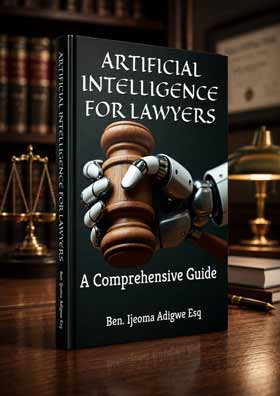 The book also examines Nigeria's legal ecosystem, focusing on the LPELR and NBA AI Guidelines. As a bonus, every purchase comes with a FREE eBook titled: How to Use the AI Features in LegalPedia and LawPavilion.
Ohio Books Ltd praises the publication, stating:
"....this is the only Nigerian book I know of on the topic."
How to Order:
📞 Call, Text, or WhatsApp: 08034917063 | 07055285878
📧 Email: benadigwe1@gmail.com
🌎 Website: www.benadigwe.com
Ebook Version: Access it directly online at https://selar.com/prv626
Authored by Ben Ijeoma Adigwe Esq., ACIarb (UK), LL.M, Dip. in Artificial Intelligence, Director at the Delta State Ministry of Justice, Asaba, Nigeria.
_______________________________________________________________________
The book also examines Nigeria's legal ecosystem, focusing on the LPELR and NBA AI Guidelines. As a bonus, every purchase comes with a FREE eBook titled: How to Use the AI Features in LegalPedia and LawPavilion.
Ohio Books Ltd praises the publication, stating:
"....this is the only Nigerian book I know of on the topic."
How to Order:
📞 Call, Text, or WhatsApp: 08034917063 | 07055285878
📧 Email: benadigwe1@gmail.com
🌎 Website: www.benadigwe.com
Ebook Version: Access it directly online at https://selar.com/prv626
Authored by Ben Ijeoma Adigwe Esq., ACIarb (UK), LL.M, Dip. in Artificial Intelligence, Director at the Delta State Ministry of Justice, Asaba, Nigeria.
_______________________________________________________________________