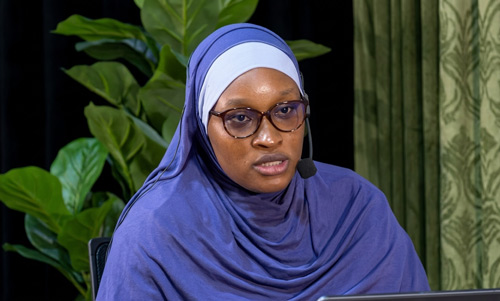
A former presenter of GIST Nigeria, a current affairs programme jointly produced by BBC Africa and Channels Television, Ms. Zainab Bala, has said that her decision to wear her hijab on air became a point of contention during her nine month engagement on the programme, and that her first recorded episode went unbroadcast for several weeks while programmes presented by a colleague continued to air.
Ms. Bala, an award-winning journalist and founder of The Scoop Storytelling Initiative, made the disclosure on the second episode of The HSM Tribe, a YouTube platform focused on Muslim women, which aired on 28 August.
She won the 2021 Michael Elliott Award for Excellence in African Storytelling from the International Centre for Journalists for her documentary on the abuse and neglect of Almajiri children, and was the 2024 recipient of The Future Awards Africa Prize for Journalism.
According to Ms. Bala, the matter arose at the point of recruitment in 2023. She said she wore her hijab to the interview and was asked directly whether she would present the programme with her head covered if she were offered the role.
“I said yes, because this is how I dress,” she said.
She said the BBC subsequently offered her the job, that she relocated from Abuja to Lagos, and that she began training before filming her first episode.
Ms. Bala said the programme was recorded with her hijab on at the Channels Television headquarters in Lagos, but that it was not broadcast for several weeks, while programmes presented by another member of the team continued to go out.
She said she later learnt from her editor that there had been discussions with the station about her appearance.
“The reason why my programme was not aired was that they had been having a back-and-forth with Channels, and that’s because Channels said they do not project a hijab-wearing person on their screens,” she said.
That account of the station’s position is what she says she was told by her editor, and no response from Channels Television appears on the record.
Ms. Bala said the development left her feeling stereotyped and demoralised.
The journalist said she had expected the question to have been settled at recruitment, since she had made her position clear before she was hired.
“I don’t think this is something to debate about,” she said.
She said the BBC subsequently sought to reach an accommodation with Channels Television that would permit her to continue wearing a head covering, but subject to restrictions on her appearance.
Ms. Bala said she initially considered resigning but chose to remain, on the view that her presence on the programme could create room for other Muslim women in the industry.
“I stayed because I realised that this was deeply rooted, and there hasn’t been any conversation around this,” she said.
She went on to present several editions of the programme, and said her background as a Muslim woman from northern Nigeria shaped some of the stories she brought to it, particularly reporting on women challenging stereotypes in the North.
The journalist said the hijab dispute was not the sole reason for her departure, alleging that she also experienced what she described as mental and emotional bullying from her editor.
She said the experience contributed to her decision to leave the organisation, notwithstanding that she had originally intended to move between BBC teams and build a longer career there.
“I just left for my peace of mind. It was the most depressing nine months of my life,” she said.
She further alleged that other members of the team had raised complaints about the editor’s conduct.
Enquiries were directed to the editor of GIST Nigeria, Ms. Omotola Adebanjo, and to the Head of West Africa at BBC News, Mr. Ehizojie Okharedia, on 5 September. The broadcaster was asked to confirm the account of the recruitment interview and the delay in broadcasting the first programme, and to say whether any policy or production guideline restricted presenters from appearing on air in a hijab.
It was also asked whether the journalist’s religious identity or appearance was a factor in decisions concerning her role, and whether she had raised complaints of bullying before leaving.
The Head of Communications at BBC News, Mr. Robin Miller, responded on behalf of the corporation. He initially questioned the premise of the enquiry, stating that the BBC had evidence that Ms. Bala presented GIST Nigeria on multiple occasions wearing her hijab.
“This contradicts much of what you have put to us in your questions below,” he said.
It was clarified to the broadcaster that the question was not whether she had appeared on screen with her head covered, but concerned the form of hijab she wore, including at her interview, and the discussions said to have taken place about her appearance not looking too Muslim. The BBC was also asked to respond to the allegation of mental and emotional bullying.
On 10 September, Mr. Miller forwarded a photograph of Ms. Bala presenting in a hijab, together with the corporation’s formal response.
“The BBC strives to be an inclusive workplace where every colleague feels respected, supported and able to do their best work,” the response stated.
He added that the BBC has presenters and correspondents who regularly wear the hijab on screen, “and this includes whilst presenting GIST Nigeria.”
On the bullying allegation, he said: “We do not comment on individual HR matters. However, as a general principle, we take complaints about bullying very seriously, and where allegations are made, they are fully investigated.”
The photograph supplied by the broadcaster was put to Ms. Bala, who disputed its provenance.
“This is a report, not a presentation of the show,” she said, adding that the image was taken from a report she filed rather than from her presentation of the programme.
She said she believed no footage exists showing her presenting the programme in the full hijab she ordinarily wears.
She acknowledged that other reporters have presented BBC programmes wearing their hijabs, but suggested that her circumstances may have differed because GIST Nigeria was jointly produced with Channels Television.
“I am hoping other Muslim women who come to these platforms are allowed to present shows without making compromises,” she said.
The wearing of the hijab in professional and institutional settings has generated litigation and controversy in Nigeria before.
In 2017, a law graduate, Miss Amasa Firdaus, was prevented from attending her Call to Bar ceremony after she declined to remove her hijab. She was permitted to attend the ceremony wearing the hijab the following year and was called to the Nigerian Bar.
In January 2019, the National Industrial Court sitting in Lagos determined a case brought by Ms. Hawaw Olatunji, who had been denied an interview at the Federal Medical Centre, Ebute Metta, on account of her hijab. The court held that refusing to interview her solely because she wore the hijab was discriminatory and violated section 42 of the 1999 Constitution.
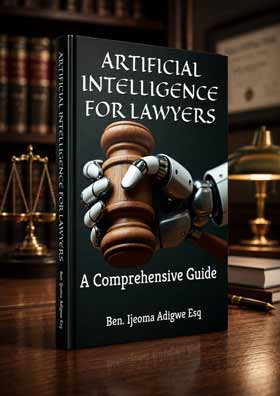 The book also examines Nigeria's legal ecosystem, focusing on the LPELR and NBA AI Guidelines. As a bonus, every purchase comes with a FREE eBook titled: How to Use the AI Features in LegalPedia and LawPavilion.
Ohio Books Ltd praises the publication, stating:
"....this is the only Nigerian book I know of on the topic."
How to Order:
📞 Call, Text, or WhatsApp: 08034917063 | 07055285878
📧 Email: benadigwe1@gmail.com
🌎 Website: www.benadigwe.com
Ebook Version: Access it directly online at https://selar.com/prv626
Authored by Ben Ijeoma Adigwe Esq., ACIarb (UK), LL.M, Dip. in Artificial Intelligence, Director at the Delta State Ministry of Justice, Asaba, Nigeria.
_______________________________________________________________________
“Enhance Legal Practice With Authoritative Reports” — Alexander Payne Offers Comprehensive Law Reports, Spanning Over A Century Of Nigerian Jurisprudence
The book also examines Nigeria's legal ecosystem, focusing on the LPELR and NBA AI Guidelines. As a bonus, every purchase comes with a FREE eBook titled: How to Use the AI Features in LegalPedia and LawPavilion.
Ohio Books Ltd praises the publication, stating:
"....this is the only Nigerian book I know of on the topic."
How to Order:
📞 Call, Text, or WhatsApp: 08034917063 | 07055285878
📧 Email: benadigwe1@gmail.com
🌎 Website: www.benadigwe.com
Ebook Version: Access it directly online at https://selar.com/prv626
Authored by Ben Ijeoma Adigwe Esq., ACIarb (UK), LL.M, Dip. in Artificial Intelligence, Director at the Delta State Ministry of Justice, Asaba, Nigeria.
_______________________________________________________________________
“Enhance Legal Practice With Authoritative Reports” — Alexander Payne Offers Comprehensive Law Reports, Spanning Over A Century Of Nigerian Jurisprudence
 Interested buyers are encouraged to place their orders and enquiries via:
0704 444 4777, 0704 444 4999, 0818 199 9888
Website: www.alexandernigeria.com
Interested buyers are encouraged to place their orders and enquiries via:
0704 444 4777, 0704 444 4999, 0818 199 9888
Website: www.alexandernigeria.com