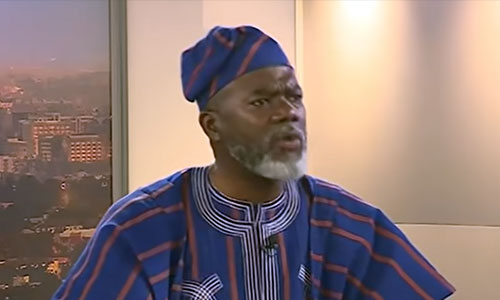
Nigeria’s Ambassador-Designate to Mexico, Honduras, Guatemala and Nicaragua, Mr. Reno Omokri, has said that President Bola Ahmed Tinubu is resisting the further release of United States Federal Bureau of Investigation (FBI) records relating to him not because they disclose any criminality, but because such files contain sensitive personal identifiers including DNA data, blood group, fingerprints and other biometrics.

Mr. Omokri, once among the President’s most persistent accusers and now among his most forceful defenders, made the case in a television interview examining the fresh litigation in the United States over the release of federal records concerning the President’s time in that country.
“They Contain Your DNA Records, They Contain Your Blood Group”
Asked why he holds so firmly that the records should not be released, when critics argue that a person with nothing to hide has no reason to resist disclosure, the ambassador-designate answered by analogy with a paternity controversy involving the musician David Adeleke, popularly known as Davido.
“One of the things the father said is that, look, I’ve got documents here that can prove that Davido is not the father of that girl. But I cannot release those documents to you because they contain DNA records. And if I give you those DNA records, they can be cloned and used to incriminate him,” he said.
“That is why the president does not want to release these FBI records, because the FBI records, they contain your DNA records, they contain your blood group, they contain your fingerprints, biometrics.”
He described how, in his account, such data reaches the bureau in the first place: “When you go to the US embassy and you take your biometrics, it goes directly to the FBI. When you give your financial information, maybe your account statements, it goes directly to the FBI. About your family, it goes directly to the FBI.”
Pressed on what specific harm publication would cause, he said the danger was not to the President’s case but to his person.
“They are not going to be harmful to the president or to his campaign, but they can be used as party in the hands of his political opponents to set up the president, to incriminate the president, because like I told you, these are biometric records, they are DNA records, they are blood group records, they are familial records, they are accounting records. You don’t want those records in the hands of your enemies.”
He put the question back to the interviewer: “If you were asked by the US embassy, can we release all of your biometric data to the public, I’m sure you’re not going to agree, because it is sensitive records, including your medical records.”
“161 Million Americans Have FBI Records”
Central to his argument is the distinction he draws between an FBI file and a criminal record.
“One of the things you’ve got to realise is that, first and foremost, those are not criminal records. They are FBI records,” he said. “I think the opposition, they’ve paid a lot of money to some fancy Washington lobbies to try to confound Nigerians with the use of the word criminal record. Nowhere, not the FBI, not the United States government, nowhere has anybody said that the president has an FBI criminal record.”
He continued: “161 million Americans have FBI records. You have an FBI record. If you have applied for a US visa, you have an FBI record. The FBI is mandated by the US government to run checks on everybody who applies for a US visa, on anybody in the United States who applies for a background check because of a job. So the vast majority of FBI records are non-criminal.”
On the volume of documents in issue, he said the page count is being used to create an impression: “My own FBI records, it’s actually in the hundreds of pages. Most Americans will have FBI records in the hundreds of pages, because your FBI record is going to have where you’ve lived, where you’ve worked, where you’ve gone to school, your biometric data. So FBI records are usually in the hundreds of pages. So they’re just trying to confound Nigerians.”
The 2003 Letter
The ambassador-designate produced and read from a letter he said was issued by the FBI in response to a Nigerian enquiry, dated 1 February 2003, during the tenure of the then Inspector General of Police, Mr. Tafa Balogun.
“Regarding Governor Bola Ahmed Tinubu, a record check of the Federal Bureau of Investigation National Crime Information Center was conducted. The result of the checks were negative for any criminal arrest records, warrants or wants for Bola Ahmed Tinubu,” he read.
He said the same document records the President’s date of birth as 29 March 1952, which he offered as an answer to claims about the President’s age.
Asked whether the letter settled everything, he said: “It did, because in law we call this a general traverse.” He added that its weight is increased by the circumstances in which it was obtained: “Don’t forget that at the time this letter came out, it was at the instance of a government that was hostile to then Governor Bola Ahmed Tinubu. Hostile to him.”
He named the officer he says signed the document and invited Nigerian media to verify it directly.
“In Nigeria you had a fellow called Michael Bonner, who was a senior FBI agent. He worked at the US embassy as a legal attaché, and thereafter he was an attaché at the National Drug Law Enforcement Agency. Now he was the one who signed this letter. This man is on LinkedIn. The Nigerian press can contact him and ask him.”
He said one newspaper had already taken up that challenge: “I believe on the 3rd of September, after I made that challenge, Vanguard contacted the American embassy to ask them, is this letter genuine? And then they got their answer and they published it. So if you’re a Nigerian media organisation, you can actually contact the US embassy.”
“The President Was Not The Subject Of That Investigation”
The clearest point of contention in the interview was whether the President was ever investigated at all. Mr. Omokri maintained that he was not.
“You said during this programme that the president was being investigated. No, the president was not investigated by the FBI. That is a wrong statement. It’s a false statement. Some persons were investigated by the FBI.”
He set out his account of the underlying facts: “The president was an accountant, and then the president had client funds. Those persons had been indicted by the FBI, and as a result of that, it said that certain funds, those funds are, would I say, suspicious funds. And then when it was brought to the attention of the president, the president agreed for a forfeiture. Now it was to the account, not the president.”
Asked to define what he means by an investigation, he said: “An investigation is where you are the subject of an investigation by a law enforcement agency. So for example, maybe if I was accused of filing false taxes, I will be the subject of that investigation.”
Put to him that a person may be a primary or secondary person of interest in an investigation, he drew a further distinction: “A person of interest is different from an investigation.”
He later accepted that an investigation did occur, while maintaining the President was not its subject: “There was an investigation. Bola Ahmed Tinubu was not the subject of that investigation. You could go and look at the documents. I think that part is already in the public domain. I know the persons who were being investigated. I don’t want to mention their names because I don’t want to hurt their families. I think one of them is even late right now.”
“That’s What You Do With Client Funds”
Challenged on why client money would be held in an accountant’s account rather than in a bank, Mr. Omokri said the question misunderstands ordinary professional practice, and cited a Nigerian precedent.
“We’ve got a similar scenario whereby you’ve had lawyers, senior advocates of Nigeria, not once, even the great Rotimi Williams, when he had clients that the police investigated and he kept money for those clients. It’s called client funds. And because the police was investigating those clients, the police seized those funds. Now coming out to say Rotimi Williams was investigated, Rotimi Williams is a criminal, is a false statement.”
He continued: “The president was an accountant, is still an accountant. He graduated cum laude. He had client funds. These clients were being investigated by the FBI, and then some of their funds were found suspicious. And so there was a forfeiture with regard to that. So you cannot say that the president was investigated. He wasn’t investigated at all.”
To the question of why client money sits in a professional’s account, he said: “Well, that’s what you do with client funds. When you go to accounting school and you go to law school, one of the things that they teach you is that you have an account, it’s called client account. This is just like asking a doctor, why do you have medicines in your cabinet? That’s what accountants do.”
“I Went There To Disgrace The President”
Reminded that he had himself gone on television years earlier to accuse the President over both his academic records and the drug allegations, Mr. Omokri confirmed the reversal and dated it precisely.
“I said all of that before September 19th, 2022. I went to Chicago. I landed September 18th. September 19th I went to Chicago State University. I can tell you who I met with. They gave me documentary evidence, photographic evidence, newspaper clippings, and then they have a hall where the president is there, because the president is an alumnus. People don’t even know that the president donates to Chicago State University.”
“And then right there in Chicago, I came out, even though it was against my own political best interest, and I said, look, it is not true. Because don’t forget, I went there to disgrace the president, but I found out that he actually was admitted, attended, and graduated Chicago State University.”
He said he also revisited the court records: “Thereafter, I went to the courts. And then when I went to the court, I came on this show, if you recall, after the Supreme Court’s judgment, and I said I was wrong. Listen, I honestly believed what the media reported, like most Nigerians. But I did something that no other Nigerian did. I went to Chicago. It was after I went to Chicago that the BBC followed me and then did their fact-finding, which vindicated the president.”
He said he had applied the same method to an allegation against a rival politician: “I didn’t just go to Chicago. I went to Peru when, if you remember, they accused Peter Obi of also being a drug lord. I thought it was true. I went there with a film crew to the prison. I interviewed the Peruvian officials. None of it was true. And then I published it. I said Peter is innocent. So that’s what I do. I follow the facts.”
On The Age Question
Responding to claims that the President is 91 years old, the ambassador-designate said he had answered them with photographic evidence.
“I immediately released a picture taken in 1993 of the president, at that time he was a senator, and the publisher of Ovation magazine, Dele Momodu. And I said to Nigerians, at that time, if the president is 91, then that was 33 years ago. Does he look like somebody in his late 50s or in his 60s? Obviously Dele Momodu is alive. Dele Momodu can testify.”
He said he had published further material, including a photograph of the President in his forties as governor and a video from a Ramadan lecture, and dismissed the entire line of enquiry.
“This is campaign season. Some persons are desperate, and so instead of focusing on issues, because probably they don’t have any issues, they’re just casting aspersion. Even if the president is not 91, and obviously we’ve established that he’s not 91, the FBI has also established that his date of birth is 29 March 1952. But even if the president was 91 years old, is that the issue right now? What about the economy? What about security? What about health? Those are the things that we should be talking about in Nigeria, not age shaming the president.”
On Primary And Secondary School Records
Asked whether he could name the primary or secondary school the President attended, or identify any classmate, Mr. Omokri answered by reference to the era.
“Are you aware that at the time the president would have gone to primary school, secondary school, most Nigerians were not going to regular schools? A lot of them were being homeschooled. If you ask some of these opponents of the president to produce their primary school classmates, they cannot.”
He added a personal illustration: “I’ve got a child. My child is being homeschooled. My wife is an Ethiopian. My wife was homeschooled. So these are not issues that people should be talking about right now.”
On the constitutional threshold, he said: “We know for a fact that the president is qualified for the position he’s holding and for the position he wants to be re-elected to. He went to Chicago State University. The registrar of that school went to court and under penalty of perjury confirmed that Bola Ahmed Tinubu was admitted, attended and graduated from that school. That is enough prima facie case to say that this man is qualified for that position.”
“Relitigating Them Now Is Madness”
Put to him that the personal records of candidates are routinely scrutinised in the United Kingdom and the United States, and that voters are entitled to ask critical questions, the ambassador-designate said the matters are closed.
“Listen, these issues were litigated in 2023. Seeking to relitigate them now is madness, because Einstein said doing the same thing and expecting different results is madness. All of these issues, every one of them that you talked about, they were all litigated all the way to the Supreme Court. They were litigated in the United States. There is no new issue. So why should we be relitigating issues that are already settled by the Supreme Court here, and by circuit courts in the United States?”
Asked whether he had read the pages produced by the FBI and the Drug Enforcement Administration, portions of which were withheld or redacted under exemptions relating to privacy, confidential sources and investigative techniques, he declined on the ground that the matter remains before the courts.
“That is a case that is before the courts, and I’ve got a masters in law. It’s expected of me to be an amicus, a friend of the court. So that’s sub judice. I’m not going to respond to a question that is before the court.”
He added of the presiding judge: “The judge is a woman of virtue. She’s a judge of very high standing.”
On The Washington Lobby
The ambassador-designate said the campaign in the United States is the work of a paid lobbying operation rather than a law firm, and dismissed its effect.
“This so-called firm have been releasing statements on X, formerly Twitter. That’s all they’ve been doing, and then sometimes when they are caught in a lie, they delete the X post.”
Asked whether the effort was not damaging Nigeria’s reputation, he replied: “It might be decimating the reputation of the country in the eyes of ignorant people. I was a political consultant. I spoke at Congress. I spoke at the US Institute for Peace. I spoke at Oxford University. I spoke at the TRT World Forum with President Erdogan. So if you go to such events and then you speak and you produce documentary evidence, then you can unnerve people. But if you’re on X releasing statements, anybody can do that.”
On why the United States has become the theatre for the dispute, he offered what he described as guesswork: “I think that they’ve collected money from whoever they’ve collected money from, and then the person has told them, I want you to do this in the United States. So obviously they are just obeying what whoever has paid them has told them to do.”
He also rejected the claim that the President has difficulty entering the United States: “The president has been in the United States under this administration. He’s been in the United States under the previous administration. He’s been in the United States under the Obama administration. So what do they mean by the president does not have easy passage to the United States? This is campaign season.”
“27 States Could Not Pay Salaries”
Turning to the administration’s record, Mr. Omokri rejected the argument that the reforms have produced pain without relief.
“On May 29, 2023, 27 states could not pay salaries,” he said, citing Osun State as an example. “Osun State had federal allocation under General Buhari of 3.5 billion naira. Meanwhile, their wage bill was 4 billion naira. So they could not pay their salaries. Right now, as I speak to you, under President Bola Ahmed Tinubu, Osun State receives 15 billion federal allocation every month.”
He continued: “There is no state in Nigeria that is not getting at least three, some of them at least five times, what they were getting prior to President Tinubu. So you have 27 states with 1.2 million civil servants now getting paid, and 1.1 million federal civil servants that are getting paid, and you’re saying that is suffering.”
On education, he said: “Right now you have over one million students collecting student loans from NELFUND, and you’re saying that is pains.”
He cited two road projects: “It takes 19 hours to drive from Sokoto all the way to Badagry. Now we are building the Sokoto to Badagry Super Highway, which is going to cut that time. So you’re going to be able to do that journey in eight hours. Now the 750 kilometre Lagos-Calabar Coastal Highway is going to reduce that 12-hour journey to a six-hour journey.”
He also said federal allocation to states had increased by a multiple of five, that 67 billion dollars had been added to the economy in two years, and that Nigeria had moved from being the largest importer of petroleum products to the largest exporter in West Africa.
“When Was The Last Time Nigerians Slept In Fuel Stations?”
Asked directly whether the average Nigerian is better off than in May 2023, he answered in the affirmative and gave his measures.
“Obviously the average Nigerian is much better off today. Why do I say so? When was the last time Nigerians slept in fuel stations? Nigerians have not slept in fuel stations since this man became president. There is no availability problem in Nigeria.”
He said the contrast holds internationally: “I did a video where there were availability issues in the United States and in the United Kingdom also. I went to Kenya. I did a video in Kenya. Availability issues in Kenya. In this country, Nigeria, there were no availability issues.”
He added: “When was the last time you heard of an ASUU strike? Under this government, there has been not a single nationwide ASUU strike.”
He then identified what he considers the country’s principal problem: “Nigeria’s main issue is not insecurity. Nigeria’s main issue is out-of-school children. We’ve got 20 million out-of-school children in this country. And this president is investing in education. After security, education has the highest sectoral allocation.”
“They Define Poverty As A Person Living On Less Than $2 A Day”
Confronted with World Bank estimates that 63 per cent of Nigerians were below the national poverty line in 2025, with a further seven million falling into poverty that year, Mr. Omokri disputed not the data collection but the benchmark.
“The World Bank and the IMF, they work with a rate that is global. And so how do they define poverty? They define poverty as a person living on less than two dollars a day. So in the United States, if you’re living on less than two dollars a day, that is poverty. But in Nigeria, what is two dollars in a day?”
He argued that purchasing power differs materially: “In Nigeria, people can live on that amount in a day. But in the United States, if you try to live on that amount in a day, it is poverty. So context matters.”
Asked whether he was rejecting the World Bank’s benchmark outright, he said he was not: “I’m saying that the World Bank is using a global benchmark. What I said is that we should domesticate their metrics. So some of their metrics will apply to us, not all.”
He extended the same argument to corruption measurement, recalling a remark he said he made at an international forum: “I said that Nigeria is not as corrupt as the world thinks it is, because the metrics that they are using to gauge corruption is a global metric and it does not take into account the particular culture of Nigeria. I gave an example. I said in the United States, tipping is expected. But that’s not our culture. Even before colonialism, when a public officer does his duty, you are able to show appreciation to them. Now when you do that, Transparency International sees that as corruption, but it is not corruption.”
He said the same body had also praised the reforms: “This same World Bank, in February this year, their vice president said that Nigeria is now an example that they give to every nation in the world about reforms that work.”
Asked what metric he would substitute, he named inflation: “The metric that we should use in Nigeria is the inflation rate, the consumer price index. That is the best metric that we can use. When this president took office, May 29, 2023, it was almost 30 per cent. I believe it was about 28.59 if my memory serves me correctly. Today it’s half that.”
“There Are A Lot Of People Living In Poverty In This Country”
Asked plainly whether those who say they are suffering and cannot feed are right or wrong, the ambassador-designate conceded the point while defending the direction of policy.
“Listen, there are a lot of people living in poverty in this country. There are a lot of people living in poverty. Before this administration came, there were a lot of people living in poverty. But this administration is doing the right things to take people out of poverty.”
He identified devolution of resources as the principal instrument: “This administration is devolving power from the federal government to the local government. Right now, I think in about a month’s time, you’re going to be having local governments getting their allocation directly. The president has threatened the state governors that if you don’t do it, I’m going to do it. So you’re going to be seeing a lot of development going down to the local government.”
He said responsibility is wrongly concentrated on one office: “The point is that everybody looks to the president. I was seeing a professor of law blaming the president for our water. Water is actually meant to be the premise of the state government and the local government. But in Nigeria, we just want to look at the president.”
On The Charge That Endurance Is Being Mistaken For Success
Put to him that a prominent opposition figure has argued that the removal of the subsidy delivered higher living costs rather than prosperity, and that Nigerians’ capacity to endure hardship should not be confused with policy success, Mr. Omokri declined to attack the individual and answered by example.
“I do not want to criticise him. He’s been good to me and I’m not an ingrate, so I’m going to take things generally.”
He cited the departure of a ride-hailing company from the Nigerian market as evidence of infrastructure gains: “The business model that Uber has is that they come into your country and they bring about mass low-ticket transportation so that they price out the regular taxis. They tried that in this country and it was succeeding. But the infrastructural development in Lagos has been so extensive that it’s now possible for you to get from point A to point B in Lagos at a fraction of a cost using the blue line, the red line, and soon the green line. In Abuja, you can get from this station to the airport by rail. And so Uber could not compete.”
“The President Has Already Won The Election”
On the 2027 contest, the ambassador-designate was categorical.
“President Tinubu has already won the election,” he said, adding: “I am giving anticipatory approval. Why do I say so? The best predictor of future events is past events. If this president could win the 2023 election with just, I think he had 19 governors at that time, he had a hostile government at the centre, he had the naira policy that was designed to ridicule him, and yet he won. How much more now that he’s an incumbent? He has about 30 governors.”
He pointed to recent rallies in Katsina and Kano as evidence of northern acceptance. Challenged that rally attendance is an unreliable indicator, since the same crowds have historically moved between parties, he turned to the governors of the rivals’ home states.
“The president’s biggest rivals probably would be Peter Obi and Atiku. In Adamawa State, the present governor and the immediate past governor are for the president. They are mobilising for the president. In Anambra State, where Peter Obi comes from, the governor is for the president. So if you cannot convince your own governor and your own people to come out en masse to support you…”
He predicted the disappearance of what he called the protest vote of 2023: “There were protest votes, because people had never seen in Nigeria a Muslim Muslim ticket. So there was a lot of fear-based voting by Christians who thought that we’re going to be having a government that’s going to be anti-Christian. But they’ve seen that for the first time in the history of this nation, a president went to Rome to attend the inauguration of a pope. We’ve had Christian presidents who never did that. So that protest vote is going to disappear. The president is going to win by a very wide majority in 2027.”
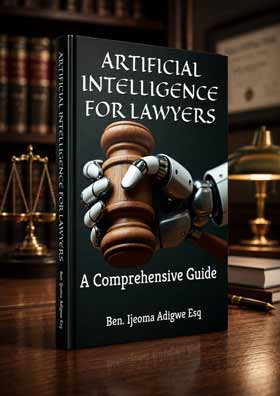 The book also examines Nigeria's legal ecosystem, focusing on the LPELR and NBA AI Guidelines. As a bonus, every purchase comes with a FREE eBook titled: How to Use the AI Features in LegalPedia and LawPavilion.
Ohio Books Ltd praises the publication, stating:
"....this is the only Nigerian book I know of on the topic."
How to Order:
📞 Call, Text, or WhatsApp: 08034917063 | 07055285878
📧 Email: benadigwe1@gmail.com
🌎 Website: www.benadigwe.com
Ebook Version: Access it directly online at https://selar.com/prv626
Authored by Ben Ijeoma Adigwe Esq., ACIarb (UK), LL.M, Dip. in Artificial Intelligence, Director at the Delta State Ministry of Justice, Asaba, Nigeria.
______________________________________________________________________
[A MUST HAVE] Evidence Act Demystified With Recent And Contemporary Cases And Materials
The book also examines Nigeria's legal ecosystem, focusing on the LPELR and NBA AI Guidelines. As a bonus, every purchase comes with a FREE eBook titled: How to Use the AI Features in LegalPedia and LawPavilion.
Ohio Books Ltd praises the publication, stating:
"....this is the only Nigerian book I know of on the topic."
How to Order:
📞 Call, Text, or WhatsApp: 08034917063 | 07055285878
📧 Email: benadigwe1@gmail.com
🌎 Website: www.benadigwe.com
Ebook Version: Access it directly online at https://selar.com/prv626
Authored by Ben Ijeoma Adigwe Esq., ACIarb (UK), LL.M, Dip. in Artificial Intelligence, Director at the Delta State Ministry of Justice, Asaba, Nigeria.
______________________________________________________________________
[A MUST HAVE] Evidence Act Demystified With Recent And Contemporary Cases And Materials

 Interested buyers are encouraged to place their orders and enquiries via:
0704 444 4777, 0704 444 4999, 0818 199 9888
Website: www.alexandernigeria.com
Interested buyers are encouraged to place their orders and enquiries via:
0704 444 4777, 0704 444 4999, 0818 199 9888
Website: www.alexandernigeria.com