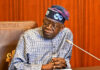
The newly inaugurated President of the Nigerian Bar Association, Oyinkansola Badejo-Okusanya, SAN, entered office with an extensive campaign manifesto built around what she called a five-point #BBOLD Agenda, promising reforms touching virtually every aspect of lawyers’ professional and personal lives remuneration, employment, welfare, health, workplace protection, technology, professional development, access to justice, protection from law-enforcement abuses, Bar-Bench relations, inclusion, public-service lawyers and institutional accountability.

A review of the 20-page manifesto shows that Badejo-Okusanya did not present the document merely as a statement of aspirations. She expressly described it as a “covenant” with NBA members, promising that every commitment would have a clear timeline, an implementation structure, measurable outcomes and periodic reporting obligations.
At the foundation of the programme, she said every policy of her administration would be judged on three tests: achievability, scalability and sustainability. She pledged to “audit what exists, strengthen what works, fix what doesn’t, [and] build what is missing.”
The five pillars are Earn Better, Live Better, Practise Better, Protected and Respected, and A Bar That Works.
Under the first pillar, Earn Better, Badejo-Okusanya rejected the traditional conception of lawyers’ welfare as merely providing assistance to members in difficulty. She argued that welfare should principally enable lawyers to earn more, live better and practise better through economic dignity, professional growth, fair remuneration, protection from exploitation, access to employment and cheaper tools for legal practice.
One of her biggest promises is enforcement of the Legal Practitioners Remuneration Order. She pledged not only to advocate compliance but to ensure the effective operationalisation of the statutory Remuneration Committee responsible for periodically reviewing and prescribing minimum remuneration standards for lawyers.
Her administration also promised to work through NBA branches to increase awareness and enforcement of remuneration standards across the profession.
For young lawyers, Badejo-Okusanya promised to advocate a structured pupillage system accompanied by a mandatory living wage. The manifesto proposes remuneration benchmarks specifically for pupil lawyers and younger practitioners and commits the NBA to pushing law firms and other legal employers to comply with approved remuneration standards.
Public-sector lawyers were also expressly included. She promised continued advocacy for better remuneration, welfare and career progression for law officers and other lawyers serving in government.
The manifesto further promised action against workplace harassment, bullying, discrimination, victimisation and exploitation, particularly where younger lawyers are affected.
Her administration said it would create safe institutional channels through which lawyers could report workplace misconduct and obtain assistance, while promoting professionalism, dignity and mutual respect within legal workplaces.
It also promised to explore access-to-finance programmes for legal practitioners, intended to give lawyers practical financial support and development opportunities to strengthen and sustain their practices.
Protection of lawyers in the discharge of professional duties was identified as another core commitment. Badejo-Okusanya argued that where a lawyer is intimidated, assaulted, unlawfully obstructed, denied access to a client or humiliated while representing a client, the damage extends beyond the individual lawyer to the justice system itself.
She consequently promised an NBA–Police Lawyer Access Protocol, intended to clearly define and protect the rights of lawyers at police stations and other law-enforcement facilities. The proposal includes direct escalation channels to Commissioners of Police and other relevant authorities for immediate intervention where lawyers encounter obstruction or abuse.
Inside the courtroom, she proposed a Bench–Bar Dignity Charter, alongside a strengthened Bar-Bench Liaison framework, to deal with allegations of judicial overreach, intimidation, improper use of contempt powers and discourtesy by lawyers or their clients.
Her stated objective is to ensure that courtrooms remain forums of “law, courtesy and respect” rather than places of fear or humiliation.
The second pillar, Live Better, widens the welfare programme beyond salaries and professional fees.
Badejo-Okusanya promised attention to a health scheme, emergency assistance, disability support, family welfare, insurance partnerships, maternity support, membership privilege benefits and greater inclusion.
“No lawyer should have to face hardship alone,” the manifesto declares.
Recognising what she described as the intense pressures associated with legal practice, she also promised to prioritise mental-health and wellbeing support, saying members facing pressures from work and life should have somewhere within the Association to turn in moments of vulnerability.
Her administration committed itself to advocating six months’ paid maternity leave and family-friendly workplace standards, including crèche facilities, nursing support and workplace wellbeing spaces.
It also promised stronger anti-harassment reporting and protection mechanisms.
The manifesto promises disability-inclusive standards across NBA branches, conferences and professional opportunities, regular national town hall-type engagements for feedback, stronger branch equity programmes and leadership mentorship pathways for women lawyers through the Nigerian Bar Association Women Forum.
Badejo-Okusanya further promised measurable representation and participation for groups she considered underrepresented within the NBA.
Her inclusion programme specifically identifies women, young lawyers, academics, lawyers with disabilities, in-house counsel, law officers, lawyers serving in security agencies and the Armed Forces, and colleagues pursuing alternative career paths.
She said the objective was to formally recognise the particular needs, perspectives and professional interests of the different constituencies that make up the Nigerian Bar.
Appointments under her administration were also promised to be diverse and reflective of the breadth of the profession, with clearer leadership pathways particularly for women and younger lawyers.
She additionally pledged platforms for regular interaction, consultation and accountability between the leadership and members.
“Inclusion is not charity. It is justice,” the manifesto states, while reiterating proposals for six-month paid maternity leave, compulsory crèche facilities in workplaces employing nursing mothers and family-support and recreation standards intended to improve work-life balance.
Under the third pillar, Practise Better, the manifesto again places lawyers’ economic condition at the centre of professional reform.
Badejo-Okusanya argued that a financially insecure legal profession cannot confidently defend democracy or uphold the rule of law, making economic dignity and professional growth a defining objective of her presidency.
She promised to take implementation of the Legal Practitioners Remuneration Order beyond sensitisation.
The programme proposes branch-based Remuneration Compliance Desks nationwide to monitor compliance and provide intervention where there is underpricing, exploitative briefing arrangements or suppression of professional fees.
It also proposes practical tools including a digital fee calculator, standard fee-note templates, standard retainer templates and complaint channels for undercutting and exploitative fee practices.
Her administration undertook to engage governments, public institutions, corporate organisations and private-sector clients that regularly retain lawyers to encourage compliance with appropriate professional fees.
The manifesto specifically identifies the low salaries paid to many young lawyers as a serious professional problem.
“No lawyer should be forced to choose between professional survival and professional standards,” she stated.
She promised targeted engagement with legal employers to encourage living wages and more humane, less oppressive working environments.
A structured national mentorship programme is also promised, connecting early-career lawyers with senior practitioners and subject-matter specialists.
This would be backed by targeted Continuing Legal Education programmes, advocacy and drafting training, practice-readiness workshops, digital support and opportunities for younger lawyers to participate in leadership and governance.
The stated philosophy is that the profession should develop its youngest members “rather than breaking them before it builds them.”
Another major proposal is the NBA Career Hub, envisioned as a digital platform connecting members with jobs, internships, mentorship programmes, skills-development opportunities and other career resources.
Alongside that, she promised a Digital Enterprise Support Desk to assist lawyers in building sustainable practices through practice-management guidance, branding, pricing strategies, technology adoption and business-development advisory services.
The NBA under her leadership also promised to resist unlawful encroachment into areas of work reserved for lawyers and to promote mandatory engagement of legal services where appropriate.
She described the overall objective candidly as putting “more money in lawyers’ pockets, ethically, professionally, and sustainably” while restoring the economic value of legal services.
For lawyers employed by government, Badejo-Okusanya promised advocacy for improved entry-level grade placement, welfare benefits and career-progression parity, arguing that lawyers in public service should receive professional recognition and remuneration comparable to other regulated professions, including medical practitioners.
The fourth pillar is Protected and Respected.
Its core commitments include rapid response to threats against lawyers, police engagement, lawyer-protection protocols and defence of the professional independence of lawyers.
Badejo-Okusanya promised to reposition the NBA as what she described as the “conscience of the nation”, insisting that the Association should not remain silent when justice, democracy or constitutional order is threatened.
Her administration pledged to restore the NBA as a leading institutional voice on constitutionalism, judicial independence, human rights, access to justice and the rule of law, and to apply those principles consistently rather than selectively.
She further promised a coordinated pro bono framework across NBA branches, deeper partnerships with legal-aid organisations and NBA participation in prison-decongestion programmes.
The Association would also undertake strategic interventions on judicial independence, electoral integrity, constitutional governance and democratic accountability.
Among the more measurable institutional proposals is NBA Justice Watch Nigeria, described in the manifesto as a digital performance tracker that would monitor court efficiency, delays, access-to-justice indicators and broader justice-sector performance.
The intention, according to the document, is to use data to strengthen accountability and inform justice-sector reform.
Badejo-Okusanya also promised to strengthen the Bar-Bench Liaison Committee to confront courtroom harassment, protect counsel from intimidation and challenge unlawful deployment of contempt powers.
The manifesto specifically states that courtroom dignity and professional independence must be protected, particularly for younger lawyers.
Public-service lawyers again feature prominently in this pillar.
Her administration promised to support reforms enabling government lawyers to participate fully in NBA affairs and leadership and to seek a review of restrictions affecting professional rights such as the exercise of notarial functions, where appropriate.
She also undertook to advocate funding support for the Nigerian Law School, including engagement with the Federal Government, National Assembly and relevant education institutions to expand sustainable financing for legal education and professional training.
The promise attached directly to her leadership style was equally clear: she said she would be a President who “will speak boldly and act swiftly for the Bar” and defend both the profession and the wider public interest with courage and conviction.
The final pillar, A Bar That Works, focuses heavily on technology, institutional efficiency and accountability.
Its components include a performance dashboard, transparency mechanisms, Secretariat reform, branch support and data-driven governance.
Badejo-Okusanya promised what she called a “Digital, Dynamic and Delivering NBA”, combining responsive services, digital infrastructure, professional development, branch empowerment and institutional accountability.
Central to that proposal is an improved digital member portal and dedicated NBA mobile application, through which members would be able to access major services and interact more easily with the Association.
She also promised to explore an NBA Member Privilege Card for financially compliant lawyers, with negotiated discounts and benefits covering healthcare, transportation, hotels, banking, insurance, legal software and family-welfare services.
The manifesto insists that annual Bar dues should produce measurable benefits for members.
A proposed NBA Practice Support Portal would provide precedents, drafting templates, filing checklists, court practice directions, procedural guides, CPD materials and AI-ready research-support frameworks.
The administration further promised to negotiate national-scale discounted access to legal technology, including research databases, document-automation platforms, secure collaboration tools and at least one online law-report service.
“Research must not remain a luxury reserved for a few,” the manifesto states.
Continuing Professional Development is also targeted for modernisation through voluntary hybrid learning programmes, on-demand digital modules, specialist certifications and sector-specific pathways designed for emerging areas of legal practice.
On accountability, she promised regular performance reports, a member-feedback dashboard, data-driven surveys and measurable deliverables for NBA committees.
She described the plan as more than digitisation, insisting that it is fundamentally about service delivery — building a Secretariat that responds faster, communicates better and gives lawyers visible value for their membership.
Branches were promised technology, resources, grants, leadership support and stronger coordination with the national body.
The broader objective is an NBA in which processes involving dues, stamp and seal, welfare, practice support, CPD and other services become seamless, transparent and digital-first.
The manifesto concludes with perhaps the most important benchmark by which the new President has asked members to assess her administration.
Badejo-Okusanya said her campaign was based on “delivery, not declarations” and maintained that it was not built on empty promises.
She described her manifesto as a covenant rather than a catalogue of aspirations and expressly promised that every commitment would be attached to four things: a clear timeline, a responsible implementation structure, a measurable outcome and periodic reporting obligations.
“This campaign is not built on empty promises. It is built on principles. It is built on values. It is built on a proven commitment to service,” she stated.
She also said her presidency would not be “ceremonial leadership,” but would pursue economic dignity, professional pride, inclusion, institutional discipline and an Association that works for everyone.
Badejo-Okusanya, who became the first elected female President of the NBA, was equally explicit that she did not want the historical significance of her election to become the principal measure of her tenure.
“I do not simply seek to make history. I seek to make a difference,” she declared.
Her concluding promise was to restore economic dignity to lawyers, create professional opportunities and build an Association in which members can “earn better, live better and practise better.”
Taken together, the manifesto leaves the new NBA administration with an unusually broad and measurable set of commitments. They range from relatively concrete deliverables — such as a Career Hub, Practice Support Portal, Member Privilege Card, Justice Watch Nigeria, digital fee calculator, remuneration desks, digital member portal and Police Lawyer Access Protocol — to broader policy commitments on salaries, pupillage, maternity leave, disability inclusion, public-service lawyers, judicial independence and access to justice.
More significantly, Badejo-Okusanya herself supplied the standard against which those promises can ultimately be assessed: timelines, identifiable implementation structures, measurable results and periodic reports to members.
Her two-year tenure will therefore provide an opportunity to determine not merely how many initiatives are announced, but how many of the specific commitments contained in the #BBOLD manifesto move from campaign promises to functioning programmes that lawyers can actually see, access and measure.
[A MUST HAVE] Evidence Act Demystified With Recent And Contemporary Cases And Materials

Available now for NGN 40,000 at ASC Publications, 10, Boyle Street, Onikan, Lagos. Beside High Court, TBS. Email publications@ayindesanni.com or WhatsApp +2347056667384. Purchase Link: https://paystack.com/buy/evidence-act-complete-annotation
______________________________________________________________________ “Enhance Legal Practice With Authoritative Reports” — Alexander Payne Offers Comprehensive Law Reports, Spanning Over A Century Of Nigerian Jurisprudence Interested buyers are encouraged to place their orders and enquiries via:
0704 444 4777, 0704 444 4999, 0818 199 9888
Website: www.alexandernigeria.com
Interested buyers are encouraged to place their orders and enquiries via:
0704 444 4777, 0704 444 4999, 0818 199 9888
Website: www.alexandernigeria.com