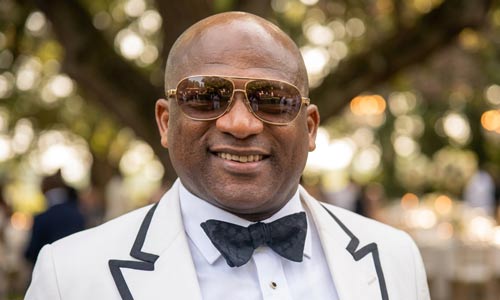
A Senior Advocate of Nigeria and the Tolugbogwa of Warri Kingdom, Eyimofe Atake, SAN, has said that public confidence in the Nigerian justice system will follow only when litigants experience three things speed, consistency and enforcement and that the government itself must be the most obedient litigant in the land.

Atake spoke in an interview with Naomi Chima, in which he traced his path to Silk, the cases he regards as the landmarks of his career, the reforms he would make to the judiciary, and the chieftaincy he holds under the Olu of Warri.
Asked what taking Silk at 41 taught him, the senior advocate said the rank certifies work already done.
“It taught me that excellence is not an event but a habit, practised daily until it becomes character,” he said.
He recalled a formative year in the chambers of Chief G.O.K. Ajayi, SAN, before founding Eyimofe Atake & Co. in 1988, and said the rank came in 1999 after less than 12 years in active practice, having gone from the Nigerian Law School to the University of Cambridge for a doctorate in law.
“There was a certain symmetry to it: I took Silk at 41, the very age at which my father was elevated to the High Court Bench in 1967,” he said.
He added: “Nobody becomes a senior advocate on the day of the announcement. You become one through years of often-unwitnessed labour, and the rank merely certifies what the work has already made of you.”
On the quality a Senior Advocate must possess, Atake named integrity ahead of brilliance.
“Brilliance without integrity is a weapon, while brilliance governed by integrity is an institution,” he said. “The rank of senior advocate is, at its core, a certificate of trust. The courts must be able to rely absolutely on what you tell them, and clients must know that your advice serves their interests and the law, never merely your fee.”
He described the contest for the rank in his day as ferocious. “We were widely considered too young, and only 12 senior advocates were appointed in my set, so the competition was keen and severe. It was not unusual to have to apply more than once.”
He disclosed that a petition followed the conferment. “Even after our conferment, a petition was sent by a SAN to the Chief Justice of Nigeria contending that we were too young, and my name was specifically mentioned in it.”
He said the Chief Justice replied, copying Chief F.R.A. Williams, SAN, then Chairman of the Body of Senior Advocates of Nigeria, and “stated that we met all the criteria, had appeared repeatedly in the courts, particularly the Supreme Court, and that the Legal Practitioners Act nowhere disqualified a candidate on the grounds of age,” noting also that the candidates had come highly recommended by justices of the Supreme Court themselves.
“It was a masterly application of the law and the criteria, and I still keep copies of that petition and the Chief Justice’s response in my archives to this day,” he said.
Of his earlier unsuccessful attempts, he said: “The profession owes you nothing, and disappointment is simply instruction wearing an unfriendly face. I went back, strengthened the record and tried again. The answer to a setback is better work, not bitterness.”
Asked for the memorable moments of his career, Atake named three cases.
The first, in 2009, arose where two vital witnesses in the United States were elderly, gravely ill with cancer and unable to travel.
“Let me be precise about how it was done: it was done strictly within the law,” he said. “As a student of international law, I argued that the jurisdiction of the Federal High Court, as the law then stood, ran throughout Nigeria, and that, in law, the premises of the Nigerian Embassy in Washington and our Consulate in New York were Nigeria. I submitted that if the proceedings were conducted within those premises, the court would still be sitting in Nigeria.”
He said the judge was initially unpersuaded. “But as the advocacy progressed, she became convinced, particularly because the interest of justice demanded that the evidence of dying witnesses, which was vital to putting my case to bed, be preserved.”
The matter was contested to the Supreme Court and won. “To my knowledge, it remains without precedent,” he said.
The second was The Vessel Saint Roland v. Adefemi Osinloye, decided by the Supreme Court on 21 April 1997 and reported in Part 500 of the Nigerian Weekly Law Reports, in which he led his brother, Adewale, for the shipowners.
He set out the facts. The plaintiff had arrested the clients’ vessel over a missing Peugeot 505 saloon car. To secure her release, the chambers handed the plaintiff’s counsel a bank draft for N200,000, held in trust as security under a written agreement between counsel, to be returned against a bank guarantee in the same sum.
“The guarantee was duly delivered and rejected. The draft was cashed. When the car itself was found and discharged at Apapa, ready for collection, the plaintiff’s answer the next day was to file a notice of discontinuance and keep our client’s money,” he said.
He recalled the record of his address. “The law report itself preserves the temperature of that day. The leading judgment recorded that I submitted, in a clear, emotional and passionate address and with considerable force, that the conduct in the entire issue bordered on fraud.”
He added: “I plead guilty to the emotion. An advocate who is not moved by injustice should not expect the court to be.”
On the principle he urged, he said: “I urged the Supreme Court to adopt a principle our courts had never before pronounced: that a notice of discontinuance, though validly filed without leave, could itself amount to an abuse of the process of the court where the plaintiff had used the machinery of the court to gain a substantial advantage to the detriment of the defendant. I argued that the court could set such a notice aside or allow it to take effect only on terms.”
The court agreed unanimously. “It pronounced the discontinuance in that case a definite abuse of process, affirmed the inherent power of the court to prevent a litigant from retaining a collateral advantage obtained through its process even after discontinuance, and ordered that the money be refunded within seven days.”
He summed up the holding: “Discontinuance, in other words, is not an escape hatch. A plaintiff cannot ride the process of the court to advantage and then dismount when the reckoning comes. It was the first time that principle was laid down in Nigerian law, and every defendant who has faced a hit-and-run plaintiff since then has that decision to lean upon.”
The third was Justice F.O.M. Atake v. Chief Nelson Asigboro Afejuku (1994), his father’s case, and his first appearance as a junior before a full court of seven justices of the Supreme Court, which he described as a rarity in the military era when constitutional cases were few.
“My father, a retired judge, had commenced a prosecution for criminal libel over defamatory publications against him and appeared in person. The trial judge raised, suo motu, the constitutional question of whether a judicial officer who had ceased to hold office could appear for himself. The judge declined to hear him further, ruled against him and struck out the case,” he said.
“My father whispered to me in court to take over, and I did, through the Court of Appeal, which agreed to refer the constitutional question to the Supreme Court.”
He recalled the moment. “The court stood down the case of the great Chief F.R.A. Williams, SAN, to hear our constitutional point, so that the giant of the Bar sat watching as I argued.”
The decision was unanimous. “A judicial officer who has ceased to hold office may appear for himself in person,” he said. “Walking out of that full court in the early 1990s, I knew that Silk was possible, and a few years later, I began to apply.”
He noted that he led his brother, Adewale, in both Supreme Court appearances. “The Silk came to me in 1999 and to Adewale in 2018. I count it among my quiet satisfactions that the cases two brothers fought side by side eventually ripened into two senior advocates in one household, with the second forged in the chambers of the first.”
On the losses, he said: “The ones that linger are never about me. They are the cases in which I remain convinced the law was on our side and the decision went the other way. A lawyer who has stopped being troubled by those has stopped believing in the law, and I have not.”
Asked how public belief in the justice system can be improved, Atake set out three requirements.
“Give the ordinary Nigerian three experiences, and belief will follow: speed, consistency and enforcement,” he said. “A system in which a simple dispute can outlive the disputants forfeits the confidence of the people it serves.”
He defined the other two. “Consistency means that cases are decided alike, so that citizens can plan their lives around the law. Enforcement means that a judgment is not a suggestion. Court orders must bind the powerful exactly as they bind the powerless, and government itself must be the most obedient litigant in the land.”
He added: “Faith in justice is built one honest, prompt and enforced decision at a time.”
Asked what he would reform in the judiciary, the senior advocate named time, discipline and independence.
“First, time: strict, enforced case-management timelines at every level and a decisive curbing of the abuse of interlocutory appeals,” he said.
“Second, discipline and integrity: a transparent and rigorous system for judicial appointments based on demonstrated learning and character, matched by a disciplinary process that is swift and fearless.”
“Third, independence: financial autonomy honestly implemented and conditions of service that allow judges to live and retire with dignity.”
He explained the last. “A judiciary that must look to the other arms of government for its comfort will struggle to look them in the eye when delivering judgment.”
On handling pressure in court, Atake said the answer lies before the hearing.
“Pressure in court is almost always the sound of inadequate preparation catching up with an advocate. So I prepare until the brief holds no surprises for me. I read the authorities myself, in full, and rehearse the difficult questions before the judge asks them.”
When the unexpected arrives, he said, he has one rule. “Slow down. A pause in court feels like an eternity to counsel, but like composure to everyone else.”
He added: “I have also learnt to leave the case at the chambers when the day ends. The brief will keep until morning, and so must the advocate.”
On the title he holds, Atake said it is an office of service.
“A chieftaincy title in Warri Kingdom is not a decoration; it is an office of service under the throne, held in trust for the people. I hold mine by the grace of the Olu of Warri, Ogiame Atuwatse, who installed me at the Aghofen,” he said.
He set out what he called the first law of the office. “We work under the Olu, and our loyalty is to the crown. Whatever learning, service or standing a chief brings, he lays it at the feet of the throne. As our royal motto teaches, the people belong to the king and the king belongs to the people.”
Beyond the regalia, he said, “it means being available: to counsel, mediate and defend the interests and dignity of the Kingdom and the Itsekiri nation.”
He described the title as an inheritance from both sides of his family. His father was the Aboludero of Warri, appointed by Olu Erejuwa II. Through his father’s mother, the family belongs to the Ogheye family, blood kin of Olu Akengbuwa, the 16th Olu of Warri.
He also traced descent from three Governors of the Benin River: Chief Diare of Jakpa, installed as the first Governor in 1851 by the British Consul John Beecroft and holding office until 1870, from whom he descends through his father’s line; Governor Olomu Asueruku, from whom his mother descended; and Nana Olomu, who succeeded to the governorship in 1884 as its fourth and last holder, the merchant prince whose fortified Ebrohimi took a British expedition to subdue in 1894 and who afterwards endured exile.
“History records that Diare’s father, the Uwangue Uwankun, was the chief who crowned Olu Akengbuwa. So my ancestors did not merely stand beside the throne; one of them placed the crown upon the Olu’s head,” he said, adding: “With ancestors like those, ceremony is the least of it. The visible part is the regalia; the invisible part is duty, and the duty is daily.”
On the lessons from his father, the senior advocate named three.
“First, that integrity is indivisible. My father’s generation of judges was styled ‘The Honourable Mr Justice’, and he wore that style as a description, not a decoration. You were either honourable in everything or in nothing.”
“Second, courage. A man must be prepared to stand alone on a point of principle, whatever it costs.”
“Third, thoroughness. In his day, appeals went straight from the High Court to the Supreme Court, so a judge’s work had to be right the first time. I have carried that into practice: verify everything, assume nothing.”
Asked what he would want history to record, he said: “That I stood for the supremacy of the law over power, argued fearlessly and wrote clearly. Above all, I would want history to record two words beside my name: integrity and loyalty.”
On his marriage of decades, Atake named respect, patience and presence. “The career has given me titles; marriage has given me a home.”
He described his day as ordered, “because a disordered day produces disordered work,” with early hours for exercise and the newspapers, then chambers or court for conferences, drafting, appearances and the supervision of juniors, and evenings for family, reading and writing.
On dress, he said: “Dress is a form of respect; for the court, the client, the occasion and oneself.” When the occasion is traditional, he dresses fully as an Itsekiri chief. “The principle is the same one that governs my advocacy: know the forum, honour it and let what you wear say who you are and where you come from.”
For joy, he named sport, travel and reading. “My devotion to Manchester United has taught me more about hope, suffering and loyalty than any law report,” he said, adding that he travels “because the world is the best library.”
On food and colour: “The watchword is healthy eating and salads, though I remain loyal to beans and dodo, and to banga and starch when available. A Warri man never fully retires his palate.” His colour is navy blue, “the colour of my chambers, my wardrobe and, I suspect, my temperament.”
Of the gym, he said: “The finest fitness equipment I own is discipline, and it requires no maintenance.”
[A MUST HAVE] Evidence Act Demystified With Recent And Contemporary Cases And Materials

Available now for NGN 40,000 at ASC Publications, 10, Boyle Street, Onikan, Lagos. Beside High Court, TBS. Email publications@ayindesanni.com or WhatsApp +2347056667384. Purchase Link: https://paystack.com/buy/evidence-act-complete-annotation
______________________________________________________________________ “Enhance Legal Practice With Authoritative Reports” — Alexander Payne Offers Comprehensive Law Reports, Spanning Over A Century Of Nigerian Jurisprudence Interested buyers are encouraged to place their orders and enquiries via:
0704 444 4777, 0704 444 4999, 0818 199 9888
Website: www.alexandernigeria.com
Interested buyers are encouraged to place their orders and enquiries via:
0704 444 4777, 0704 444 4999, 0818 199 9888
Website: www.alexandernigeria.com