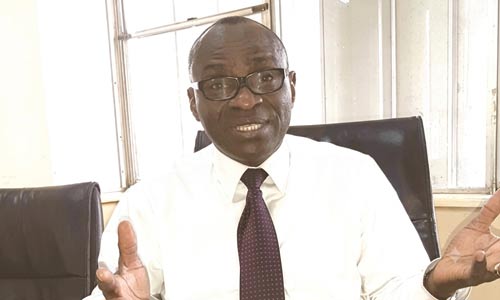
Dr. Abiodun Layonu, SAN, has warned that the rising cost of litigation in Nigeria, combined with prolonged court proceedings, bureaucratic bottlenecks and difficulties in enforcing judgments, is making access to justice increasingly difficult for poor and vulnerable citizens.

Speaking in separate interviews with the Nigerian Tribune, Layonu and other rights advocates said the growing cost of filing court processes, lawyers’ fees and other litigation-related expenses must not be allowed to shut financially disadvantaged Nigerians out of the justice system.
Layonu acknowledged that litigation costs had risen sharply in line with the general increase in the cost of living and doing business in the country.
“Like everything else in the world today and in Nigeria and with our economy, everything is expensive now. It has gone up relatively. And that includes litigation, costs of filing, lawyers’ fees, etc,” he said.
The senior advocate, however, noted that the rules of various courts provide some protection for indigent litigants through procedures that allow persons who cannot afford litigation expenses to approach the court without paying the usual fees.
He explained that High Court rules generally contain provisions allowing financially disadvantaged litigants to apply to sue in forma pauperis, depending on the facts of each case and whether the applicant satisfies the conditions set by the relevant court rules.
Layonu also recalled that Nigeria previously had a more functional legal aid system designed to support persons who could not afford legal representation, especially in criminal cases and some civil matters.
According to him, the aim was to ensure that poverty did not prevent citizens from ventilating their rights before the courts.
“In the old days when Nigeria was a bit better than or more comfortable than now, we also had legal aid that would cater, not for all cases, but for some cases, especially in terms of criminal defence and some civil matters.
“The objective was to ensure that poverty did not prevent citizens from ventilating their rights before the courts.
“But we all know that some of these things now only exist in theory or in the statutes. They are practically not really functioning,” he said.
Layonu also identified rising court filing fees and the growing adoption of electronic filing as additional burdens on litigants.
He said while technology-driven court processes are desirable, they could create extra costs for lawyers and litigants who must have access to scanners, photocopiers and other electronic tools needed for filing.
“Now, we are even going to the realm of technology where a lot of courts are now requiring that processes be filed electronically,” he said.
He stressed that whatever reforms are introduced into the justice system must take into account the financial realities of ordinary Nigerians so that poor citizens are not discouraged from going to court.
Also speaking, human rights lawyer, Chief Malachy Ugwummadu, said the cost of justice should not be viewed only from the angle of lawyers’ fees and court filing charges.
According to him, the true cost of justice includes the time spent pursuing cases, bureaucratic delays and the difficulties faced by successful litigants in enforcing judgments.
“That’s a very relative question, because you cannot assess and compare if you have other jurisdictions to juxtapose with ours. Nevertheless, you can safely say that justice is not a cheap commodity in Nigeria today,” he said.
Ugwummadu noted that while some cases, such as fundamental rights enforcement actions, may be cheaper to file than other forms of litigation, long delays in the justice system often impose financial and emotional strain on litigants.
He said litigants who begin cases with enthusiasm may become frustrated after spending several years in court, while witnesses in criminal cases may die, relocate or become unwilling to testify.
“In criminal cases, for instance, the witnesses, some have passed on or relocated, or become very lukewarm in testifying any longer. In some other cases, the body of evidence you have may get lost,” he said.
The rights advocate also pointed to the transfer or death of judges as another factor that may force cases to start afresh, thereby worsening delay and increasing costs.
Ugwummadu further identified judgment enforcement as one of the most difficult aspects of Nigeria’s justice system, especially where the judgment is against law enforcement agencies.
He questioned how judgments against the police or other security agencies would be effectively enforced when such agencies are often required to assist in the enforcement of court orders.
“For instance, if you obtain a judgment against the Nigerian Police for the abuse of the right of a citizen, who would think, even not being a lawyer, who enforces a judgment of court?” he asked.
He explained that while judges deliver judgments, enforcement is usually carried out through the sheriffs of the court, sometimes with the assistance of law enforcement agencies, making the process more complicated where those same agencies are judgment debtors.
Ugwummadu also referred to the difficulties involved when judgments obtained in one jurisdiction have to be registered in another before enforcement can take place.
He said the cost of justice in Nigeria is therefore broader than financial expenditure.
“It is expensive not just in terms of financial implications; it is expensive in terms of the time that goes into it. It is also expensive in terms of bureaucratic bottlenecks, and it remains expensive, even more so, in relation to the available enforcement mechanisms,” he said.
Another human rights lawyer, Ige Asemudara, offered a different perspective, particularly on election petitions and commercial litigation.
Asemudara said most persons involved in election petitions cannot strictly be described as ordinary citizens because they are usually politicians or political actors with the financial capacity to hire lawyers.
“For election matters, my candid opinion is that those politicians are not ordinary citizens. Most of them can afford what they have been charged,” he said.
He noted that election cases are complex and demanding, requiring lawyers to devote substantial time and resources, sometimes on a daily basis.
According to him, lawyers handling such matters are entitled to charge fees that reflect the amount of work involved.
Asemudara said the same principle applies to commercial litigation, where legal fees may depend on the complexity of the dispute, the parties involved and the amount of work required from the legal team.
He, however, stressed that greater concern should be shown to ordinary citizens seeking to enforce fundamental rights or defend themselves in criminal cases.
He said lawyers’ fees should be minimal or moderate in such matters, especially where the affected persons are unable to afford representation.
“I believe that the charges that lawyers should bill should be minimal or moderate. And where there are no lawyers, the government and civil society should provide lawyers for those areas,” he said.
Asemudara said citizens should not be denied fundamental rights protection or fair hearing simply because they lack money to hire lawyers.
He also urged regulatory bodies in the legal profession to develop mechanisms to ensure that vulnerable citizens receive legal representation even where they cannot pay.
At the same time, he defended the right of lawyers to charge fees that allow them to meet their professional and personal obligations, including rent, transportation, vehicle maintenance and household expenses.
“Legal practitioners should therefore be able to charge fees that enable them to maintain a reasonable standard of living.
“No matter what you know, if you are not living well, clients are not likely to take you seriously,” he said.
Asemudara added that lawyers representing high-ranking public officials and politicians should be able to earn fees commensurate with the demands and complexity of such engagements.
[A MUST HAVE] Evidence Act Demystified With Recent And Contemporary Cases And Materials

Available now for NGN 40,000 at ASC Publications, 10, Boyle Street, Onikan, Lagos. Beside High Court, TBS. Email publications@ayindesanni.com or WhatsApp +2347056667384. Purchase Link: https://paystack.com/buy/evidence-act-complete-annotation
______________________________________________________________________ “Enhance Legal Practice With Authoritative Reports” — Alexander Payne Offers Comprehensive Law Reports, Spanning Over A Century Of Nigerian Jurisprudence Interested buyers are encouraged to place their orders and enquiries via:
0704 444 4777, 0704 444 4999, 0818 199 9888
Website: www.alexandernigeria.com
Interested buyers are encouraged to place their orders and enquiries via:
0704 444 4777, 0704 444 4999, 0818 199 9888
Website: www.alexandernigeria.com