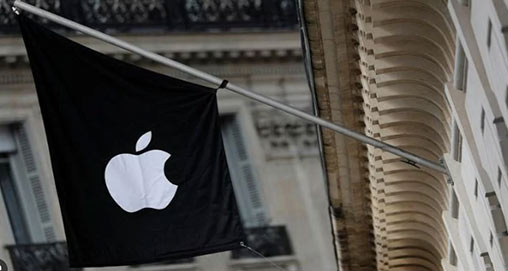
Apple has asked a United States federal judge to issue a preliminary injunction restraining OpenAI and two former Apple employees from accessing, acquiring, using or disclosing its alleged confidential information and trade secrets.

The application marks a fresh escalation in Apple’s trade secrets lawsuit against OpenAI, the maker of ChatGPT, and two former Apple employees who now work with the artificial intelligence company.
Apple had last month sued OpenAI and the former employees, alleging that they misappropriated its trade secrets to support OpenAI’s reported push into consumer hardware.
In a motion filed on Monday before the U.S. District Court for the Northern District of California, Apple argued that it would suffer irreparable harm unless the court intervened.
“Apple will be irreparably harmed absent a preliminary injunction,” the company said in its filing.
Apple also filed a separate motion seeking expedited discovery, including the production of documents relating to the defendants’ alleged access to Apple’s proprietary and trade secret information.
The iPhone maker asked the court to compel the two former employees named in the suit, Chang Liu and Tang Yew Tan, to sit for depositions. Liu is described as a former senior system electrical engineer at Apple, while Tan was a former vice president of product design for iPhone and Apple Watch.
Apple also sought depositions from OpenAI employee Yu-Ting Peng and an unnamed OpenAI employee who previously worked at Apple, as well as corporate representatives of OpenAI and io Products, OpenAI’s commercial arm listed as a defendant in the case.
In the suit, Apple accused OpenAI of using former Apple employees and confidential information to gain an unfair advantage in its hardware ambitions.
“OpenAI should not be permitted to use Apple’s secrets to gain an unjust head start in its hardware ambitions,” Apple said.
OpenAI, however, has denied the allegations, describing Apple’s claims as false, baseless and unnecessary.
In a blog post late on Monday, OpenAI said it did not possess or want Apple’s trade secrets.
“Apple’s request for a preliminary injunction is both based on false information and completely unnecessary because we do not have, nor want, any of their trade secrets,” OpenAI said.
The company also filed a motion asking the court to dismiss the case permanently, accusing Apple of using the lawsuit to address what it described as its own shortcomings in talent retention and artificial intelligence development.
“Apple built its reputation by paying close attention to the smallest details. This lawsuit does the opposite,” OpenAI’s lawyers said, describing Apple’s complaint as “rotten to its core.”
OpenAI’s lawyers argued that California law encourages employee mobility and permits workers to take new jobs, a policy they said has helped drive the state’s technology industry.
The company also maintained that it follows standard industry practices and does not encourage employees or recruits to bring confidential materials from former employers.
According to OpenAI, Tan repeatedly instructed recruits and team members not to bring or disclose confidential information belonging to former employers.
Apple, however, alleged that Tan used his knowledge of unreleased Apple products to obtain information from job candidates. It further claimed that OpenAI asked candidates to bring prototypes and design files to interviews during “show and tell” sessions.
OpenAI denied any wrongdoing and insisted that it is building something new and different, not copying any Apple product.
“OpenAI has no use, need or desire for Apple’s trade secrets,” the company said in a court filing, adding that Apple had not identified any specific product that OpenAI allegedly copied.
The dispute comes amid reports that OpenAI is developing its first consumer hardware device in collaboration with LoveFrom, the design studio founded by former Apple design chief Jony Ive.
Apple’s lawyers cited media reports about the device to support their argument that urgent court intervention was necessary. The reported device has been described as a screenless smart speaker, while another report claimed it could be circular, about the size of a hockey puck, priced between $300 and $400, and launched in 2027.
OpenAI has not confirmed the reported details of the device.
The case also comes at a time when Apple and OpenAI remain business partners, with ChatGPT already integrated into Apple products since 2024.
According to Apple’s complaint, more than 400 former Apple employees currently work at OpenAI.
OpenAI, in its defence, also accused Apple of failing to properly protect its own information, claiming that Apple allegedly encouraged employees to use personal iCloud accounts for work and failed to manage access properly after employees left the company.
Federal Judge Edward Davila is expected to hear Apple’s request for an injunction and OpenAI’s request for dismissal on October 1.
The case is being closely watched because of its potential implications for competition in the emerging market for artificial intelligence-powered consumer devices, particularly as OpenAI moves beyond software and into hardware.
[A MUST HAVE] Evidence Act Demystified With Recent And Contemporary Cases And Materials

Available now for NGN 40,000 at ASC Publications, 10, Boyle Street, Onikan, Lagos. Beside High Court, TBS. Email publications@ayindesanni.com or WhatsApp +2347056667384. Purchase Link: https://paystack.com/buy/evidence-act-complete-annotation
______________________________________________________________________ “Enhance Legal Practice With Authoritative Reports” — Alexander Payne Offers Comprehensive Law Reports, Spanning Over A Century Of Nigerian Jurisprudence Interested buyers are encouraged to place their orders and enquiries via:
0704 444 4777, 0704 444 4999, 0818 199 9888
Website: www.alexandernigeria.com
Interested buyers are encouraged to place their orders and enquiries via:
0704 444 4777, 0704 444 4999, 0818 199 9888
Website: www.alexandernigeria.com