The Nigerian Bar Association, the Nigeria Internet Registration Association and several other organisations have raised concerns over a bill seeking to compel social media platforms and bloggers operating in Nigeria to establish physical offices with verifiable addresses in the country.

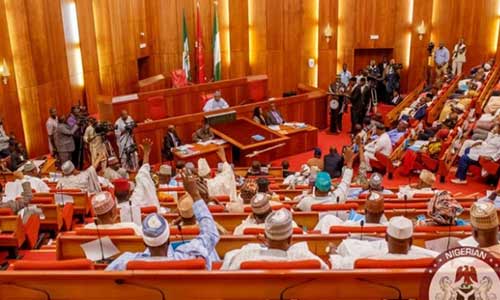
The stakeholders expressed their reservations on Thursday during a public hearing organised by the Senate Committee on Information and Communications Technology and Cyber Security.
The bill, sponsored by Senator Ned Nwoko, representing Delta North on the platform of the All Progressives Congress, passed second reading in the Senate in March 2025 before it was referred to the committee for further legislative consideration and public consultation.
While some stakeholders warned that the proposed physical-office requirement could force certain social media platforms to withdraw from or shut down their operations in Nigeria, others supported the legislation on the grounds that it could create employment, promote technology transfer, improve regulatory engagement and strengthen corporate social responsibility.
Those opposed to aspects of the bill also criticised the proposed 30-day compliance period, describing it as inadequate for global technology companies to restructure their operations and meet the requirements.
The President-elect of the NBA, Oyinkansola Badejo-Okusanya, SAN, advised the Senate committee to amend the bill by requiring social media platforms to appoint local representatives in Nigeria instead of compelling every platform to establish a physical office.
Badejo-Okusanya, who was represented at the hearing by Mercy Agada, also recommended that the proposed 30-day compliance period be extended to at least 180 days.
The NBA further urged lawmakers to subject the bill to additional technical drafting to prevent the creation of an excessively burdensome regulatory framework for social media companies, bloggers and users of digital platforms.
Although the association supported provisions aimed at strengthening compliance with data-protection obligations, it recommended that the proposed legislation be withdrawn and subjected to a more comprehensive review.
The Nigeria Internet Registration Association also argued that the establishment of physical offices alone would not be sufficient to ensure accountability by social media companies.
NIRA’s Chief Operating Officer, Seyi Onasanya, said the government should instead consider requiring the platforms to host their data on Nigeria’s internet domain or within the country’s legal jurisdiction.
She maintained that any requirement for a physical office should, at a minimum, be accompanied by provisions compelling local data hosting, which would strengthen Nigeria’s regulatory authority over the platforms and information generated by their users.
However, the Chairman of the Practitioners of Content Creating, Influencers and Skit Makers Guild of Nigeria, Obinna Nwanfo, strongly supported the bill.
Nwanfo said the policies adopted by many social media companies were frequently unfavourable to Nigerian content creators, particularly when they sought to resolve complaints relating to account restrictions, loss of followers and other platform-related sanctions.
He argued that the absence of physical offices and accessible local representatives made it difficult for creators to obtain timely redress when their accounts or businesses were affected.
Other organisations that participated in the public hearing included Paradigm Initiative, the Nigerian Youths of Social Media Analysts, Digital Civic, the Middle Belt Youth Congress and the Nigerian Female Youth Organisation.
Defending the bill, Nwoko said the proposed legislation was not designed to punish, discourage or force social media companies out of Nigeria.
According to him, the objective is to encourage major technology companies to deepen their presence in the country by becoming recognised corporate entities with stronger local operations and accountability structures.
The senator argued that requiring global technology companies to maintain physical offices was not unusual, noting that such firms have established regional headquarters, engineering centres and operational offices in several countries with smaller populations and digital markets than Nigeria.
He cited the United Kingdom, Ireland, Singapore, India, the United Arab Emirates, South Africa, Brazil, Australia and Japan as countries where major global technology companies maintain substantial corporate operations.
Nwoko said those countries had benefited from the presence of such companies through job creation, increased tax revenue, improved engagement with regulators, technological innovation and the transfer of knowledge and technical skills.
He particularly referred to Ireland, which he said had developed into a major global technology hub because companies including Meta, Google, LinkedIn, TikTok and X established significant operations there, employing thousands of people and contributing substantially to the economy.
The senator questioned why Nigeria, which has Africa’s largest digital market and a population exceeding that of many countries hosting major technology offices, should not pursue similar investments and economic opportunities.
He maintained that compelling social media platforms and other major digital businesses to establish a physical presence would enable Nigeria to derive greater economic, regulatory and technological benefits from the enormous number of citizens using their services.
[A MUST HAVE] Evidence Act Demystified With Recent And Contemporary Cases And Materials

Available now for NGN 40,000 at ASC Publications, 10, Boyle Street, Onikan, Lagos. Beside High Court, TBS. Email publications@ayindesanni.com or WhatsApp +2347056667384. Purchase Link: https://paystack.com/buy/evidence-act-complete-annotation
______________________________________________________________________ “Enhance Legal Practice With Authoritative Reports” — Alexander Payne Offers Comprehensive Law Reports, Spanning Over A Century Of Nigerian Jurisprudence Interested buyers are encouraged to place their orders and enquiries via:
0704 444 4777, 0704 444 4999, 0818 199 9888
Website: www.alexandernigeria.com
Interested buyers are encouraged to place their orders and enquiries via:
0704 444 4777, 0704 444 4999, 0818 199 9888
Website: www.alexandernigeria.com