The Supreme Court of Nigeria has established an important principle on the legal status of banks whose licences have been revoked, holding that the mere revocation of a banking licence by the Central Bank of Nigeria does not, by itself, bring the life or legal existence of the bank to an end, that a bank whose licence has been revoked remains a juristic person competent to sue and be sued, and that it is only upon the making of a winding-up order by a court that the bank ceases to exist as a juristic person.
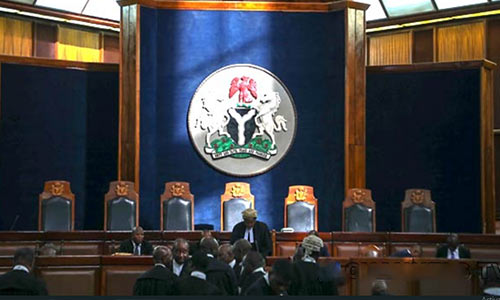
The decision was delivered in the case of Oredola Okeya Trading Co. & Anor v. Bank of Credit and Commerce International & Anor (In Re: Amolegbe), by a five-member panel comprising Justices Muhammed, Fabiyi, Peter-Odili, Ariwoola, and Muhammad, JJ.SC.
The ruling arose from a Motion on Notice filed by Mr Sakiru Amolegbe seeking to substitute two parties in a pending appeal: the late Alhaji Yesufu Alabi Amolegbe (the deceased 2nd Appellant) with himself as successor in interest, and the Bank of Credit and Commerce International (BCCI) (the 1st Respondent) with the Nigeria Deposit Insurance Corporation (NDIC).
The Facts
The Bank of Credit and Commerce International (BCCI) was, until July 1991, affiliated with Bank of Credit and Commerce International (Holdings) Luxembourg S.A. Following the liquidation of its parent company, the bank changed its name to African International Bank Limited (AIB) and continued banking operations until sometime before 2005, when it eventually ceased operations. Its banking licence was subsequently revoked by the Central Bank of Nigeria.
A dispute involving the bank had progressed through the High Court and the Court of Appeal and was pending before the Supreme Court when the applicant filed the motion seeking substitution. The application was filed in June 2013, more than two decades after the 1st Respondent had ceased banking operations.
The Arguments
The applicant’s counsel argued that since the banking licence of the 1st Respondent had been revoked, the NDIC, by operation of the applicable statutory provisions, became the provisional liquidator of the bank and assumed responsibility for managing its affairs, including defending legal proceedings. Counsel submitted that the NDIC should therefore be substituted for the 1st Respondent to enable the appeal to proceed to a just and final determination.
The 2nd Respondent’s counsel opposed the application on multiple grounds. First, that the application was filed after “an inordinate and unexplained delay” of more than two decades. Second, that no application for substitution had been made before the trial court or the Court of Appeal despite the 1st Respondent having been continuously represented by counsel throughout the proceedings. Third, and most critically, that the revocation of a company’s banking licence does not extinguish its legal personality, and a company remains a juristic person until it is formally dissolved in accordance with the law.
Counsel for the 2nd Respondent further argued that the NDIC’s role is merely that of a statutory liquidator acting on behalf of the company in liquidation, not a body that assumes the bank’s liabilities or automatically becomes a substitute party in pending proceedings.
The 2nd Respondent also contended that if any substitution was required, it should properly have been AIB, being the corporate entity in liquidation, rather than the NDIC.
The Supreme Court’s Decision
The Supreme Court resolved the issue in favour of the 2nd Respondent, establishing several important principles on the legal status of banks whose licences have been revoked.
Licence Revocation Does Not Equal Corporate Death
The court held that the mere revocation of a bank’s licence by the Central Bank of Nigeria does not, by itself, bring the life or legal existence of the bank to an end.
This principle draws a clear distinction between regulatory authorisation and corporate existence. A banking licence is the regulatory permission granted to a corporate entity to carry on banking business. Its revocation means the entity can no longer conduct banking operations. But the entity itself, the company incorporated under the Companies and Allied Matters Act, does not cease to exist simply because it has lost its licence to carry on a particular type of business.
The company was brought into existence by incorporation. It can only be brought to an end by a formal winding-up order made by a court pursuant to the applicable statutory provisions. Between the revocation of the licence and the making of a winding-up order, the company continues to exist as a legal person with all the attributes of corporate personality, including the capacity to own property, to enter into contracts, to sue, and to be sued.
Cessation of Operations Does Not Extinguish Personality
The court further explained that the cessation of banking operations or the closure of a bank’s business does not extinguish its corporate personality.
This principle addresses a common misconception. Many people assume that when a bank closes its doors, shuts its branches, and stops transacting business, it has ceased to exist. The Supreme Court held that this is not the case. A bank that has closed its business and has had its licence revoked is no longer authorised to carry on banking business, but it retains its legal existence. It remains a juristic person. It can still be sued for pre-existing obligations. It can still institute proceedings to recover debts owed to it. It remains subject to the jurisdiction of the courts.
Only a Winding-Up Order Ends Corporate Life
The court held that it is only upon the making of a winding-up order by a court that the bank ceases to exist as a juristic person.
A winding-up order is a formal court order that initiates the process of dissolving a company, realising its assets, paying its debts, and distributing any surplus to its members. Until such an order is made, the company exists in law, however dormant, however inactive, and however long it may have been since it last transacted any business.
NDIC Cannot Be Compelled to Substitute
Applying these principles to the facts, the Supreme Court held that the 1st Respondent had merely transformed into AIB, whose banking licence was subsequently revoked. Since no winding-up order had been made against AIB, it remained a legal entity capable of suing and being sued.
Accordingly, the court held that the NDIC, as statutory liquidator, “could not be compelled to assume the position or functions of the 1st Respondent merely because its banking licence had been revoked.”
The NDIC’s role as provisional liquidator of a failed bank is to manage the orderly wind-down of the bank’s affairs, including collecting its assets, settling its liabilities, and administering the liquidation process. This role does not make the NDIC the alter ego of the bank or a substitute party in every proceeding in which the bank is involved. The bank retains its own legal personality and remains the proper party to proceedings, even though its affairs are being managed by the NDIC as liquidator.
The Significance
The judgment carries important implications for several categories of stakeholders.
For creditors of failed banks, the judgment confirms that the bank itself remains the proper defendant in proceedings to recover debts or enforce obligations, even after its licence has been revoked and its operations have ceased. The NDIC manages the liquidation process but does not become the substitute defendant in every case.
For the NDIC, the judgment clarifies the limits of its role. It is a statutory liquidator, not a successor entity. It manages failed banks’ affairs but does not assume their legal identity or become automatically substitutable as a party in pending proceedings simply because it has been appointed liquidator.
For litigants with pending cases involving banks that have changed names, ceased operations, or had their licences revoked, the judgment establishes that the original corporate entity remains a competent party as long as no winding-up order has been made. Applications for substitution must be directed at the correct entity, which is the company itself (under whatever name it currently bears), not the NDIC.
For the banking sector generally, the judgment reinforces the fundamental principle that corporate personality, once created by incorporation, is not easily destroyed. It survives changes of name, cessation of business, revocation of regulatory licences, and even decades of dormancy. Only the formal legal process of winding up, initiated by court order, brings a company’s legal life to an end.
The Broader Principle
The judgment also carries implications beyond the banking sector. The principle that the loss of a regulatory licence does not destroy corporate personality applies to any incorporated entity that loses its licence to operate in a regulated sector, whether banking, insurance, telecommunications, aviation, or any other field. A company may lose its authorisation to carry on a specific business, but it remains a legal person until formally wound up. This distinction between regulatory status and legal existence is fundamental to corporate law and was authoritatively restated by the Supreme Court in this decision.
The Parties
The Appellant/Applicant was represented by Mr B.B. Lawal, with P.U. Abbe and C. Dunkwu. The NDIC (2nd party sought to be substituted) was represented by Mr Ogechi Ogbonna. The 2nd Respondent was represented by Mr M.I. Hanafi, with S.S. Umoru.
The judgment is fully reported at (2015) 1 CLRN in association with ALP NG & Co.
[A MUST HAVE] Evidence Act Demystified With Recent And Contemporary Cases And Materials

Available now for NGN 40,000 at ASC Publications, 10, Boyle Street, Onikan, Lagos. Beside High Court, TBS. Email publications@ayindesanni.com or WhatsApp +2347056667384. Purchase Link: https://paystack.com/buy/evidence-act-complete-annotation
______________________________________________________________________ “Enhance Legal Practice With Authoritative Reports” — Alexander Payne Offers Comprehensive Law Reports, Spanning Over A Century Of Nigerian Jurisprudence Interested buyers are encouraged to place their orders and enquiries via:
0704 444 4777, 0704 444 4999, 0818 199 9888
Website: www.alexandernigeria.com
Interested buyers are encouraged to place their orders and enquiries via:
0704 444 4777, 0704 444 4999, 0818 199 9888
Website: www.alexandernigeria.com
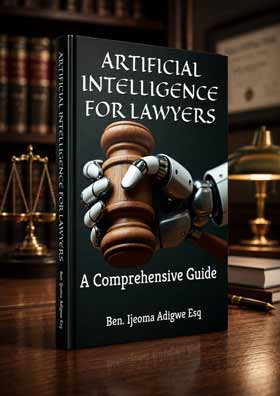 The book also examines Nigeria's legal ecosystem, focusing on the LPELR and NBA AI Guidelines. As a bonus, every purchase comes with a FREE eBook titled: How to Use the AI Features in LegalPedia and LawPavilion.
Ohio Books Ltd praises the publication, stating:
"....this is the only Nigerian book I know of on the topic."
How to Order:
📞 Call, Text, or WhatsApp: 08034917063 | 07055285878
📧 Email: benadigwe1@gmail.com
🌎 Website: www.benadigwe.com
Ebook Version: Access it directly online at https://selar.com/prv626
Authored by Ben Ijeoma Adigwe Esq., ACIarb (UK), LL.M, Dip. in Artificial Intelligence, Director at the Delta State Ministry of Justice, Asaba, Nigeria.
______________________________________________________________________
The book also examines Nigeria's legal ecosystem, focusing on the LPELR and NBA AI Guidelines. As a bonus, every purchase comes with a FREE eBook titled: How to Use the AI Features in LegalPedia and LawPavilion.
Ohio Books Ltd praises the publication, stating:
"....this is the only Nigerian book I know of on the topic."
How to Order:
📞 Call, Text, or WhatsApp: 08034917063 | 07055285878
📧 Email: benadigwe1@gmail.com
🌎 Website: www.benadigwe.com
Ebook Version: Access it directly online at https://selar.com/prv626
Authored by Ben Ijeoma Adigwe Esq., ACIarb (UK), LL.M, Dip. in Artificial Intelligence, Director at the Delta State Ministry of Justice, Asaba, Nigeria.
______________________________________________________________________