But Contradictory Rulings From Same Court System Create Legal Confusion As Judges Use Artificial Intelligence To Define “Cult”

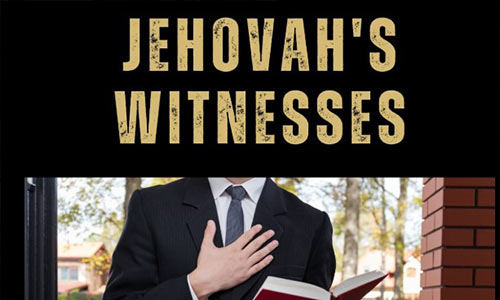
A Spanish appeals court has delivered what lawyers are describing as an unprecedented ruling, declaring for the first time in any country that a formally registered religion can be described as a “destructive sect,” even while holding official recognition as a religious organisation. The ruling concerns the Jehovah’s Witnesses and arose from a legal complaint brought by six Spanish members of the faith against an anti-cult association.
However, the landmark decision exists alongside a directly contradictory ruling from a different section of the same court, delivered just weeks apart, which found that calling the Jehovah’s Witnesses a “dangerous, extremist and destructive cult” constitutes unlawful interference with the organisation’s right to honour and ordered the removal of such expressions from social media platforms and compensation of ten thousand euros.
The contradictory decisions from two sections of Madrid’s Audiencia Provincial Civil have created what legal observers describe as an extraordinary situation where the same religious organisation is simultaneously protected from being called a cult by one judicial panel and officially classified as one by another panel of the same court.
The case stems from a legal complaint brought by six Spanish Jehovah’s Witnesses against the Spanish Association of the Victims of the Jehovah’s Witnesses, known by its Spanish acronym AEVTJ. The complainants argued that the use of the word “victims” in the association’s name was defamatory and sought its dissolution.
Carlos Bardavio, a lawyer representing the association, described the ruling as historic.
“This is the first time that, in a country, it has been stated that a religion can be described as a ‘destructive sect’, even if it is formally registered as a religion,” Bardavio told AFP.
The Jehovah’s Witnesses did not immediately respond to a request for comment. The ruling is not yet final and may be appealed to Spain’s Supreme Court.
One of the most striking aspects of the case is the Eleventh Section of the Audiencia Provincial Civil of Madrid’s decision to consult artificial intelligence for the meaning of the Spanish word “secta,” which translates to “cult” in English rather than the more neutral “sect.”
The Jehovah’s Witnesses had argued that the word is offensive. The opposing side relied on dictionary definitions that are more neutral. The judges turned to AI for guidance.
The AI response stated that “the term ‘cult’ is sometimes used to refer to a religious, philosophical or ideological group that separates or distinguishes itself from a mainstream or traditional group, often with beliefs or practices that are considered unusual or extreme by society in general. In many cases, the sect has a charismatic leader and its members follow specific beliefs or rituals that can be very different or stricter than those of established religions. Sometimes the term ‘cult’ has a negative connotation associated with dangerous or manipulative practices, especially when there is psychological control over the members or social isolation. However, its use depends on the context and the social perception of that group.”
Based on this definition, the court concluded that the Jehovah’s Witnesses qualify as a “secta” because historically they separated themselves from the Adventists and within Spanish society they are perceived as separated from mainline Catholicism. The court noted that “Catholics believe that God the Father, God the Son and the Holy Spirit are one. Jehovah’s Witnesses deny this. They do not believe that Jesus is God, nor that the Holy Spirit is a person, but simply a force.”
Critics of the ruling have argued that the court asked the wrong question. The relevant inquiry, they contend, was not how dictionaries, theologians, or nineteenth century sociologists defined “cult” but how the word is perceived by Spaniards in the twenty-first century. They point to the European Court of Human Rights’ 2022 decision in Tonchev and Others v. Bulgaria, which noted that language continuously evolves and that while past decisions had regarded the French “secte” as not offensive, by 2022 using its Bulgarian equivalent was “perceived as pejorative and hostile.”
The current contradictory appeals decisions are the culmination of an extraordinary sequence of conflicting rulings that began at the Court of First Instance of Torrejón de Ardoz in 2023, where four similar cases involving the same parties and similar allegations produced diametrically opposite results depending on which section of the court heard the case.
On October 2, 2023, the First Section ruled that the newspaper El Mundo had been fed false information by the AEVTJ and had published them, ordering the newspaper to publish the Jehovah’s Witnesses’ reply and pay litigation costs.
On October 25, 2023, the same First Section found the Secretary of the AEVTJ, Enrique Carmona, guilty of violating the right to honour of the Jehovah’s Witnesses through statements in one of his videos.
However, when a case involving several Jehovah’s Witnesses suing AEVTJ directly went to the Sixth Section of the same court, Judge Raquel Chacón Campollo ruled on December 5, 2023, that the association’s statements were within the limits of freedom of expression, even if some were possibly not true.
On December 22, 2023, the same Judge Chacón Campollo ruled again against the Jehovah’s Witnesses and in favour of AEVTJ member Gabriel Pedrero, who had been sued for posting offensive statements about the religious group online.
The four decisions from the same court, involving similar allegations from the same sources, produced two rulings favouring the Jehovah’s Witnesses and two favouring their critics.
Rather than resolving the contradictions, the appeals process deepened them.
The appeals went to different sections of the Audiencia Provincial Civil of Madrid. The Eleventh Section, presided over by Judge Cesáreo Duro Ventura, and the Eighteenth Section, presided over by Judge Jesús C. Rueda López, rendered once again contradictory decisions.
With a decision notified on February 21, 2025, the Eleventh Section examined the appeal by Carmona against the October 25, 2023, decision. Overturning the first instance ruling, it found in favour of Carmona and against the Jehovah’s Witnesses, effectively ruling that calling them a cult was permissible.
The Eleventh Section’s decision included a list of accusations against the Jehovah’s Witnesses regarding alleged “ostracism,” alleged mental damage to members, alleged inadequate protection of children against abuse, and even alleged instructions to members to lie to authorities. The court also made factual errors, claiming the Spanish Jehovah’s Witnesses were found guilty of social security violations when an inspection had actually concluded no violations occurred.
However, with a decision notified on March 26, 2025, the Eighteenth Section of the same court, ruling on a separate appeal, overturned Judge Chacón Campollo’s December 22, 2023, decision and found in favour of the Jehovah’s Witnesses.
The Eighteenth Section’s ruling drew an important distinction between generic criticism and specific insults.
The court agreed that even harsh and controversial expressions are protected by freedom of expression, but stated this principle has limits. When expressions of hostility remain “generic,” they fall within the boundaries of free speech, even if offensive and emphatic.
The court therefore accepted “the expressions and statements of the defendant regarding his own consideration as a victim” and “generically, the plaintiff confession does not respect human rights or the qualification of a religious company” as within permissible limits. The court did not conclude these statements were true but held that as long as they remain generic, they do not constitute insults.
However, the court found that “the expressions referring to the plaintiff as a dangerous, extremist, and destructive cult that should be outlawed, endanger the lives of children through hidden sexual abuse protecting pedophiles or have blood on their hands from various suicides caused, are excessive and objectively injurious and degrading” and fall outside the limits of permissible criticism.
The defendant was ordered to remove the offensive expressions from Instagram, Facebook, YouTube, and the Change.org platform, to publish the heading and ruling of the judgment with the same public dissemination as the original statements, and to pay ten thousand euros in compensation.
As of this report, the Spanish court system has produced the following simultaneous and irreconcilable positions on the same religious organisation.
One section of the appeals court has ruled that calling the Jehovah’s Witnesses a “cult” or “sect” is within the bounds of freedom of expression, and that they can be described as a “destructive sect” even though they are formally registered as a religion.
Another section of the same appeals court has ruled that calling the Jehovah’s Witnesses “a dangerous, extremist, and destructive cult” is “objectively injurious and degrading” and constitutes unlawful interference with their right to honour.
Both decisions are currently in force. Both were rendered by the same court. Both concern the same religious organisation and substantially similar allegations.
Jehovah’s Witnesses, founded in 1870 by pastor Charles Taze Russell in Pennsylvania, claim approximately nine million followers worldwide. The group opposes blood transfusions, believing blood is sacred, a position that has generated controversy when parents refuse transfusions for sick children.
Critics of the organisation say it is difficult to leave, with former members reporting emotional pressure to remain and social shunning after departing the faith. The organisation disputes these characterisations.
In Spain, the Jehovah’s Witnesses are formally registered as a religious organisation, giving them legal recognition and protections under Spanish law governing religious freedom.
The contradictory rulings may ultimately reach Spain’s Supreme Court, which could resolve the conflicting positions and establish a unified legal standard for how religious organisations can be described in public discourse.
The central question the Supreme Court would need to address is where freedom of expression ends and the right to honour begins when criticising a religious organisation. Can a formally registered religion be called a “destructive cult” in public discourse? Is the word “cult” inherently offensive in modern Spanish usage, or is it a neutral descriptive term? And should courts rely on artificial intelligence definitions or on sociological evidence about how words are actually perceived by the public?
Until the Supreme Court intervenes, the Spanish legal landscape remains one where contradictory rulings from the same court system leave both the Jehovah’s Witnesses and their critics uncertain about the legal boundaries of religious criticism, with the unprecedented “destructive sect” ruling standing alongside the equally forceful finding that such language is “objectively injurious and degrading.”
The case has drawn international attention as a test of the boundaries between religious freedom, freedom of expression, and the right to honour in European democracies, with implications that extend far beyond Spain’s borders to any jurisdiction grappling with the legal treatment of controversial religious movements.
[A MUST HAVE] Evidence Act Demystified With Recent And Contemporary Cases And Materials

Available now for NGN 40,000 at ASC Publications, 10, Boyle Street, Onikan, Lagos. Beside High Court, TBS. Email publications@ayindesanni.com or WhatsApp +2347056667384. Purchase Link: https://paystack.com/buy/evidence-act-complete-annotation
______________________________________________________________________ “Enhance Legal Practice With Authoritative Reports” — Alexander Payne Offers Comprehensive Law Reports, Spanning Over A Century Of Nigerian Jurisprudence Interested buyers are encouraged to place their orders and enquiries via:
0704 444 4777, 0704 444 4999, 0818 199 9888
Website: www.alexandernigeria.com
Interested buyers are encouraged to place their orders and enquiries via:
0704 444 4777, 0704 444 4999, 0818 199 9888
Website: www.alexandernigeria.com