*As APC Denies Setting ₦200m Presidential Nomination Fee

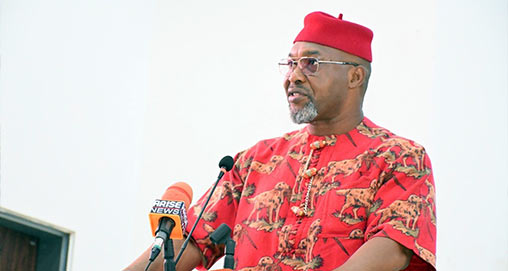
Former Aviation Minister and chieftain of the Peoples Democratic Party, Chief Osita Chidoka, has condemned what he described as the “exclusionary” cost of nomination forms in Nigerian politics, issuing both an initial statement and an addendum after the All Progressives Congress denied setting prices for the 2027 general elections.
In his addendum, Chidoka acknowledged the APC’s clarification but insisted that the broader concern remains valid, noting that both major parties have established a pattern of monetising access to political office.
In his first statement released on Saturday, Chidoka described the reported nomination fees as a threat to Nigeria’s democracy.
“The recently announced APC nomination fees raise serious questions about the future of democratic participation in Nigeria,” Chidoka stated.
According to the figures cited by Chidoka, the APC allegedly set nomination fees at ₦200 million (approximately $130,000) for the presidency, ₦150 million ($97,000) for governorship, ₦100 million ($65,000) for the Senate, ₦70 million ($45,000) for the House of Representatives, and ₦20 million ($13,000) for State Assemblies.
Chidoka used Nigeria’s minimum wage to illustrate the gulf between ordinary citizens and the reported nomination costs.
“At a minimum wage of ₦70,000, a Nigerian worker would need 238 years to afford a presidential form and 24 years to afford a State Assembly form,” he said.
“This is not a system designed for participation; it is exclusionary.”
He cited data from the Nigeria Deposit Insurance Corporation showing that over 97% of Nigerians have less than ₦500,000 in their bank accounts.
“Yet we are setting entry fees at ₦20 million and above. Who exactly is this democracy designed for?” Chidoka asked.
The former minister estimated that assuming just four aspirants per seat, nomination fees could generate approximately ₦223.68 billion across the Senate, House of Representatives, and State Assemblies.
“That is 74% of what we budget to build schools, 56% of health capital spending, and more than the entire police capital budget in the 2015 budget,” Chidoka stated.
“In effect, the cost of accessing political office in one party is now competing with what Nigeria invests in education, health, and security. That should trouble us.”
Chidoka warned that the high nomination fees send a dangerous signal about Nigerian politics.
“The signalling is disturbing. We are saying that leadership in Nigeria is not about ideas, competence, or service. It is about money. That is dangerous,” he said.
He noted that globally, Nigeria’s approach is an outlier, citing South Africa, Brazil, India, and Mexico where candidates emerge through internal democratic processes rather than financial barriers.
“If these systems demanded ₦200 million upfront, it is unlikely leaders like Lula, Modi, Clinton, or Obama would have emerged,” Chidoka stated.
Chidoka proposed an alternative approach to party funding.
“And it is entirely avoidable. If parties were properly organised, 800,000 members paying ₦25,000 a year (about ₦2,000 monthly) would generate ₦20 billion annually, excluding donations,” he said.
“Parties can be sustainably funded by their members and supporters, not by turning nominations into a high-priced gateway that excludes the majority.”
The former minister urged the APC to reconsider the reported fees.
“I therefore urge the APC, as the governing party, to reconsider these fees and set a standard that strengthens, not weakens, our democracy,” Chidoka said.
“I also call on all political parties in Nigeria to resist the growing tendency to convert nominations into luxury items accessible only to the wealthy or their sponsors.”
He concluded: “Nigeria cannot build a representative democracy if access to the ballot is priced beyond the reach of its citizens. The pathway to leadership must remain open, competitive, and fair. This is bigger than APC or any other party. It is about whether Nigeria remains a democracy in practice, or only in theory.”
The All Progressives Congress dismissed the reports about nomination fees as fake news.
In a statement signed by Felix Morka, its National Publicity Secretary, the APC stated that the report is misleading and did not emanate from the party.
“To be clear, no decision or announcement has been made on the sale or pricing of forms for the 2027 elections. The report is a mere figment of the writer’s mischievous imagination,” the statement said.
“We urge Party members, the media, and the general public to disregard the report in its entirety.”
The ruling party just concluded its national convention held in Abuja between Friday and Saturday, where it re-elected Professor Nentawe Yilwatda and Senator Ajibola Basiru as National Chairman and National Secretary respectively through consensus.
Following the APC’s denial, Chidoka issued an addendum acknowledging the clarification but insisting that the substance of his concern remains valid.
“Shortly after I published my statement on the cost of nomination forms, I observed that the APC has formally disowned the widely circulating list for the 2027 elections. I acknowledge this clarification and note that my earlier reference relied on figures that were in public circulation at the time,” Chidoka wrote.
“However, this does not diminish the substance of the concern.”
Chidoka pointed out that the disputed figures closely track the pattern already established in 2022 by both the APC and the PDP, as documented by International IDEA.
“In 2022, the APC fixed its nomination fees at ₦100 million ($240,884) for President and ₦50 million ($85,470) for Governorship. For legislative offices, APC charged ₦20 million ($34,188) for Senate, ₦10 million ($17,094) for House of Representatives, and ₦2 million ($3,418) for State Assemblies,” Chidoka stated.
He noted that the PDP’s 2022 nomination fees, while lower than the APC’s, followed the same model of monetising access to political office.
“PDP charged ₦40 million (about $68,376) for the presidential form and ₦21 million (about $35,897) for the governorship. For legislative offices, PDP fixed ₦3.5 million (about $5,982) for the Senate, ₦2.5 million (about $4,273) for the House of Representatives, and ₦1.5 million (about $2,564) for the State Assemblies,” he documented.
“This demonstrates that the issue is not limited to one party; it reflects a wider, entrenched approach across major political parties in Nigeria,” Chidoka said.
Chidoka analysed the circulated 2026 figures against the 2022 levels, revealing what he described as a troubling pattern.
At current exchange realities of approximately ₦1,500 to the dollar, the widely circulated 2026 APC figures translate to: ₦200 million (approximately $133,000) for President, ₦150 million (approximately $100,000) for Governorship, ₦100 million (approximately $67,000) for Senate, ₦70 million (approximately $47,000) for House of Representatives, and ₦20 million (approximately $13,000) for State Assemblies.
“This reveals a clear pattern,” Chidoka stated. “Compared to 2022 APC levels: Presidential cost has declined by about 45% in dollar terms, despite doubling in naira terms; Governorship has increased by about 17%; The Senate has increased by about 96%; The House of Representatives has increased by about 175%; The State Assembly has increased by about 280%.”
Chidoka argued that even the 2022 fees were already exclusionary by global standards.
“Even at their 2022 levels, these fees had no meaningful precedent in comparable democracies and were already exclusionary,” he said.
“The relatively moderate dollar values for legislative seats in 2022 appear to have created a perverse incentive — steady upward adjustment in naira terms, amplified by currency depreciation, leading to sharp real increases that progressively shut out new entrants.”
He concluded: “The issue, therefore, is not whether the current list is authentic. It is that the model itself, established and normalised by both major parties, treats access to political office as a financial transaction rather than a democratic right. Nigeria must move away from this path.”
Meanwhile, the Lagos State chapter of the APC has denied reports suggesting that its delegates were left stranded during the national convention.
In a statement released on Saturday, the party’s spokesman, Seye Oladejo, urged the public to disregard publications alleging that Lagos delegates faced logistical challenges due to non-release of mobilisation funds.
Oladejo emphasised that all accredited delegates from Lagos were transported to the convention in a well-organised and coordinated manner, with arrangements made to ensure their comfort throughout the journey.
“Upon arrival, delegates were provided with appropriate accommodation, directly countering the claims in circulation,” the statement said.
The spokesman also clarified that the Lagos State Government does not provide funding for party activities, noting that the APC independently manages its operations and logistics through its internal structures.
However, reports emerged that some delegates, journalists, and other participants at the convention were tear-gassed on Friday night while trying to gain entry into Eagles Square.
Some of the victims described the incident as inhumane and unjustified.
A delegate from Taraba State, who identified himself simply as Mohammed, alleged that he was assaulted with tear gas despite presenting his accreditation tag.
“Despite possessing a valid accreditation tag for the event, I was treated badly by security personnel at the entrance. This is so sad. Our country has a long way to go,” he said.
Security personnel, including police officers and soldiers, cordoned off major access routes to the venue, restricting movement and forcing many accredited journalists to trek long distances.
A journalist who spoke on condition of anonymity said a security personnel threatened to open fire on those attempting to gain access through the entrance point at the Federal Ministry of Finance, describing the development as worrisome.
The controversy over nomination fees — whether the circulated figures are authentic or not — has sparked a broader conversation about the commercialisation of Nigerian politics and the barriers ordinary citizens face in seeking elected office.
Chidoka’s documentation of the 2022 fees from both the APC and PDP, and his analysis of the sharp increases in legislative nomination costs, suggests that the problem is systemic rather than limited to one party or one election cycle.
With the 2027 elections on the horizon, the question of who can afford to participate in the democratic process remains a pressing concern — and one that, according to Chidoka, requires a fundamental rethinking of how Nigerian political parties fund themselves and select their candidates.
[A MUST HAVE] Evidence Act Demystified With Recent And Contemporary Cases And Materials

Available now for NGN 40,000 at ASC Publications, 10, Boyle Street, Onikan, Lagos. Beside High Court, TBS. Email publications@ayindesanni.com or WhatsApp +2347056667384. Purchase Link: https://paystack.com/buy/evidence-act-complete-annotation
______________________________________________________________________ “Enhance Legal Practice With Authoritative Reports” — Alexander Payne Offers Comprehensive Law Reports, Spanning Over A Century Of Nigerian Jurisprudence Interested buyers are encouraged to place their orders and enquiries via:
0704 444 4777, 0704 444 4999, 0818 199 9888
Website: www.alexandernigeria.com
Interested buyers are encouraged to place their orders and enquiries via:
0704 444 4777, 0704 444 4999, 0818 199 9888
Website: www.alexandernigeria.com