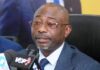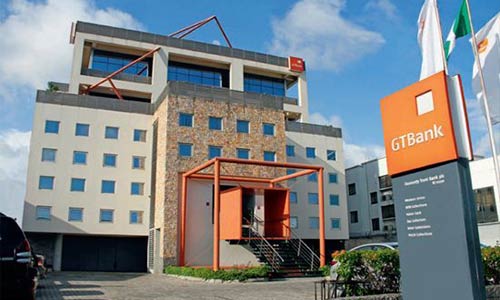
Professor Shina Akinfenwa, Deputy Vice-Chancellor of Kola Daisi University in Oyo State and an award-winning Professor of Journalism, has petitioned the Central Bank of Nigeria over what he described as grossly unauthorised withdrawal of ₦9.98 million from his Guaranty Trust Bank (GTBank) account.
The petition, submitted through his legal counsel at Solanke and Solanke Chambers on March 26, accuses the financial institution of systemic negligence and a lack of due care in protecting customer funds.
Professor Akinfenwa is demanding that the apex bank compel GTBank to refund the full amount, investigate the security breach, and impose necessary sanctions on the bank.
The dispute centres on two rapid-fire transactions executed on February 21, 2026, where nearly ₦10 million was moved to third-party fintech accounts within a 120-second window.
According to the petition, the first transaction of ₦4,990,000 was transferred at 10:19 a.m. to one Isah Ahmed Ahmed via Paga. This was followed by an identical ₦4,990,000 transfer at 10:21 a.m. to Nasir Nasir Sanusi.
The total amount withdrawn was ₦9,980,000.
Professor Akinfenwa maintained that he neither authorised the transfers nor compromised his banking credentials.
“Our client categorically denies authorising the transactions and insists that he never shared his banking security details with any individual,” the petition stated.
The professor insisted that he took all reasonable precautions to protect his account and that he did not disclose or compromise his Personal Identification Number (PIN), token, or any other security credentials linked to the account.
His lawyers stated that the incident was promptly reported to the bank on February 24, three days after the transactions occurred.
In a response received on March 20, GTBank denied liability for the loss.
The bank claimed the transactions were duly authenticated using the customer’s login details and PIN, adding that it acted on a “best-effort” basis to restrict the funds.
However, GTBank stated that the funds had already been dissipated through cryptocurrency platforms before any recovery could be attempted.
Professor Akinfenwa’s legal team described the bank’s position as “legally indefensible.”
The lawyers argued that modern banking standards require robust, multi-layered fraud detection systems capable of flagging suspicious patterns — such as two near-identical high-value transfers to new beneficiaries within minutes.
“There is no evidence whatsoever of customer negligence,” the petition stated, asserting that the burden of liability remains with the financial institution.
The petitioner’s counsel described the manner of the transactions as a red flag that should have triggered an immediate system freeze.
“We write on our client’s firm instructions regarding two unauthorised debit transactions carried out on Saturday, February 21, 2026, resulting in the total withdrawal of the sum of ₦9,980,000 from his account,” the petition read.
“In the circumstances, our client holds the bank responsible for the unauthorised debits, which occurred within your banking infrastructure and security framework.”
Apart from seeking a directive for a full refund of the ₦9.98 million, Professor Akinfenwa is also demanding a forensic report explaining how the breach occurred.
The petitioner argued that such transparency is necessary to ensure continued public confidence in the banking system.
An earlier petition dated February 21, addressed directly to GTBank’s management and copied to the bank’s legal department, had demanded the immediate refund of the funds within seven days.
That petition warned that failure by the bank to comply would leave the client with no option but to initiate legal proceedings against the financial institution.
Following GTBank’s denial of liability, Professor Akinfenwa has now escalated the matter to the Central Bank of Nigeria and other relevant regulatory agencies.
The petitioner is calling on the apex bank to intervene and ensure that the funds are refunded, and that appropriate sanctions are imposed on the bank for the alleged security lapse.
The case highlights growing concerns about the security of customer funds in Nigerian banks and the liability framework when unauthorised transactions occur.
With the proliferation of fintech platforms and cryptocurrency exchanges, fraudsters have found new channels to quickly dissipate stolen funds, making recovery increasingly difficult.
The outcome of this petition could have significant implications for how Nigerian banks handle fraud disputes and the extent of their liability when customers claim unauthorised access to their accounts.
GTBank had not issued a public statement on the matter as at the time of filing this report.
[A MUST HAVE] Evidence Act Demystified With Recent And Contemporary Cases And Materials

Available now for NGN 40,000 at ASC Publications, 10, Boyle Street, Onikan, Lagos. Beside High Court, TBS. Email publications@ayindesanni.com or WhatsApp +2347056667384. Purchase Link: https://paystack.com/buy/evidence-act-complete-annotation
______________________________________________________________________ “Enhance Legal Practice With Authoritative Reports” — Alexander Payne Offers Comprehensive Law Reports, Spanning Over A Century Of Nigerian Jurisprudence Interested buyers are encouraged to place their orders and enquiries via:
0704 444 4777, 0704 444 4999, 0818 199 9888
Website: www.alexandernigeria.com
Interested buyers are encouraged to place their orders and enquiries via:
0704 444 4777, 0704 444 4999, 0818 199 9888
Website: www.alexandernigeria.com
 The book also examines Nigeria's legal ecosystem, focusing on the LPELR and NBA AI Guidelines. As a bonus, every purchase comes with a FREE eBook titled: How to Use the AI Features in LegalPedia and LawPavilion.
Ohio Books Ltd praises the publication, stating:
"....this is the only Nigerian book I know of on the topic."
How to Order:
📞 Call, Text, or WhatsApp: 08034917063 | 07055285878
📧 Email: benadigwe1@gmail.com
🌎 Website: www.benadigwe.com
Ebook Version: Access it directly online at https://selar.com/prv626
Authored by Ben Ijeoma Adigwe Esq., ACIarb (UK), LL.M, Dip. in Artificial Intelligence, Director at the Delta State Ministry of Justice, Asaba, Nigeria.
______________________________________________________________________
The book also examines Nigeria's legal ecosystem, focusing on the LPELR and NBA AI Guidelines. As a bonus, every purchase comes with a FREE eBook titled: How to Use the AI Features in LegalPedia and LawPavilion.
Ohio Books Ltd praises the publication, stating:
"....this is the only Nigerian book I know of on the topic."
How to Order:
📞 Call, Text, or WhatsApp: 08034917063 | 07055285878
📧 Email: benadigwe1@gmail.com
🌎 Website: www.benadigwe.com
Ebook Version: Access it directly online at https://selar.com/prv626
Authored by Ben Ijeoma Adigwe Esq., ACIarb (UK), LL.M, Dip. in Artificial Intelligence, Director at the Delta State Ministry of Justice, Asaba, Nigeria.
______________________________________________________________________