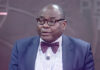
Professor Jibrin Ibrahim, a professor of political science, senior fellow at the Centre for Democracy and Development (CDD), and chair of the editorial board at Premium Times newspaper, has said that Nigeria is currently facing one of the most serious crises in its history, with over 65 percent of Nigerians living in poverty — higher than in 1960, 1990, or 1980.

Prof. Ibrahim made these remarks on Wednesday during an appearance on Arise Television’s ‘Prime Time’ programme, where he analysed whether Nigeria can truly reform only when pushed to the brink.
The political scientist painted a grim picture of Nigeria’s current state.
“There’s a sense in which the crisis we’re in today is one of the most serious we’ve ever had in the history of this country. First of all, we have the crisis of livelihoods. Over 65 percent of Nigerians are living in poverty. This is higher than it was in 1960, higher than in 1990, higher than in 1980. We have more people, more poor people in the country today than we’ve ever had in our history. And that should be really a cause for general concern,” Prof. Ibrahim stated.
On the security situation, Prof. Ibrahim said Nigeria has never been as unsafe as it currently is.
“The most substantive crisis we are in now is the security crisis. This country has never been as insecure and as unsafe as it is today. And this is something that directly brings state responsibility into the question. Because the state, our constitution says, has a responsibility to provide for the welfare and for the security of Nigerians.
“With massive poverty, our welfare is not catered for. With massive insecurity, nobody is protecting Nigerians from armed banditry, insurrection, and what have you. So the crisis today is a very serious one.”
Prof. Ibrahim expressed grave concern about the state of democracy in Nigeria.
“Then you add the political crisis, where democracy is disappearing before our very eyes, where the fundamental principles are being dulled, where the National Assembly and the presidency is showing a clear commitment to disrupting multi-party democracy in the country, imposing a one-party regime, shutting up the opposition, shutting up criticisms and finally using money to bribe all voices that try to speak. If they can’t bribe them, they put them in jail. They find excuses to do that,” he said.
The professor criticised the attitude of Nigeria’s governing class.
“There’s an issue that people don’t know, especially Nigeria’s governing class, that this belief of this government — and this is what I pick up in Bia Paolo talk — that every Nigerian has a price. If you cannot be bribed, more money can bribe you. So that’s the attitude that they can take care of everybody who tries to speak out.
“But that is often the case until the time when there is an explosion. Unfortunately, in social science, we never can tell when that explosion will be. We still don’t have the tools to understand what the signals are and how those signals will translate into timing in terms of the explosion.”
Prof. Ibrahim warned that Nigeria is already showing signs of state failure.
“We already have a lot of signs of state failure. The first definition of a state is that they have the monopoly of the use of arms. There are six million guns in the hands of civilians in this country, and that’s more than the guns in the hands of the agents of the Nigerian state.
“So already the state is really extremely fragile. And that’s a clear sign of the beginning of state failure, when the state no longer has a monopoly of the means of legitimate use of violence in society.”
On the ongoing Electoral Act controversy, Prof. Ibrahim was blunt.
“The past week, for example, is a key issue, when Nigerians have realized that the National Assembly, or the Senate in particular, is trying to compromise the electoral process to make it easier to rig elections. That’s the objective of their proposed reform.
“And that’s something that hurts Nigerians, that frightens Nigerians and makes them realize they’re going to lose even the little democracy that we have because of the recklessness of a political class that wants to stay in power, irrespective of the wishes of the Nigerian citizen.”
The professor warned that the political class’s refusal to reform could precipitate a major national crisis.
“What is more dangerous is the refusal for gradual reform. We are not reforming this country. By taking this attitude, they really pose the risk of precipitating the country into a major national crisis,” he stated.
Prof. Ibrahim explained that historically, Nigeria has only reformed at moments of major shock.
“Significant reform has occurred in Nigeria only at moments of major shock to the system, where the entire political class feels and believes that it cannot continue as it had been doing and that the survival of the system will require a dramatic reform,” he said.
He cited examples including the 1966 coup which Nzeogwu called “the revolution of January,” the heavily rigged 1983 elections that brought military rule, and the annulment of the June 12, 1993 election under Babangida that eventually led to the Fourth Republic.
“So the Nigerian governing classes successively have completely rejected the line of reform, even when it was clear to everybody that that was the only way to save the country. And it’s only under force that they had been ready to accept reform,” he concluded.
[A MUST HAVE] Evidence Act Demystified With Recent And Contemporary Cases And Materials

Available now for NGN 40,000 at ASC Publications, 10, Boyle Street, Onikan, Lagos. Beside High Court, TBS. Email publications@ayindesanni.com or WhatsApp +2347056667384. Purchase Link: https://paystack.com/buy/evidence-act-complete-annotation
______________________________________________________________________ “Enhance Legal Practice With Authoritative Reports” — Alexander Payne Offers Comprehensive Law Reports, Spanning Over A Century Of Nigerian Jurisprudence Interested buyers are encouraged to place their orders and enquiries via:
0704 444 4777, 0704 444 4999, 0818 199 9888
Website: www.alexandernigeria.com
Interested buyers are encouraged to place their orders and enquiries via:
0704 444 4777, 0704 444 4999, 0818 199 9888
Website: www.alexandernigeria.com