By Abiola Adegboyega Kolawole, Esq

The new Nigeria Tax Act has generated fear among Nigerians to whom the law applies. The question of whether the Act is a curse or a blessing is yet to be answered by many. There are also concerns, fuelled by rumours, that the law to be implemented may differ from the version gazetted by the draftsmen. Though this is not verified, it has not allayed public concern. While the fears linger, one thing we must all learn as a matter of urgency is proper record-keeping. This is no longer optional. It is the difference between knowing what you are doing and inviting unnecessary issues.
Record-keeping helps you distinguish between income and net profit. Income is what comes in; profit is what remains after the cost of doing the work has been deducted. Every Nigerian who earns legitimately spends money to earn that income: on rent, transport, data, power, staff, logistics, and other unavoidable expenses. Tax law recognises this economic reality, but only where proper records exist.
That is why record-keeping sits at the heart of the current tax conversation.
- What Is Taxable and What Is Not
One of the biggest drivers of fear is the mistaken belief that every bank transfer is taxable. This is incorrect. Tax law focuses on income, not on every movement of money.
The following are not automatically taxable:
- Salary that has already been taxed under PAYE
- Transfers between your own accounts
- Intra-bank transfers
- Personal gifts and reimbursements
- Proceeds from the sale of personal assets (for example, selling your car)
What attracts attention is not transfers in themselves, but unexplained inflows combined with poor or non-existent records. Questioning is not punishment. It is simply a request for explanation.
2.0. Tax-Free Thresholds and Personal Income
Under Nigerian tax law, tax is not calculated on a person’s full income. The law deliberately provides a tax-free portion of income, created through recognised reliefs and exemptions, to protect individuals—especially low-income earners. These reliefs include the Consolidated Relief Allowance, Pension Contributions, National Housing Fund and health insurance contributions, life assurance premiums, and, for self-employed persons, legitimate business expenses incurred in earning income. Once these reliefs are applied, only the remaining taxable income is subjected to tax. This is why people earning the same amount may end up paying different amounts of tax, and why some individuals may effectively pay little or no tax at all. Nigerian taxation therefore operates on a progressive basis, not on a single fixed income figure that applies uniformly to everyone.
3.0. Presumptive Tax: What It Really Means
Presumptive tax applies mainly to the informal sector, individuals who:
- Are self-employed;
- Do not keep proper records;
- Do not file returns; and
- Operate outside formal registration.
In such cases, the tax authority is permitted to estimate income using reasonable indicators. This is not because the law assumes guilt, but because the absence of records leaves the authority with no alternative basis for assessment. Presumptive assessment is therefore a fall-back mechanism, though many people wrongly perceive it as a weapon.
4.0. Businesses and Company Taxation
Some persons have wrongly assumed that the best approach to avoid taxation is operating through businesses or company accounts. This is far from the truth as businesses and companies have their own compliance obligations and tax liabilities. Business taxation depends on structure, turnover, and classification. Small companies, within statutory turnover and asset thresholds, enjoy significant tax reliefs.
However, professional service providers such as law firms and accounting firms are commonly excluded from certain small-company incentives.
Registration alone does not make a business “small” for tax purposes. Actual turnover, asset base, and nature of activity matter. Medium and large companies are taxed at higher rates, with large companies generally paying around 30% company income tax.
5.0. Self-Employed Persons and Informal Workers
Individuals who earn income but refuse to register, file returns, or keep records are treated as informal workers. For this category, presumptive schemes may apply. It could be recalled that rumours circulated that the new tax would target certain informal occupations. Such persons, where they operate outside registration and record-keeping, would naturally fall under presumptive tax. This is why formalisation is not punishment; it is protection.
6.0. Content Creators, Tech Earners, and Digital Professionals
For content creators and digital earners, proper registration and documentation are critical. Registration can provide structure and clarity, but classification, turnover, and nature of income still matter. In most cases, it is far better to register formally and be treated as a small business where applicable, than to remain informal and risk being subjected to presumptive tax assessment.
7.0. Your Rights as a Taxpayer
Under the Nigeria Tax Administration Act 2025, enforcement follows a defined legal sequence. A taxpayer must first be issued a notice of assessment. The taxpayer is then given a statutory opportunity to respond, explain, and object. Where the taxpayer is dissatisfied with the outcome, the law provides a right of appeal to the Tax Appeal Tribunal. Only after these processes have been exhausted may penalties or recovery mechanisms be considered.
Most importantly, enforcement under the law is not automatic, not arbitrary, and not immediate. The Act does not empower tax authorities to wake up and debit personal bank accounts, bypass objections and appeals, or enforce payment without notice and an opportunity to be heard. Every enforcement step is tied to procedure, timelines, and legal safeguards.
Therefore, the absence of enforcement provisions in the Nigeria Tax Act 2025 is not a loophole or an omission. It is the law functioning exactly as designed. Tax liability is created by the Nigeria Tax Act 2025, while enforcement is controlled and restrained by the Nigeria Tax Administration Act 2025, both operating under the overarching guarantee of fair hearing provided by the Constitution. This further emphasizes the need for tax consultants and legal practitioners in businesses operations and transaction.
8.0. Real-Life Examples We Can Relate To As Nigerians
Example 1: The Salary Earner
Bello earns ₦450,000 monthly as a staff member of a private company. His employer deducts PAYE every month and remits it to the tax authority. If Bello does not run a business, does not do side hustles, and does not earn rental or professional income, he has nothing to fear. His tax obligation is already settled through PAYE.
Example 2: Employer-Paid Rent
Pelumi earns ₦600,000 monthly, but her employer also pays her annual rent of ₦2 million directly to the landlord. For tax purposes, her salary together with the value of the rent are treated as employment income and subjected to PAYE. While the rent itself is not taxed as a housing expense, the benefit of having accommodation provided by an employer is taxable as part of her remuneration.
Example 3: The Lawyer or Consultant
Abiola, a lawyer, earns ₦2 million in a month, but spends heavily on office rent, staff, power, data, and logistics. For tax purposes, tax is calculated on profit, not on total inflow, provided proper records of these expenses exist. Without records, the full inflow may be assumed to be profit. That is why record-keeping is strongly advised.
Note: Lawyers and other professional service providers do not enjoy the small- business tax exemptions, even when their turnover falls within the thresholds applicable to non-professional small businesses.
Example 4: Selling a Personal Car
Peller sells his personal car for ₦8 million. That amount is not income. It is proceeds from a personal asset sale. The issue only arises if he cannot explain the source (Subject to proper record – keeping).
Example 5: The Informal Trader
A trader who keeps no records and files no returns may be assessed under presumptive tax, not as punishment, but because no reliable information exists.
Example 6: The Content Creator
A content creator with proper registration, records, and account separation enjoys predictable tax outcomes. Without structure, inflows may attract avoidable scrutiny.
9.0. WARNING: What You Must Not Do Under the New Tax Law
Under the new tax laws, there are things you must never do because they can lead to serious legal problems, hefty fines, or even criminal sanctions:
- Do not misdescribe transactions.
Labelling rent as a “gift” or any false description to avoid scrutiny is effectively misrepresentation and can attract penalties or prosecution.
- Your NIN is not your TIN.
Having a NIN does not mean you are registered for tax. Failure to properly obtain a TIN can expose you to penalties for non-registration. Always confirm that you have an actual TIN issued by the relevant tax authority.
- Do not fail to register for tax.
Every person or entity that is liable must register with the relevant tax authority and obtain a Tax Identification Number (TIN). Failure to do so attracts fines that increase the longer registration is delayed.
- Do not ignore filing obligations.
Failing to file tax returns on time, filing inaccurate returns, or omitting required information can result in fines and interest.
- Do not keep poor or no records.
Not maintaining proper records of income and expenditures undermines your ability to justify your tax position and exposes you to penalties.
- Do not refuse access to tax authorities.
Denying authorised officers access to your records, premises, or systems can attract substantial fines.
- Do not fail to deduct or remit taxes when required.
Employers and businesses must deduct taxes like withholding tax when applicable and remit them promptly; failure to deduct or remit can result in heavy penalties and possible prosecution.
- Do not provide false declarations or documents.
Making false statements, submitting forged or misleading documents, or providing inaccurate information is an offence punishable by fines, interest, and in some cases, imprisonment.
- Do not ignore notices or demands.
Failure to respond to official notices, requests, or demands from tax authorities can attract penalties for non-compliance.
Most of these offences carry penalties ranging from administrative fines to imprisonment, depending on severity and intent.
- Enforcement and Fear
No, Government Cannot Arbitrarily Debit Your Account
A major source of public anxiety around the new tax reforms is the fear that government now has the power to arbitrarily debit money directly from the bank accounts of taxpayers. This fear has been amplified by viral interpretations of certain enforcement provisions, particularly those relating to distraint, and by commentaries suggesting that tax authorities can seize assets without court orders. However, a careful reading of the law shows that this fear is misplaced. The Nigeria Tax Administration Act 2025 does not authorize direct or automatic debiting of personal bank accounts, and enforcement powers are not exercised arbitrarily. Any enforcement action arises only after a valid assessment, proper notice, and the exhaustion or failure of objection and appeal processes under the Nigeria Tax Administration Act 2025. Even distrain powers apply strictly to movable assets and are subject to procedural safeguards, with immovable property requiring court orders. In essence, the law does not permit secret or instant deductions from taxpayers’ accounts; it mandates due process, notice, and an opportunity to be heard before any enforcement step can lawfully occur.
- Conclusion: Fear Is Not the Law — Understanding Is
The fear surrounding Nigeria’s new tax regime is not rooted in the law itself, but in misinformation, poor communication, and years of distrust. The Nigeria Tax Act has not abolished due process, has not criminalised ordinary bank transfers, and has not declared war on salary earners or small businesses. What it emphasises clearly and unmistakably is structure, transparency, and accountability.
Tax authorities are not empowered to dip hands into personal accounts at will. They are empowered to assess income, request explanations, and enforce compliance through established legal processes. The real risk lies not in earning income, but in keeping no records, mixing personal and business funds, and responding to queries with silence or panic.
Understanding the law is protection.
Record-keeping is insurance.
Clarity is safety.
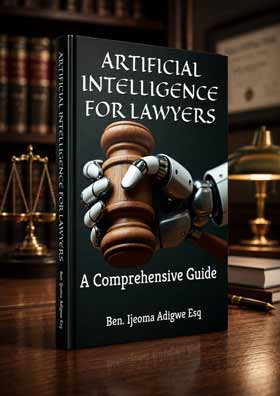 The book also examines Nigeria's legal ecosystem, focusing on the LPELR and NBA AI Guidelines. As a bonus, every purchase comes with a FREE eBook titled: How to Use the AI Features in LegalPedia and LawPavilion.
Ohio Books Ltd praises the publication, stating:
"....this is the only Nigerian book I know of on the topic."
How to Order:
📞 Call, Text, or WhatsApp: 08034917063 | 07055285878
📧 Email: benadigwe1@gmail.com
🌎 Website: www.benadigwe.com
Ebook Version: Access it directly online at https://selar.com/prv626
Authored by Ben Ijeoma Adigwe Esq., ACIarb (UK), LL.M, Dip. in Artificial Intelligence, Director at the Delta State Ministry of Justice, Asaba, Nigeria.
______________________________________________________________________
[A MUST HAVE] Evidence Act Demystified With Recent And Contemporary Cases And Materials
The book also examines Nigeria's legal ecosystem, focusing on the LPELR and NBA AI Guidelines. As a bonus, every purchase comes with a FREE eBook titled: How to Use the AI Features in LegalPedia and LawPavilion.
Ohio Books Ltd praises the publication, stating:
"....this is the only Nigerian book I know of on the topic."
How to Order:
📞 Call, Text, or WhatsApp: 08034917063 | 07055285878
📧 Email: benadigwe1@gmail.com
🌎 Website: www.benadigwe.com
Ebook Version: Access it directly online at https://selar.com/prv626
Authored by Ben Ijeoma Adigwe Esq., ACIarb (UK), LL.M, Dip. in Artificial Intelligence, Director at the Delta State Ministry of Justice, Asaba, Nigeria.
______________________________________________________________________
[A MUST HAVE] Evidence Act Demystified With Recent And Contemporary Cases And Materials

 Interested buyers are encouraged to place their orders and enquiries via:
0704 444 4777, 0704 444 4999, 0818 199 9888
Website: www.alexandernigeria.com
Interested buyers are encouraged to place their orders and enquiries via:
0704 444 4777, 0704 444 4999, 0818 199 9888
Website: www.alexandernigeria.com