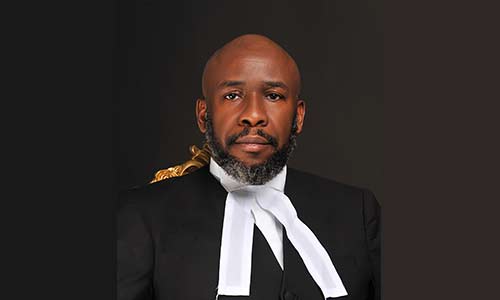
By Chike Obi


Every democracy stands on three pillars the executive, legislature, and judiciary each holding its own weight, and each meant to operate independently. But among them, the judiciary occupies a unique place: it is the quiet guardian, the final refuge; the one arm expected to remain calm when all others become noisy.
It is in this context that the recent scene at the Nigerian judiciary’s annual conference where chants associated with political support for the President were echoed stirred national conversation. To many, it appeared like an institutional tilt toward executive influence. Yet rather than approach this moment purely with criticism, it can serve as a powerful reminder of the judiciary’s noble calling, and an opportunity to encourage it toward even greater strength.
Judicial Power Does Not Flow From Political Mandate
Nigeria’s Constitution is clear: the judiciary draws its authority not from electoral victories or partisan enthusiasm, but from the timeless principles of law and justice. Its judges do not stand on the mandate of any president — no matter how popular or powerful. They stand on the mandate of the Constitution, a mandate that outlasts administrations and transcends political tides.
Symbolism matters. Even a simple chant may unintentionally blur the sacred lines of separation that protect the courts from undue influence. But rather than condemning the judiciary for this moment, it is healthier — and more productive — to view it as an invitation for deeper reflection:
- to remember its unique mandate
- to reaffirm its independence
- to rise above the energy of the moment
- and to re-anchor itself firmly in constitutional duty
The judiciary’s strength is not found in public alignment but in quiet neutrality — the kind that inspires confidence even in those who lose cases before it.
Lessons From the Past: Why Independence Must Be Guarded
Nigeria has experienced eras when the executive loomed overwhelmingly large. Under General Sani Abacha, institutions often bowed under the sheer force of centralized control. Decrees curtailed judicial review, ouster clauses clipped the courts’ wings, and political loyalty was publicly orchestrated through spectacles like the “Two Million Man March.”
We are no longer in those days — and that is precisely why the judiciary must continue to stand firm, lest subtle signs of alignment rekindle memories of darker chapters. When institutions appear too close to political power, even unintentionally, public confidence wavers.
But here lies the beauty of the judiciary: even in the harshest years of military rule, it remained the one institution that preserved a spark of legality. Today, its constitutional protections are stronger than ever. This is not a moment of collapse — it is a moment to recall that legacy of resilience.
Confidence: The Judiciary’s Most Precious Currency
For millions of Nigerians, the judiciary is the last hope. When politics grows loud, when the executive becomes overwhelming, and when the legislature becomes divided, the courts remain the quiet center of the nation’s conscience.
But confidence is delicate.
A judiciary perceived as partisan loses more than prestige — it loses moral authority. And without moral authority, even legal power becomes hollow.
Yet the solution is not to chastise the judiciary harshly. Rather, it is to encourage it to reclaim, loudly and visibly, the independence that has always defined its greatness. The judiciary does not need to match the executive’s energy; it simply needs to be steadfast in its own identity.
Standing Firm in a Time of Executive Dominance
In an era where the executive arm appears strong and politically coordinated, the judiciary’s task is not to compete with that strength, but to balance it. A powerful executive is not inherently dangerous — it becomes dangerous only when other institutions shrink. And the judiciary must never shrink.
The Nigerian courts have the tools, the history, and the constitutional protection to remain firm:
- The National Judicial Council (NJC) shields judges from political interference.
- Judicial traditions hold them to higher standards of neutrality.
- The public’s expectation of judicial fairness elevates their responsibility.
This is a moment for the judiciary to rise — not against the executive, but above the executive.
A Balanced Call to All Stakeholders
To the Judiciary:
You are the stabilizers of the nation. Your independence is your strength. Continue to walk with calm dignity, unmoved by political enthusiasm.
To the National Judicial Council:
Strengthen safeguards that ensure judicial conferences remain neutral spaces of learning and reflection.
To the Nigerian Bar Association:
Support the Bench through principled advocacy and a firm stance on judicial dignity.
To the Nigerian public:
Continue to place faith in the courts, holding them accountable with respect, hope, and expectation.
Nigeria needs not a judiciary that chants, but a judiciary that anchors.
Not a judiciary that echoes power, but one that balances it.
Not a judiciary that stands on political mandate, but one that stands on justice — the most enduring mandate of all.
Bibliography (Selected Sources & Background Reading)
- Joseph Onyekwere & Bridget Chiedu Onochie, “Nigeria’s Judiciary in Retrospect: The Vicissitudes of the Third Arm of Government”, The Guardian Nigeria.
- Aanuoluwa Oluwapelumi Ola, “The Function and Evolution of the Judicial System in Nigeria”, LawGlobal Hub.
- Taiwo & Lateef, “Judicial Independence and the Role of the National Judicial Council”, International Review of Law and Jurisprudence (IRLJ).
- International Commission of Jurists (ICJ), “Nigeria: The Rule of Law Under Military Rule” (1996).
- Human Rights Watch, Reports on Human Rights Violations in Nigeria Under Military Governments.
- Historical summaries on Sani Abacha’s rule and the Two Million Man March, documented in Nigerian political and historical literature.
Chike Obi, Aka nni V, is a Christian Nigerian Lawyer,20/11/2025
 The book also examines Nigeria's legal ecosystem, focusing on the LPELR and NBA AI Guidelines. As a bonus, every purchase comes with a FREE eBook titled: How to Use the AI Features in LegalPedia and LawPavilion.
Ohio Books Ltd praises the publication, stating:
"....this is the only Nigerian book I know of on the topic."
How to Order:
📞 Call, Text, or WhatsApp: 08034917063 | 07055285878
📧 Email: benadigwe1@gmail.com
🌎 Website: www.benadigwe.com
Ebook Version: Access it directly online at https://selar.com/prv626
Authored by Ben Ijeoma Adigwe Esq., ACIarb (UK), LL.M, Dip. in Artificial Intelligence, Director at the Delta State Ministry of Justice, Asaba, Nigeria.
_______________________________________________________________________
“Enhance Legal Practice With Authoritative Reports” — Alexander Payne Offers Comprehensive Law Reports, Spanning Over A Century Of Nigerian Jurisprudence
The book also examines Nigeria's legal ecosystem, focusing on the LPELR and NBA AI Guidelines. As a bonus, every purchase comes with a FREE eBook titled: How to Use the AI Features in LegalPedia and LawPavilion.
Ohio Books Ltd praises the publication, stating:
"....this is the only Nigerian book I know of on the topic."
How to Order:
📞 Call, Text, or WhatsApp: 08034917063 | 07055285878
📧 Email: benadigwe1@gmail.com
🌎 Website: www.benadigwe.com
Ebook Version: Access it directly online at https://selar.com/prv626
Authored by Ben Ijeoma Adigwe Esq., ACIarb (UK), LL.M, Dip. in Artificial Intelligence, Director at the Delta State Ministry of Justice, Asaba, Nigeria.
_______________________________________________________________________
“Enhance Legal Practice With Authoritative Reports” — Alexander Payne Offers Comprehensive Law Reports, Spanning Over A Century Of Nigerian Jurisprudence
 Interested buyers are encouraged to place their orders and enquiries via:
0704 444 4777, 0704 444 4999, 0818 199 9888
Website: www.alexandernigeria.com
Interested buyers are encouraged to place their orders and enquiries via:
0704 444 4777, 0704 444 4999, 0818 199 9888
Website: www.alexandernigeria.com