Senior lawyers have expressed divergent views on the new directive by the United States Mission in Nigeria requiring all non-immigrant visa applicants to provide details of their social media accounts for the past five years.
The policy, which mandates disclosure of usernames or handles across all platforms used within the period on the DS-160 visa application form, comes with a warning that omission could lead to visa denial and ineligibility for future applications.
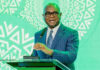
Reacting, the President of the Nigerian Bar Association, Afam Osigwe (SAN), said the directive was not new and did not amount to a violation of rights.
He stressed that the measure fell within the sovereign powers of a country to determine who it admits.
“It’s not a new request. Every country has the power to regulate who enters its country,” Osigwe stated.
“If, by checking your social media handles, they find that you promote terrorism, hate, or division, they have a right to deny you entry. I don’t see how that violates anyone’s rights.”
The NBA president likened the visa application process to seeking entry into a private home, noting that just as a homeowner may deny access to perceived threats, countries also reserve the right to screen applicants using available information.
He added that those who felt uncomfortable with the requirement could simply decline to apply.
However, another Senior Advocate of Nigeria, Mrs Titilola Akinlawon, faulted the directive, insisting that it infringed on applicants’ fundamental rights.
“Oh well, it certainly does, but you have no compulsion to go to their country,” she argued.
“It violates fundamental rights. It’s not our laws, but the humanitarian law. It violates it, but again, it’s their country. You don’t have to go there.”
Akinlawon revealed that despite holding a five-year U.S. visa, she had chosen not to use it.
“Why should I go when somebody will now be looking at me with one kind eye?” she asked.
She urged Nigerians to focus on fixing the country, rather than feeling compelled to seek opportunities abroad.
“Let us stay in our country and put our country right, so that we won’t have any compulsion going abroad,” she said.
Another lawyer, Ken Ahia (SAN), backed the rule, likening it to an employer setting conditions for prospective workers.
“America has the right to set up the standards it wants for any applicant. It’s up to you to either comply with it or not,” he said.
He noted that social media activity was already public information.
“All they want to go and see is what you have been publishing. If it’s private, you won’t make it public. They are not asking you to bring what you write in your diary.”
Ahia, however, raised concerns about applicants without a social media presence.
“The only flag there is that I’m not aware that everybody has a social media handle. So are they saying that if you don’t have one, you must go and open an account?” he queried.
On his part, Professor Sam Erugo (SAN) urged the Nigerian government to open discussions with the U.S. Mission over the new policy.
“One would expect the Nigerian government to engage the U.S. Embassy in Nigeria to discuss the new development at the highest diplomatic level,” he said.
Erugo explained that visa issuance was essentially an exercise of sovereignty, noting that the disclosure requirement should not be seen as an infringement of fundamental rights.
“To the extent that the disclosure is required to determine qualification for the issuance of an entry visa, which is a privilege and not a right, it is difficult to see how it amounts to infringement on the applicant’s right to freedom of expression and privacy,” he argued.
He pointed out that social media handles were already public, while rights such as privacy and free expression were not absolute.
“In the first place, the applicant is not obliged to seek a visa. Again, the social media handles are no secrets, and the right to freedom of expression and privacy are not absolute, even under the Nigerian Constitution,” he noted.
Erugo added that human rights protections were largely localised and subject to interpretation.
“The international human rights regime may not be quite useful here,” he said.
[A MUST HAVE] Evidence Act Demystified With Recent And Contemporary Cases And Materials

Available now for NGN 40,000 at ASC Publications, 10, Boyle Street, Onikan, Lagos. Beside High Court, TBS. Email publications@ayindesanni.com or WhatsApp +2347056667384. Purchase Link: https://paystack.com/buy/evidence-act-complete-annotation
______________________________________________________________________ “Enhance Legal Practice With Authoritative Reports” — Alexander Payne Offers Comprehensive Law Reports, Spanning Over A Century Of Nigerian Jurisprudence Interested buyers are encouraged to place their orders and enquiries via:
0704 444 4777, 0704 444 4999, 0818 199 9888
Website: www.alexandernigeria.com
Interested buyers are encouraged to place their orders and enquiries via:
0704 444 4777, 0704 444 4999, 0818 199 9888
Website: www.alexandernigeria.com