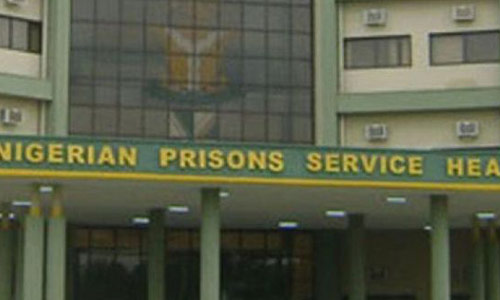
The Nigerian Correctional Service (NCoS) has confirmed the dismissal of Assistant Superintendent of Corrections, Efe Onakpoya, following allegations linked to whistleblowing.

Mr. Onakpoya was an officer at the Medium Security Custodial Centre (MSCC) in Afikpo, Ebonyi State. Reports indicate he was dismissed after exposing a colleague, Ogbule Obinna, who allegedly took an inmate out of the facility illegally for a conjugal visit.
While the officer accused of misconduct, Mr. Obinna, was reportedly pardoned and transferred, Mr. Onakpoya was dismissed.
In a statement responding to the reports, the NCoS spokesperson, Abubakar Umar, confirmed Mr. Onakpoya’s dismissal but stated it was due to “false allegations against the Service.” According to Mr. Umar, an investigation found the whistleblower guilty of taking unauthorized photographs of an inmate, Ibuchi Eze, and uploading them online.
The NCoS also accused Mr. Onakpoya of making unsubstantiated claims, including the allegation about the conjugal visit, and found him “guilty of acts unbecoming of a public officer.” No comments were made regarding the colleague who was exposed for wrongdoing.
According to internal documents cited by media, Mr. Obinna, who allegedly took the inmate out without authorization, was pardoned and reassigned to another command.
Despite legal protections, whistleblowers in Nigeria face serious risks such as harassment, job loss, and worse. Although there is a law designed to protect whistleblowers, many suffer consequences for exposing corruption or wrongdoing.
Experts attribute ongoing corruption partly to the culture of secrecy in government, which often forces journalists and civil society groups to rely on whistleblower leaks to expose malpractice.
In 2024, the government threatened to prosecute whistleblowers under clauses relating to breaches of secrecy in the Public Service Rules and Section 97(2) of the Criminal Code, which penalizes unauthorized disclosure of official documents.
Launched in 2016, Nigeria’s whistleblowing policy aimed to fight corruption by compensating informants. From 2017 to 2023, the government reported recovering significant funds through this policy.
However, recent reports suggest a decline in people willing to act as whistleblowers. The African Centre for Media & Information Literacy (AFRICMIL) noted that while awareness of the policy is high, many Nigerians remain reluctant to come forward due to inadequate legal protections and lack of confidence in the system’s effectiveness.
[A MUST HAVE] Evidence Act Demystified With Recent And Contemporary Cases And Materials

Available now for NGN 40,000 at ASC Publications, 10, Boyle Street, Onikan, Lagos. Beside High Court, TBS. Email publications@ayindesanni.com or WhatsApp +2347056667384. Purchase Link: https://paystack.com/buy/evidence-act-complete-annotation
______________________________________________________________________ “Enhance Legal Practice With Authoritative Reports” — Alexander Payne Offers Comprehensive Law Reports, Spanning Over A Century Of Nigerian Jurisprudence Interested buyers are encouraged to place their orders and enquiries via:
0704 444 4777, 0704 444 4999, 0818 199 9888
Website: www.alexandernigeria.com
Interested buyers are encouraged to place their orders and enquiries via:
0704 444 4777, 0704 444 4999, 0818 199 9888
Website: www.alexandernigeria.com