By Othniel A. Ikpibako, FCIArb.


Introduction
Generally, the court’s jurisdiction does not extend to a dispute which is the subject of arbitration. The parties having agreed to submit their dispute to arbitral proceedings, have excluded the court’s jurisdiction therefrom. The arbitration agreement is an ouster of the court’s jurisdiction on the substance of the parties’ dispute. Despite the fact that the parties have excluded the court’s jurisdiction on the substance of their dispute, the court does intervene in the arbitral proceedings on a number of issues and for good reasons.
Rationale for court’s intervention
There are legally defined areas where the court has to intervene in the arbitral proceedings. The reasons for the court’s intervention are, among others: to prevent a party from evading the arbitration agreement or from frustrating the arbitral proceedings; to prevent a situation of deadlock to the arbitral proceedings; and to clothe the arbitral proceedings with the coercive power of the state, which is a missing element especially in an arbitral award.
Needless to say that the roles the court play in arbitration are delineated mainly by the lex arbitri (governing law of the arbitration) and also the applicable arbitration rules. This paper examines below the court’s role before, during and after the arbitral proceedings.
Court’s role before the arbitral proceedings
The court does play defined roles before the commencement of the arbitral proceedings, usually to give effect to the agreement of the parties to have recourse to arbitration.
- Stay of Proceedings. The state court is a default forum where an aggrieved party usually approaches for a remedy. Hence, where an arbitration agreement does not exist, the court seems to be the obvious recourse for resolving the parties’ dispute. However, where there is a valid and enforceable arbitration agreement, a party may, in an attempt to breach same, institute the matter which is the subject of arbitration in a law court.
Where a party has instituted a matter which is the subject of an arbitration agreement in court, it does not automatically rob the court of the jurisdiction to hear and determine same. For the court to decline jurisdiction to hear the matter, the defendant must raise an objection timeously before or in their statement of defence, that the matter be referred to arbitration, otherwise the defendant would have waived their right to arbitral determination. Where the defendant raises an objection timeously, the court would stay the proceedings and refer the parties to arbitration.
Noteworthy, because arbitration prides itself in speedy resolution of dispute, when a party thereto has wrongly instituted a matter in court, without a waiver by the defendant, and before the determination to refer same to arbitration by the court, the defendant can commence or continue the arbitral proceedings and an award made pending the court’s decision. (See Section 5 Arbitration and Mediation Act 2023 (Nigeria); Section 9 Arbitration Act 1996 (United Kingdom); Section 6 International Arbitration Act 1994 (Singapore).
- Extension of time to commence arbitral proceedings. Noteworthy, statute of limitation apply to arbitration generally. Notwithstanding, parties to an arbitration agreement may fix a time within which to commence the arbitral proceedings, failure of which will bar the claim. The said time fixed by the parties is usually shorter than that provided in the statute of limitation. Where the United Kingdom is the seat of arbitration, an application for leave can be made to the court for extension of time to commence the arbitral proceedings where the time agreed by the parties to do so has elapsed. (See Section 12 Arbitration Act 1996).
Court’s intervention during the arbitral proceedings
The court plays a significant number of laudable roles during the arbitral proceedings, especially to prevent a situation of deadlock in or a party from frustrating the proceedings.
- The appointment of arbitrator. This happens especially where a party has failed to act, or there is a disagreement, on the appointment of the arbitral tribunal. For example, where a sole arbitrator is provided for, and the parties have failed to agree who should be the arbitrator or they did not name an institution to make such appointment, a party can apply to the court to appoint the arbitrator. In the case of three arbitrators, where a party has appointed their arbitrator, and the other party has not appointed theirs, or where the two arbitrators appointed by each party have failed to agree on the third arbitrator, or where a named institution has failed to act, a party can apply to the court to make the relevant appointment. (See Sections 7, 16 (1) and 18 (2) Arbitration and Mediation Act 2023; Sections 18 and 21 (5) Arbitration Act 1996).
- Removal of an arbitrator. Except agreed otherwise, where a party intends to challenge the appointment of an arbitrator (for any circumstances of justifiable doubt as to the arbitrator’s impartiality or independence or not possessing agreed qualifications), usually within a specified period after becoming aware of such circumstance or from date of constitution of the arbitral tribunal, they may apply to the arbitral tribunal first, and if the parties do not agree to the challenge or the challenged arbitrator does not withdraw, the tribunal shall decide on it. Where such an application is refused by the tribunal, the party seeking removal, within a given time after receiving the notice of the tribunal decision, may apply to the court to make the determination for the removal of the arbitrator. (See Sections 9 and 17 (2) Arbitration and Mediation Act 2023; Sections 17(3) and 24 Arbitration Act 1996).
- Termination of arbitrator’s mandate. An arbitrator’s mandate usually terminates with the making of a final award or where the arbitral tribunal makes an order terminating the arbitral proceedings. However, there are two instances where the arbitrator’s mandate can be terminated even before the arbitrator assumes office: firstly, inability to act; and secondly, failure to act without undue delay. In either case, where the arbitrator withdraws or the parties agree, the arbitrator’s mandate terminates; failing which a party may apply to the court for the determination of the termination. (See Section 10 Arbitration and Mediation Act 2023; Section 23 Arbitration Act 1996).
- Relief of arbitrator from liability and determination of arbitrator’s fee. Failing agreement with the parties, and in the absence of an appointing authority, an arbitrator upon resignation or withdrawal from office, may apply to the court to grant relief from any liability incurred and also to determine the arbitrator’s fees and expenses. (See Section 12 Arbitration and Mediation Act 2023; Section 23 Arbitration Act 1996).
- Determination of the arbitral tribunal jurisdiction. Where there is a challenge to the jurisdiction of the arbitral tribunal such plea must be made first to the tribunal and where the tribunal determines that it has jurisdiction, and within a defined period after receiving notice of the tribunal’s decision, any party to the arbitral proceedings may apply to the court to decide the matter. (See Section 14 (6) Arbitration and Mediation Act 2023; Section 32 Arbitration Act 1996; Section 10 (3) International Arbitration Act 1994).
- Grant of interim measures. These are temporary measures, before a final award is made, to preserve the integrity of the arbitral process and prevent a party from frustrating the process and rendering the final award futile. Both the arbitral tribunal and the court have concurrent jurisdictions in making interim measures, however, considering the speed of arbitral proceedings, it will be advisable that a party to an arbitration should apply to the tribunal for an interim measure instead of the court. Noteworthy, an interim measure issued by an arbitral tribunal is recognised and enforced by the court, and refusal thereof is on the same grounds as a final award. (See Sections 19, 28 and 29 Arbitration and Mediation Act 2023; Sections 42 and 44 Arbitration Act 1996; Sections 12(1) and 12A (4) International Arbitration Act 1994).
- Assistance in taking evidence. Because the arbitral tribunal lacks coercive power, it cannot compel a party or third party to testify, hence a party to arbitral proceedings may apply to court to issue a writ of subpoena ad testificandum or subpoena duces tecum to compel a party to testify or produce document respectively. (See Section 43 Arbitration and Mediation Act 2023; Section 43 Arbitration Act 1996; Section 13 International Arbitration Act 1994).
- Determination of preliminary question of law. There are instances where the arbitral tribunal is not composed of lawyers and a question of law may arise. Where the seat of arbitration is the United Kingdom, except the parties have agreed otherwise, a party to the arbitral proceedings may apply to the court to determine any question of law arising in the course of the proceedings. (See Section 45 Arbitration Act 1996).
- Extension of time for making an award. Where the arbitration agreement limits the time for making an award, the arbitral tribunal must deliver the award within that time otherwise it will strike at the jurisdiction of the arbitral tribunal, but since that time was fixed by the parties they can also agree to extend same. Where the parties do not agree to extend the time, it would put the arbitral tribunal in limbo. However, where the seat of the arbitration is the United Kingdom, and unless the parties have agreed otherwise, a party to the arbitral proceedings or the arbitral tribunal may apply to the court for extension of time to make the award. (See Section 50 Arbitration Act 1996).
Court’s intervention after the arbitral proceedings
Generally, the arbitral proceedings terminate when the arbitral tribunal has issued a final award, and it also terminates when the tribunal makes an order terminating the proceedings either by agreement of the parties or the tribunal finds that continuation of the proceedings is unnecessary or impossible or the claims are withdrawn.
After a final award is made, a lot of possibilities could arise such as arbitrator withholding the award for non-payment of fees and expenses, appeal against an award, setting aside an award and enforcement of an award. These are instances where the court’s jurisdiction can further be invoked.
- Order to deliver an award upon payment of fees. After an award is made the arbitral tribunal may refuse to deliver same to the parties because of non-payment of fees and expenses. In such a case, a party to the arbitral proceedings may apply to court who will order that the arbitral tribunal shall deliver the award upon the applicant payment to court of the arbitrator’s fees and expenses demanded or a lesser sum as the court may specify. (See Section 54 (2) Arbitration and Mediation Act 2023; Sections 28 (2), 56 (2) and 64 (2) Arbitration Act 1996).
- Review of an award. The essence of arbitration is that the parties thereto have chosen to submit the substance of their dispute to a private resolution process. Hence, it is unusual for the court to delve into the substance of the parties’ dispute. Notwithstanding, parties to arbitral proceedings which seat is the United Kingdom, except they have agreed otherwise, may appeal to the court against an award on question of law. (See Sections 69 Arbitration Act 1996).
- Setting aside an award. Usually, recourse to the court against an award is by an application for setting it aside, not on the merit of the ward, but on a whole wide range of grounds such as:
- Incapacity of a party to the arbitration agreement.
- Invalidity of the arbitration agreement.
- Lack of procedural fairness – no notice to a party of appointment of an arbitrator or of the arbitral proceedings or inability of a party to present his case.
- Excess of jurisdiction – an award deals with issues, or contains decisions, beyond scope of submission to arbitration, except there could be separation to recognise and enforce the part within jurisdiction.
- Composition of the arbitral tribunal or the arbitral procedure was not in accordance with the agreement of the parties or lex arbitri.
- The subject-matter of the dispute is not capable of settlement by arbitration under the law of the State where the order for setting aside is sought.
- The award is in conflict with the public policy of the State where the order for setting aside is sought.
- Fraud or corruption or breach of the rules of natural justice.
A big lacuna in almost all the jurisdictions though, is failure to limit the matter of setting aside an award to the court of first or second instance which has prolonged arbitration matter all the way to the court of last instance with all its attendant delay, thereby destroying the very allure or beauty of arbitration which is speed. (See Section 55 Arbitration and Mediation Act 2023; Sections 67 and 68 Arbitration Act 1996; Section 24 International Arbitration Act 1994).
- Enforcement of an award. Where the unsuccessful party to arbitral proceedings does not comply with the award, the successful party will apply to court for the recognition and enforcement of the award, and recognition may be refused on the proof by the unsuccessful party of same above grounds for setting aside award, in addition to the proof that the award has not yet become binding on the parties or has been set aside or suspended by a court of the lex arbitri.
Where an application for setting aside or suspension of an award has been made, the court where recognition or enforcement is sought may adjourn its decision, and may on the application of the party seeking recognition or enforcement order the other party to provide appropriate security.
(See Section 57 Arbitration and Mediation Act 2023; Sections 66 Arbitration Act 1996; Section 19 International Arbitration Act 1994).
Conclusion
Clearly, although the court lacks jurisdiction to determine the substance of the parties’ dispute in arbitration, it plays laudable roles to ensure effectiveness of the process, which roles are delineated mainly by the lex arbitri. Much said, the following are recommended:
- Other jurisdictions should adopt the United Kingdom statutory provisions of application to court for extension of time to commence arbitral proceedings or make an award. Since this would ensure that the aim of the parties to arbitration, which is private dispute resolution, is not unnecessarily defeated or the arbitral tribunal left in limbo.
- Fraud or corruption or breach of the rules of natural justice, which are expressly provided in the Singaporean statute, as grounds for setting aside an award by the court, should be incorporated in the arbitration law of all other jurisdictions which do not have the provisions. As proof of fraud, corruption or breach of the rules of natural justice should render an award nugatory.
- Arbitration laws should limit the matter of setting aside an award to the court of second instance, such as the Court of Appeal in Nigeria, and also leave of the court of second instance should be sought before an appeal can proceed to it to prevent a frivolous appeal from the court of first instance, in all to preserve the allure of arbitration which is speed, so that the successful party can proceed to reap the fruits of the award timeously.
Othniel A. Ikpibako is a legal practitioner and a Fellow of the Chartered Institute of Arbitrators. He can be reached on truthlawfirm@gmail.com
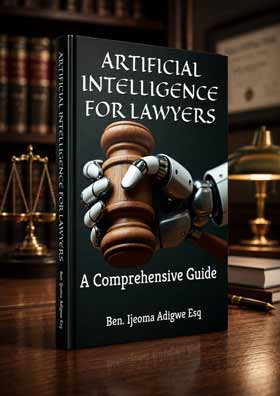 The book also examines Nigeria's legal ecosystem, focusing on the LPELR and NBA AI Guidelines. As a bonus, every purchase comes with a FREE eBook titled: How to Use the AI Features in LegalPedia and LawPavilion.
Ohio Books Ltd praises the publication, stating:
"....this is the only Nigerian book I know of on the topic."
How to Order:
📞 Call, Text, or WhatsApp: 08034917063 | 07055285878
📧 Email: benadigwe1@gmail.com
🌎 Website: www.benadigwe.com
Ebook Version: Access it directly online at https://selar.com/prv626
Authored by Ben Ijeoma Adigwe Esq., ACIarb (UK), LL.M, Dip. in Artificial Intelligence, Director at the Delta State Ministry of Justice, Asaba, Nigeria.
______________________________________________________________________
[A MUST HAVE] Evidence Act Demystified With Recent And Contemporary Cases And Materials
The book also examines Nigeria's legal ecosystem, focusing on the LPELR and NBA AI Guidelines. As a bonus, every purchase comes with a FREE eBook titled: How to Use the AI Features in LegalPedia and LawPavilion.
Ohio Books Ltd praises the publication, stating:
"....this is the only Nigerian book I know of on the topic."
How to Order:
📞 Call, Text, or WhatsApp: 08034917063 | 07055285878
📧 Email: benadigwe1@gmail.com
🌎 Website: www.benadigwe.com
Ebook Version: Access it directly online at https://selar.com/prv626
Authored by Ben Ijeoma Adigwe Esq., ACIarb (UK), LL.M, Dip. in Artificial Intelligence, Director at the Delta State Ministry of Justice, Asaba, Nigeria.
______________________________________________________________________
[A MUST HAVE] Evidence Act Demystified With Recent And Contemporary Cases And Materials

 Interested buyers are encouraged to place their orders and enquiries via:
0704 444 4777, 0704 444 4999, 0818 199 9888
Website: www.alexandernigeria.com
Interested buyers are encouraged to place their orders and enquiries via:
0704 444 4777, 0704 444 4999, 0818 199 9888
Website: www.alexandernigeria.com