The Federal Government is reassessing its economic strategies and exploring multiple scenarios to cushion the potential negative impact of new U.S. tariffs on the Nigerian economy.

A multi-sectoral economic management team is currently analysing data, revenues, projections, opportunities, and weak points in response to the 14 per cent tariff recently imposed by the United States on all products imported from Nigeria.
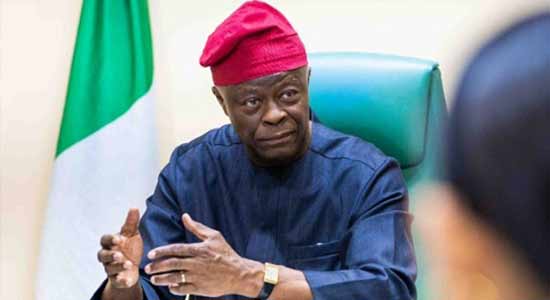
Minister of Finance and Coordinating Minister of the Economy, Mr. Wale Edun, alongside the Ministry of Foreign Affairs, yesterday in Abuja allayed concerns over President Donald Trump’s trade policies, which have unsettled global markets.
Speaking at the launch of a corporate governance scorecard for government-owned enterprises, Edun said the economic team is re-evaluating national assumptions in light of the new tariff regime. The Ministry of Foreign Affairs assured that the government would consider all options and respond appropriately.
Edun noted that the team is reviewing current projections and underlying assumptions in the budget, particularly for the first quarter, to gauge how the new trade dynamics could affect fiscal performance and trade volumes.
“The U.S. tariffs could present both challenges and opportunities,” Edun stated. “Nigeria will respond strategically, prioritising sustainable economic growth.”
Last week, President Trump announced a 14 per cent levy on imports from Nigeria, a move that rattled global markets and contributed to a decline in crude oil prices, now trading between $65 and $67 per barrel.
Edun said the situation is “not too bad,” especially compared to countries like Vietnam facing 46 per cent tariffs. “Given our relatively stable economy and attractive investment environment, companies could consider relocating production to Nigeria,” he added.
While oil and mineral exports remain largely unaffected, non-oil exports have been hit, prompting calls for strategic repositioning. Edun highlighted Nigeria’s competitive exchange rates, export potential, and market size as key attractions for investors.
The Ministry of Foreign Affairs’ spokesperson, Kimiebi Ebienfa, confirmed that stakeholders are studying the situation. He said: “Rest assured that the government will critically analyse the impact and respond in the nation’s best interest.”
Other affected countries like China, Canada, and the EU have also responded to Trump’s tariffs, which took effect Saturday.
Minister of Foreign Affairs, Ambassador Yusuf Maitama Tuggar, met virtually with U.S. Deputy Secretary of State Christopher Landau on Friday. Although the statement released was silent on whether tariffs were discussed, both sides emphasized strengthening commercial ties, enhancing security collaboration, and deepening diplomatic engagements.
Edun reiterated the government’s commitment to economic reforms and private sector-led growth. Highlighting that the Federal Government represents just 10 per cent of Nigeria’s GDP while the private sector makes up 90 per cent, he stressed the need to leverage private investment through public-private partnerships (PPPs) and asset optimization strategies.
He cited the Highway Development and Management Initiative, particularly the Benin-Asaba expressway, which is set to reduce travel time from four hours to one, as a successful model. Additional road projects covering about 1,000 kilometres are ready for private sector concession.
The government is also shifting from debt reliance to a model focusing on equity and internally generated revenue, boosted by the improved performance of state-owned enterprises and automated revenue collection systems.
Edun noted that the economy has shown signs of recovery over the past 18 months under the Tinubu Administration, with growth rates between 3.8 and 4.0 per cent, stabilizing inflation, and declining food and fuel prices.
He stressed that corporate governance is key for public enterprises considering public listings, such as the Nigerian National Petroleum Company Limited (NNPC), which is preparing for an Initial Public Offering (IPO).
Meanwhile, Minister of Power, Mr. Adebayo Adelabu, decried poor corporate governance in the power sector. He pointed out that despite an installed capacity of over 4,000 megawatts, government-owned plants operate at less than 20 per cent efficiency compared to private plants like Azura and Transcorp.
Adelabu criticized the inefficiencies at the Transmission Company of Nigeria (TCN), noting that over 100 transmission projects remain incomplete, leading to wastage of billions of naira and stalling energy reliability.
“Power infrastructure must be 100 per cent complete before energisation,” he said. “Had 125 of those projects been completed, the impact on power stability would have been profound.”
Managing Director of the Ministry of Finance Incorporated (MOFI), Mr. Armstrong Takang, revealed that only 20 out of 52 portfolio companies have audited their financial statements in the past three years. Despite this, he cited positive developments, including the Bank of Industry’s successful $1.879 billion fundraising last year to support critical sectors.
World Bank Country Director, Mr. Ndiyame Diop, praised Nigeria’s potential for economic transformation but expressed concern over transparency issues. He urged greater adherence to governance best practices, including independent audits and annual financial reports.
[A MUST HAVE] Evidence Act Demystified With Recent And Contemporary Cases And Materials

Available now for NGN 40,000 at ASC Publications, 10, Boyle Street, Onikan, Lagos. Beside High Court, TBS. Email publications@ayindesanni.com or WhatsApp +2347056667384. Purchase Link: https://paystack.com/buy/evidence-act-complete-annotation
______________________________________________________________________ “Enhance Legal Practice With Authoritative Reports” — Alexander Payne Offers Comprehensive Law Reports, Spanning Over A Century Of Nigerian Jurisprudence Interested buyers are encouraged to place their orders and enquiries via:
0704 444 4777, 0704 444 4999, 0818 199 9888
Website: www.alexandernigeria.com
Interested buyers are encouraged to place their orders and enquiries via:
0704 444 4777, 0704 444 4999, 0818 199 9888
Website: www.alexandernigeria.com