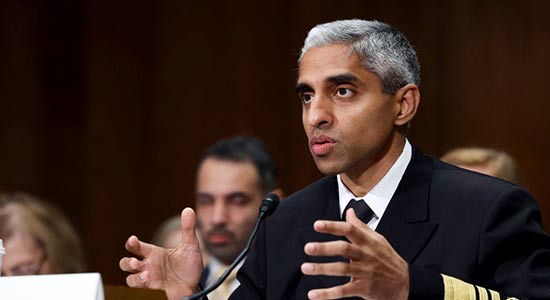
United States Surgeon General Dr. Vivek Murthy released a new Surgeon General’s Advisory on Alcohol and Cancer Risk, outlining the direct link between alcohol consumption and increased cancer risk. Alcohol consumption is the third leading preventable cause of cancer in the United States, after tobacco and obesity, increasing risk for at least seven types of cancer. While scientific evidence for this connection has been growing over the past four decades, less than half of Americans recognize it as a risk factor for cancer.


The Surgeon General’s Advisory includes a series of recommendations to increase awareness to help minimize alcohol-related cancer cases and deaths, including updating the existing Surgeon General’s health warning label on alcohol-containing beverages.
“Alcohol is a well-established, preventable cause of cancer responsible for about 100,000 cases of cancer and 20,000 cancer deaths annually in the United States – greater than the 13,500 alcohol-associated traffic crash fatalities per year in the U.S. – yet the majority of Americans are unaware of this risk,” said U.S. Surgeon General Dr. Vivek Murthy. “This Advisory lays out steps we can all take to increase awareness of alcohol’s cancer risk and minimize harm.”
The direct link between alcohol consumption and cancer risk is well-established for at least seven types of cancer including cancers of the breast, colorectum, esophagus, liver, mouth (oral cavity), throat (pharynx), and voice box (larynx), regardless of the type of alcohol (e.g., beer, wine, and spirits) that is consumed. For breast cancer specifically, 16.4% of total breast cancer cases are attributable to alcohol consumption.
In the U.S., there are about 100,000 alcohol-related cancer cases and about 20,000 alcohol-related cancer deaths annually. Cancer risk increases as alcohol consumption increases. For certain cancers, like breast, mouth, and throat cancers, evidence shows that the risk of developing cancer may start to increase around one or fewer drinks per day. An individual’s risk of developing cancer due to alcohol consumption is determined by a complex interaction of biological, environmental, social, and economic factors.
In addition to calling for an update on the Surgeon General’s health warning label on alcohol-containing beverages to now include cancer risk, the Advisory makes further recommendations. It calls for a reassessment of the guideline limits for alcohol consumption to account for cancer risk, and it advises individuals to be aware of the relationship between alcohol consumption and increased cancer risk when considering whether or how much to drink. Additionally, public health professionals and community groups should highlight alcohol consumption as a leading modifiable cancer risk factor and strengthen and expand education efforts to increase general awareness, and health care providers should inform patients in clinical settings about this link and promote the use of alcohol screening and treatment referrals as needed.
“The data does not bear that out for cancer risk.”
Only Congress can mandate new warning labels of the sort Dr. Murthy recommended, and it’s not clear that the incoming administration would support the change.
Still, President-elect Donald J. Trump does not drink, and his choice to head the Health and Human Services Department, Robert F. Kennedy Jr., swore off alcohol and drugs decades ago, and says he regularly attends AA meetings.
There is no question that heavy consumption is harmful. But supporters of moderate drinking — including makers of wine, beer and spirits, and some physicians and scientists — argue that a little alcohol each day may reduce cardiovascular disease, the No. 1 killer in the United States.
Newer scientific studies have criticized the methodology of earlier studies, however, and have challenged that view, which was once a consensus.
While most cancer deaths occur at drinking levels that exceed the current recommended dietary guidelines, the risk for cancers of the breast, the mouth and the throat may rise with consumption of as little as one drink a day, or even less, Dr. Murthy said on Friday.
Overall, one of every six breast cancer cases is attributable to alcohol consumption, Dr. Murthy said. More recent studies have also linked moderate alcohol consumption to certain forms of heart disease, including atrial fibrillation, a heart arrhythmia.
Two scientific reviews will be used to inform the updated recommendations about alcohol consumption in the federal dietary guidelines.
Five years ago, the scientific report that informed the writing of the 2020-2025 dietary guidelines acknowledged that alcohol is a carcinogen and generally unhealthy and suggested “tightening guidelines” by capping the recommendation for men at one standard drink, or 14 grams of alcohol a day.
When the final guidelines were drafted, however, there was no change in the advice that moderate drinking of up to two drinks a day for men was acceptable.
But the government acknowledged emerging evidence indicating that “even drinking within the recommended limits may increase the overall risk of death from various causes, such as from several types of cancer and some forms of cardiovascular disease.”
Since then, even more studies have linked alcoholic beverages to cancer. Yet any attempt to change the warning labels on alcoholic beverages is likely to face an uphill battle.
The current warning label has not been changed since it was adopted in 1988, even though the link between alcohol and breast cancer has been known for decades.
It was first mentioned in the 2000 U.S. Dietary Guidelines. In 2016, the surgeon general’s report on alcohol, drugs and health linked alcohol misuse to seven different types of cancer.
More recently, a scientific review of the research on moderate drinking, carried out under the auspices of the National Academies of Sciences, Engineering and Medicine, was commissioned by Congress.
That analysis found a link between alcohol consumption and a slight increase in breast cancer, but no clear link to any other cancers. The report also revived the theory that moderate drinking is linked to fewer heart attack and stroke deaths, and fewer deaths overall, compared with never drinking.
The World Health Organization says there is no safe limit for alcohol consumption, however, and 47 nations require warnings on alcoholic beverages. But cancer is rarely mentioned.
To date, only South Korea has a label warning about liver cancer, though manufacturers can choose alternative labels that don’t mention cancer. Ireland is currently slated to introduce labels that say there is a “direct link between alcohol and fatal cancers” in 2026.
The industry has a strong history of fighting warning labels that mention cancer, and alcohol-producing nations have also challenged warning labels under international trade law.
Industry opposition led to the premature termination of a federally funded Canadian study of the impact of warning labels that mentioned cancer.
The surgeon general’s advisory provided a brief overview of research studies and reviews published in the past two decades, including a global study of 195 countries and territories involving 28 million people.
They all found that higher levels of alcohol consumption were associated with a greater risk of cancer.
Other studies looked at specific cancers, like breast cancer and mouth cancer, finding the risks increased by 10 percent and 40 percent, respectively, for those who had just one drink a day, when compared with those who did not drink.
The report described the biological mechanisms by which alcohol is known to induce cancerous changes at the cellular level.
The most widely accepted theory is that inside the body, alcohol breaks down into acetaldehyde, a metabolite that binds to DNA and damages it, allowing a cell to start growing uncontrollably and creating a malignant tumor.
Animal experiments have shown that rodents whose drinking water was spiked with either ethanol, the alcohol used in alcoholic beverages, or with acetaldehyde developed large numbers of tumors all over their bodies.
Research has shown that alcohol generates oxidative stress, which increases inflammation and can damage DNA.
It also alters levels of hormones like estrogen, which can play a role in breast cancer development, and makes it easier for carcinogens like tobacco smoke particles to be absorbed into the body, increasing susceptibility to cancers of the mouth and the throat.
The surgeon general’s report also goes into detail about the increase in risk associated with drinking, differentiating between the increases in absolute risk and in relative risk.
For example, the absolute risk of breast cancer over a woman’s life span is about 11.3 percent (11 out of 100) for those who have less than a drink a week.
The risk increases to 13.1 percent (13 of 100 individuals) at one drink a day, and up to 15.3 percent (15 of 100) at two drinks per day.
For men, the absolute risk of developing an alcohol-related cancer increases from about 10 percent (10 of every 100 individuals) for those who consume less than one drink a week to 11.4 percent (11 per 100) for those who have a drink every day on average. It rises to 13 percent (13 of 100 individuals) for those who have two drinks a day on average.
Many Americans don’t know there is a link between alcohol and cancer.
Fewer than half of Americans identified alcohol use as a risk factor for cancer, compared with 89 percent who recognized tobacco as a carcinogen, according to a 2019 survey of U.S. adults aged 18 and older carried out by the American Institute for Cancer Research.
Yet alcohol consumption is the third leading preventable cause of cancer, after tobacco and obesity, according to the surgeon general’s report.
Dr. Murthy said it was important to know that the risk rises as alcohol consumption increases. But each individual’s risk of cancer is different, depending on family history, genetic makeup and environmental exposures.
“I wish we had a magic cutoff we could tell people is safe,” he said. “What we do know is that less is better when it comes to reducing your cancer risk.”
“If an individual drinks occasionally for special events, or if you’re drinking a drink or two a week, your risk is likely to be significantly less than if you’re drinking every day,” he added.
 Interested buyers are encouraged to place their orders and enquiries via:
0704 444 4777, 0704 444 4999, 0818 199 9888
Website: www.alexandernigeria.com
Interested buyers are encouraged to place their orders and enquiries via:
0704 444 4777, 0704 444 4999, 0818 199 9888
Website: www.alexandernigeria.com

 The book also examines Nigeria's legal ecosystem, focusing on the LPELR and NBA AI Guidelines. As a bonus, every purchase comes with a FREE eBook titled: How to Use the AI Features in LegalPedia and LawPavilion.
Ohio Books Ltd praises the publication, stating:
"....this is the only Nigerian book I know of on the topic."
How to Order:
📞 Call, Text, or WhatsApp: 08034917063 | 07055285878
📧 Email: benadigwe1@gmail.com
🌎 Website: www.benadigwe.com
Ebook Version: Access it directly online at https://selar.com/prv626
Authored by Ben Ijeoma Adigwe Esq., ACIarb (UK), LL.M, Dip. in Artificial Intelligence, Director at the Delta State Ministry of Justice, Asaba, Nigeria.
_______________________________________________________________________
The book also examines Nigeria's legal ecosystem, focusing on the LPELR and NBA AI Guidelines. As a bonus, every purchase comes with a FREE eBook titled: How to Use the AI Features in LegalPedia and LawPavilion.
Ohio Books Ltd praises the publication, stating:
"....this is the only Nigerian book I know of on the topic."
How to Order:
📞 Call, Text, or WhatsApp: 08034917063 | 07055285878
📧 Email: benadigwe1@gmail.com
🌎 Website: www.benadigwe.com
Ebook Version: Access it directly online at https://selar.com/prv626
Authored by Ben Ijeoma Adigwe Esq., ACIarb (UK), LL.M, Dip. in Artificial Intelligence, Director at the Delta State Ministry of Justice, Asaba, Nigeria.
_______________________________________________________________________