
By Nnenna Ogbenna


Gender roles are roles encompassing a range of acceptable behaviors and attitudes of the sexes. These behaviors are generally considered appropriate, or desirable for a particular sex, by societal construct. They are usually centered on the concept of Masculinity and femininity. These started from different cultures and gradually became a way of life. Gender roles affect the personal relationships of people, the outfits they are expected to wear, the desired profession, and so on.
Gender roles globally have become slightly less lopsided with the dawn of the 21st century. This did not happen by chance, it happened because concerned women and men decided to speak and enlighten the masses on the level of inequality the sexes faced and how it affected not just the societal aspect but the economic progress of countries.
Despite all the progress that has been made to breach the gap between sexes on all fronts, women still face a range of obstacles in the workplace which prevent them from realizing their full career potential. It ranges from maternity leaves, sexual harassment, to wage parity and much more. A colleague of mine told me of various experiences she has had ever since our call to bar. Some clients have little or no confidence in your capabilities as a female lawyer. Being under 30, and single, female lawyers are not taken as seriously as their male counterparts. When a firm has controversial matters, it is usually the male lawyer that is sent to ‘do justice to the case’. In some firms, the females are not usually given the opportunity to lead in examination in chief or even cross examine a witness. They are allowed to do the easy tasks like moving motions. The level of confidence accorded to the male lawyer is not always accorded to the female lawyer.
The effect of this disparity is that many women do not reach certain senior and executive positions in the firms before running off to seek other employment or startup their own firms where they are able to actively participate in decision making and the growth of their legal career.
The Labour Act (Cap L1, LFN 2004) does not mandate nondiscrimination in employment based on gender Nigeria. I remember when I was job hunting, one of the firms I applied to, told me that although I was qualified for the job, they could not give the junior associate position to me because what they wanted was a male lawyer. This logic didn’t make sense to me then and it still does not.
The Labour Act also does not mandate equal remuneration of the sexes for work of equal value. Women in Successful Careers (WISCAR) advocates that the tools for enabling the attainment of a gender-friendly workplace are effective and far-reaching workplace policies, structured mentorship programs and a review of our existing legal framework.
As a young female lawyer in Nigeria, you are constantly undermined by potential clients, colleagues, and the society as a whole, and soon, you start to believe it and act accordingly.
The labour Act is highly restrictive of the Nigerian woman seeking employment generally. Women are not allowed to work the night shift. This in turn hinders women in manufacturing and similar industries from getting deserved promotions in their workplace. (Sec 55, Labour Act).
When taking maternity leave, their jobs or positions are not guaranteed when they return.
When sexually harassed at work, there are no remedies available for the working Nigerian woman.
The Labour Act should be amended to protect women from gender based discrimination in employment and provide a guarantee for equal pay for equal work. The working Nigerian woman deserves equal career opportunities her male counterparts have, and a work environment that enhances inclusivity and diversity.
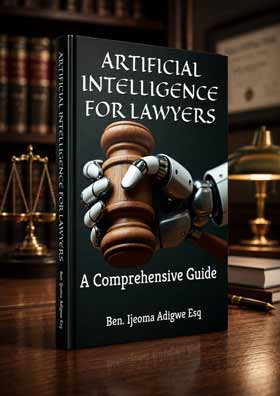 The book also examines Nigeria's legal ecosystem, focusing on the LPELR and NBA AI Guidelines. As a bonus, every purchase comes with a FREE eBook titled: How to Use the AI Features in LegalPedia and LawPavilion.
Ohio Books Ltd praises the publication, stating:
"....this is the only Nigerian book I know of on the topic."
How to Order:
📞 Call, Text, or WhatsApp: 08034917063 | 07055285878
📧 Email: benadigwe1@gmail.com
🌎 Website: www.benadigwe.com
Ebook Version: Access it directly online at https://selar.com/prv626
Authored by Ben Ijeoma Adigwe Esq., ACIarb (UK), LL.M, Dip. in Artificial Intelligence, Director at the Delta State Ministry of Justice, Asaba, Nigeria.
_______________________________________________________________________
The book also examines Nigeria's legal ecosystem, focusing on the LPELR and NBA AI Guidelines. As a bonus, every purchase comes with a FREE eBook titled: How to Use the AI Features in LegalPedia and LawPavilion.
Ohio Books Ltd praises the publication, stating:
"....this is the only Nigerian book I know of on the topic."
How to Order:
📞 Call, Text, or WhatsApp: 08034917063 | 07055285878
📧 Email: benadigwe1@gmail.com
🌎 Website: www.benadigwe.com
Ebook Version: Access it directly online at https://selar.com/prv626
Authored by Ben Ijeoma Adigwe Esq., ACIarb (UK), LL.M, Dip. in Artificial Intelligence, Director at the Delta State Ministry of Justice, Asaba, Nigeria.
_______________________________________________________________________
“Order Justice Omolaye-Ajileye’s Electronic Evidence Books Now” — Essential Guides On Evidence Act, Case Law And Digital Proof
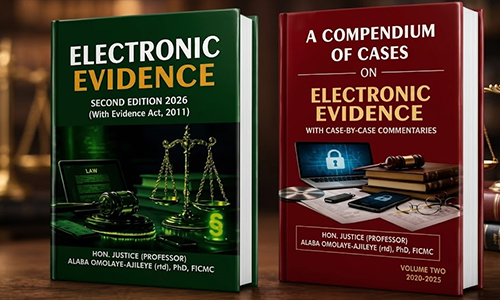
 Interested buyers are encouraged to place their orders and enquiries via:
0704 444 4777, 0704 444 4999, 0818 199 9888
Website: www.alexandernigeria.com
Interested buyers are encouraged to place their orders and enquiries via:
0704 444 4777, 0704 444 4999, 0818 199 9888
Website: www.alexandernigeria.com