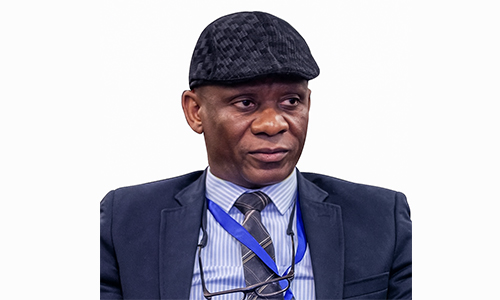
Senior Advocate of Nigeria Kunle Edun has condemned the killing of 28-year-old Mene Ogidi by ASP Nuhu Usman, popularly known as Ogbebe, describing it as an extrajudicial murder committed in broad daylight at the front of the Effurun Area Command office while the victim’s hands were tied, he constituted no danger to anyone, and he was pleading his innocence and offering to lead the police to the person who sent him to collect a parcel at a motor park.

In a statement that combined legal analysis with raw outrage, Edun disclosed that he is personally following up the case, has received assurances from the police top echelon in Delta State that the matter will be properly investigated and the culprits prosecuted, and that the victim’s family has reached out to him for legal assistance.
“We intend taking up the case for the family and ensure that justice is done. This is just one senseless murder too many,” Edun declared.
The senior advocate called for the arrest and prosecution not only of ASP Usman but of all the police officers present during the shooting, alleging that viral video footage shows officers praising the killer and one of them handing him a loaded cartridge which he used to shoot the young man, conduct that Edun described as “a planned conspiracy to commit murder.”
According to Edun’s account, based on video footage that has gone viral and information available to him, the killing occurred in two stages.
The first shooting occurred at the Effurun roundabout park, where police officers went to pick up Mene Ogidi. At this location, ASP Nuhu Usman allegedly shot Ogidi in one of his legs “without any form of provocation or attack.” The young man was then transported, with his hands tied, to the Effurun Area Command.
The second and fatal shooting occurred at the front of the Area Commander’s office. “Immediately the policemen dropped Mene Ogidi at the front of the Area Commander’s office, the same Ogbebe, again and without any provocation, shot him at close range three times,” Edun stated.
“That was a cold-blooded and brutal murder,” the senior advocate declared.
Edun emphasised that at the time of the fatal shooting, Ogidi was not resisting, was not armed, was not threatening anyone, and was actively cooperating with the police.
“Mene Ogidi was murdered while pleading his innocence and to be allowed to take the Police to the person who sent him to collect the parcel at the motor park,” Edun stated.
The account suggests Ogidi was willing to provide information that could assist the police investigation, making the decision to kill him not only unlawful but counterproductive to whatever law enforcement objective the officers were pursuing.
“Mene Ogidi had his two hands tied up at all times when he was shot at the two different places, so he constituted no danger to Ogbebe or any person around him. There was no reason to shoot him at all,” Edun stated.
Edun dismantled any possible justification for the shooting by reference to the law.
“The law did not appoint Ogbebe as an executioner,” Edun stated. “The punishment for illegal possession of firearms is 14 years, not death; and that would only be if Mene Ogidi had been charged to court and found guilty.”
The observation highlights the fundamental violation of due process that extrajudicial killing represents. Even if Ogidi were guilty of the most serious charge that could arise from whatever offence he was suspected of, the maximum punishment prescribed by law would be a prison sentence, not death. Only a competent court can impose that sentence, and only after trial and conviction. A police officer who kills a suspect in custody has usurped the functions of the prosecutor, the judge, and the executioner simultaneously.
Edun cited Section 33(1) of the 1999 Constitution, which guarantees every Nigerian the right to life.
“No Nigerian security or military official or any Nigerian has the right to take the life of another person except and only in the manner laid down in the Constitution of the Federal Republic of Nigeria, and that would be in the execution of a sentence of death passed by a competent court of law,” Edun stated.
Edun described the viral video footage as revealing not merely a rogue officer acting alone but a group of officers who were complicit in the killing.
“The video which has now gone viral clearly showed police officers praising Ogbebe while one of them handed over a loaded cartridge to Ogbebe which he used at that particular moment to shoot the young man,” Edun stated.
“That was a planned conspiracy to commit murder,” the senior advocate declared.
The allegation transforms the incident from the act of a single trigger-happy officer into a collective criminal enterprise. If officers were indeed praising the shooter and supplying him with ammunition during the killing, each of them bears criminal responsibility for the death.
Edun was explicit that ASP Nuhu Usman is “not the only person culpable” and that all officers present must face investigation and prosecution.
“The policemen that were there with him when he fired those reckless shots into the body of the young man are equally culpable,” Edun stated.
He grounded this position in law: “Every policeman, just like private citizens, has the authority to prevent the commission of a crime and arrest the culprit immediately. Those policemen failed to carry out their statutory responsibilities to protect the young man from the trigger-happy Ogbebe.”
“They are all complicit in the murder,” Edun declared.
The legal principle Edun invokes is that a person who is present at the commission of a crime and has the power and duty to prevent it, but fails to act, shares in the criminal responsibility for the offence. Police officers have a heightened duty in this regard, as they are statutorily empowered and obligated to prevent crime and protect citizens.
Edun raised questions about the possible motive behind the killing that extend beyond mere brutality.
“The murder is suspicious. Was it done to cover up the identity of the owner of the gun or other things that we don’t know? Was Ogbebe acting alone or on the authority of someone else?” Edun asked.
The questions suggest the killing may not have been a random act of police brutality but a deliberate silencing of a suspect who possessed information that someone wanted suppressed. Ogidi was killed while offering to lead police to “the person who sent him to collect the parcel,” meaning he was about to provide evidence that could implicate others. His death prevented that information from being disclosed.
Whether the killing was motivated by a desire to protect someone higher up the chain, or by some other undisclosed reason, is a question that only a thorough investigation can answer. But the fact that Edun raises it indicates the suspicion extends beyond the act of shooting to the question of who benefited from Ogidi’s silence.
Edun drew a direct parallel between the Ogidi killing and the events that triggered the nationwide #EndSARS protests in October 2020.
“The killing of the young man is reminiscent of the incident that led to the #EndSARS protest. It started in Ughelli when some law enforcement agents took laws into their hands and started arresting youths indiscriminately in Ughelli,” Edun stated.
The geographical connection is significant. Ughelli and Effurun are both in Delta State, and the original incident that sparked the #EndSARS movement involved a SARS officer allegedly shooting a young man in Ughelli. The killing of Ogidi at the Effurun Area Command, also in Delta State, evokes the same pattern of police violence against young Nigerians in the Niger Delta region.
The reference serves as both a historical reminder and a warning: the last time police officers in Delta State killed a young man in circumstances similar to these, the result was the largest popular uprising in Nigeria’s modern history.
Edun expressed his shock that the killing occurred inside a police facility rather than in the field.
“A police facility should be a place where every citizen of Nigeria should feel safe and secured. Sadly, a Nigerian citizen was extra-judicially killed right inside a police facility,” Edun stated.
The observation underscores the violation of the most basic expectation of police custody. When a suspect is brought to a police station or command, they are under the protection of the state. The officers who have custody of the suspect have a duty to preserve their life, health, and safety. A killing inside a police facility, at the entrance to the Area Commander’s office no less, represents the most fundamental betrayal of that duty.
Edun commended the quick intervention of the Delta State Police Commissioner and ACP Aliyu Shaba in arresting ASP Nuhu Usman and transferring him to Abuja for investigation.
“The quick intervention of the Delta State Police Commissioner and ACP Aliyu Shaba in arresting the culprit and moving him to Abuja is commendable,” Edun stated.
“However, it should not stop there,” the senior advocate added, insisting that all officers present during the killing must also be arrested and their individual roles investigated.
Edun disclosed that he is personally committed to pursuing justice for the Ogidi family.
“I am personally following up the case and I have been assured by the police top echelon in Delta State that the matter will be properly investigated and the culprits prosecuted,” Edun stated.
“The victim’s family has also reached out to me for legal assistance. We intend taking up the case for the family and ensure that justice is done,” the senior advocate declared.
The involvement of a Senior Advocate of Nigeria in representing the family ensures that the case will receive sustained legal attention and that the police cannot allow the investigation to quietly fade from public view.
Edun concluded with a statement that encapsulates both the specific tragedy of Mene Ogidi’s death and the broader pattern of extrajudicial killings in Nigeria.
“This is just one senseless murder too many,” Edun stated.
The phrase acknowledges that Ogidi’s killing is not an isolated incident but part of a recurring pattern in which Nigerian security forces take the lives of citizens outside any legal process, without accountability, and often without consequence.
For the family of Mene Ogidi, a 28-year-old whose hands were tied, who was pleading his innocence, who was offering to cooperate, and who was shot three times at close range inside a police facility, the promise of legal representation from a Senior Advocate offers a pathway to the justice that their son was denied.
For Nigeria’s police force, the viral video of officers praising a colleague as he executes a bound suspect represents another catastrophic failure of discipline, training, and basic humanity that will further erode the institution’s already depleted public trust.
For Delta State, the killing at the Effurun Area Command echoes the Ughelli incident that ignited the #EndSARS movement, a reminder that the conditions that produced that historic protest have not been addressed and that the consequences of continued impunity remain unpredictable.
As Edun stated: “The law did not appoint Ogbebe as an executioner.”
The law appointed courts to determine guilt and impose sentences. The law appointed police to protect citizens, not to kill them. And the law now demands that every officer who participated in, facilitated, or failed to prevent the murder of Mene Ogidi be held accountable.
[A MUST HAVE] Evidence Act Demystified With Recent And Contemporary Cases And Materials

Available now for NGN 40,000 at ASC Publications, 10, Boyle Street, Onikan, Lagos. Beside High Court, TBS. Email publications@ayindesanni.com or WhatsApp +2347056667384. Purchase Link: https://paystack.com/buy/evidence-act-complete-annotation
______________________________________________________________________ “Enhance Legal Practice With Authoritative Reports” — Alexander Payne Offers Comprehensive Law Reports, Spanning Over A Century Of Nigerian Jurisprudence Interested buyers are encouraged to place their orders and enquiries via:
0704 444 4777, 0704 444 4999, 0818 199 9888
Website: www.alexandernigeria.com
Interested buyers are encouraged to place their orders and enquiries via:
0704 444 4777, 0704 444 4999, 0818 199 9888
Website: www.alexandernigeria.com