(Reuters) – The weeks-old federal law establishing the $349 billion Paycheck Protection Program for small businesses does not give loan applicants a right to sue banks that are administering the program, according to a ruling Monday by U.S. District Judge Stephanie Gallagher of Baltimore.

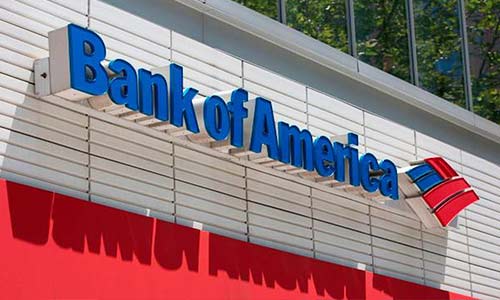
Judge Gallagher denied a motion for a temporary restraining order by a purported class of small businesses challenging Bank of America’s requirement that PPP applicants have a previous relationship with the bank and have no lending relationship with any other bank. The prospective class, represented by Rifkin Weiner Livingston, had argued that small businesses ineligible to apply for PPP loans through Bank of America would be irreparably harmed if they were shut out of the program, which offers funding on a first-come, first-served basis.
But in a decision that relied heavily on a TRO opposition brief by BofA’s lawyers at Williams & Connolly, the judge concluded that the statutory text of the Coronavirus Aid, Relief, and Economic Security Act does not indicate that Congress intended to allow private businesses to sue lenders. If lawmakers do want to confer that right, Judge Gallagher said, they will have to spell it out in an amendment to the CARES Act.
Plaintiffs’ lawyer Alan Rifkin said in an email statement that the plaintiffs in the case, including a Connecticut company that sells roof racks for cars and a Maryland business that provides private security services to bars, will appeal Judge Gallagher’s decision.
The judge also said that even if the law permitted such suits, Bank of America did not run afoul of the CARES Act by imposing eligibility requirements on applicants. The statute specifies only that PPP applicants must show they were operating as of February 15, 2020 and that they will use PPP funds to pay workers or meet mortgage, lease or utility obligations. But the law does not preclude lenders from adding additional requirements, the judge said, noting that many banks besides BofA have required PPP applicants to meet particular criteria. BofA’s brief pointed out, for example that some of the more than 2,400 lenders processing PPP applications have established rules giving priority to PPP applicants founded by U.S. military veterans or to businesses or nonprofits in particular geographic areas. Many banks, BofA said, will only consider PPP applications from existing customers. It cited a survey last week of 80 lenders, 26 of which reported they were only accepting applications from their current clients.
Judge Gallagher, who held an April 10 phone hearing on the motion for a restraining order, agreed that the text of the CARES Act “does not constrain banks such that they are prohibited from considering other information when deciding from whom to accept applications, or in what order to process applications.” Bank of America’s eligibility requirements, she said, are not inconsistent with the plain language of the statute.
Rifkin, who represents the businesses suing BofA, pointed in an email statement to Judge Gallagher’s recognition that the class action allegations “demonstrate a significant flaw … in the implementation of the massive and complex PPP program.” The judge also said that “BofA’s rigid eligibility criteria have undoubtedly made it materially harder for some small businesses to access the PPP.”
Rifkin said the suit brought attention to “serious shortcomings” in BofA’s PPP participation. The bank, he said, “denied scores of small businesses throughout the country the right to access these critical funds at a time when those funds are desperately needed.” He called on BofA and other lenders “to do what is right and open the PPP process to any small business that otherwise qualifies.”
Importantly, however, Judge Gallagher said that exposing lenders like BofA to liability for PPP lending rules might discourage banks from participating in the program. “If fewer lenders are incentivized to participate in PPP, because they are prohibited from prioritizing their own customers or other entities they believe worthy of expedited consideration, then fewer American small businesses will have access to the pool of readily available PPP funds, and Congress’s statutory scheme would be further frustrated,” Judge Gallagher wrote.
A Bank of America spokesman said via email, “We remain focused on processing the more than 300,000 applications we’ve received so far, seeking more than $45 billion in loans.” Bank of America’s brief opposing the TRO said the bank has deployed 3,000 employees to process PPP applications.
Clearly, any future challenge by small businesses to PPP lenders, at least under the current version of the CARES Act, will have to confront Judge Gallagher’s threshold finding that the law does not imply a private cause of action. That was BofA’s lead argument in its brief opposing a restraining order. Williams & Connolly said U.S. Supreme Court precedent in 2001’s Alexander v. Sandoval (121 S.Ct. 1511) made clear that courts can’t read such rights into statutes without Congressional say-so.
The plaintiffs had relied in their brief on a 2019 decision from the 4th U.S. Circuit Court of Appeals in Planned Parenthood v. Baker (941 F.3d 687), which enjoined the state of South Carolina from striking Planned Parenthood as an eligible Medicaid provider. But Williams & Connolly argued – and Judge Gallagher agreed – that the Planned Parenthood case was rooted in the private right of action against state actors for civil rights violations, which doesn’t apply to suits against private parties like BofA.
[A MUST HAVE] Evidence Act Demystified With Recent And Contemporary Cases And Materials

Available now for NGN 40,000 at ASC Publications, 10, Boyle Street, Onikan, Lagos. Beside High Court, TBS. Email publications@ayindesanni.com or WhatsApp +2347056667384. Purchase Link: https://paystack.com/buy/evidence-act-complete-annotation
______________________________________________________________________ “Enhance Legal Practice With Authoritative Reports” — Alexander Payne Offers Comprehensive Law Reports, Spanning Over A Century Of Nigerian Jurisprudence Interested buyers are encouraged to place their orders and enquiries via:
0704 444 4777, 0704 444 4999, 0818 199 9888
Website: www.alexandernigeria.com
Interested buyers are encouraged to place their orders and enquiries via:
0704 444 4777, 0704 444 4999, 0818 199 9888
Website: www.alexandernigeria.com