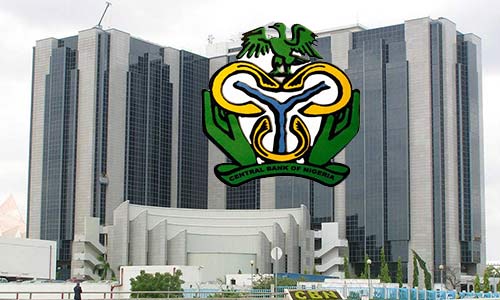
Contrary to widespread speculations in some quarters that the Central Bank of Nigeria (CBN) is yet to work out modalities and timeline for the implementation of the new policy regime on food import restriction, the apex bank has revealed that the policy has since taken effect.

Giving this hint over the weekend was the Director, Corporate Communications at the CBN, Mr Isaac Okoroafor.
According to him, the government took that drastic measure in the interest of the national economic growth and development.
“The implementation started since 2015. We started by excluding 41 items; subsequently we included others, now we have eliminated all sorts of food import which we know that can easily be produced in Nigeria. The country cannot be food sufficient if we continue like this,” he recalled, adding, “There will never be an amendment because the issue is this, why should we be exporting jobs to other countries? Today we are complaining that there is a high rate of unemployment, leading to some extent of insecurity in the country, why should we allow people to import food that can be produced in the country?”
Pressed further, the CBN’s spokesman said, “We need to improve wealth in our rural communities and I am saying we will not change course, we will even be more aggressive on this programme. The move is an attempt to stop the importation of items that Nigeria has the capacity to produce, stressing that the country’s foreign reserves should not be wasted on importing food items.
“If you recall, we started with about 41 items (food and non-food items), because we believe that those items can be produced in the country. As we stand today, there are about 43 items on that list and I will say substantially most of them are food items.”
It may be recalled that President Muhammadu Buhari had recently instructed the CBN to stop providing foreign currency for food imports, according to a statement from his spokesman.
Presidential spokesman Garba Shehu said the move was aimed at improving Nigeria’s agricultural production and attaining more food security.
President Buhari was quoted as saying, “Don’t give a cent to anybody to import food into the country.”
Nigeria is currently Africa’s largest producer of oil and relies on the sale of crude oil for about 90% of its foreign-exchange earnings.
 The book also examines Nigeria's legal ecosystem, focusing on the LPELR and NBA AI Guidelines. As a bonus, every purchase comes with a FREE eBook titled: How to Use the AI Features in LegalPedia and LawPavilion.
Ohio Books Ltd praises the publication, stating:
"....this is the only Nigerian book I know of on the topic."
How to Order:
📞 Call, Text, or WhatsApp: 08034917063 | 07055285878
📧 Email: benadigwe1@gmail.com
🌎 Website: www.benadigwe.com
Ebook Version: Access it directly online at https://selar.com/prv626
Authored by Ben Ijeoma Adigwe Esq., ACIarb (UK), LL.M, Dip. in Artificial Intelligence, Director at the Delta State Ministry of Justice, Asaba, Nigeria.
______________________________________________________________________
[A MUST HAVE] Evidence Act Demystified With Recent And Contemporary Cases And Materials
The book also examines Nigeria's legal ecosystem, focusing on the LPELR and NBA AI Guidelines. As a bonus, every purchase comes with a FREE eBook titled: How to Use the AI Features in LegalPedia and LawPavilion.
Ohio Books Ltd praises the publication, stating:
"....this is the only Nigerian book I know of on the topic."
How to Order:
📞 Call, Text, or WhatsApp: 08034917063 | 07055285878
📧 Email: benadigwe1@gmail.com
🌎 Website: www.benadigwe.com
Ebook Version: Access it directly online at https://selar.com/prv626
Authored by Ben Ijeoma Adigwe Esq., ACIarb (UK), LL.M, Dip. in Artificial Intelligence, Director at the Delta State Ministry of Justice, Asaba, Nigeria.
______________________________________________________________________
[A MUST HAVE] Evidence Act Demystified With Recent And Contemporary Cases And Materials

 Interested buyers are encouraged to place their orders and enquiries via:
0704 444 4777, 0704 444 4999, 0818 199 9888
Website: www.alexandernigeria.com
Interested buyers are encouraged to place their orders and enquiries via:
0704 444 4777, 0704 444 4999, 0818 199 9888
Website: www.alexandernigeria.com