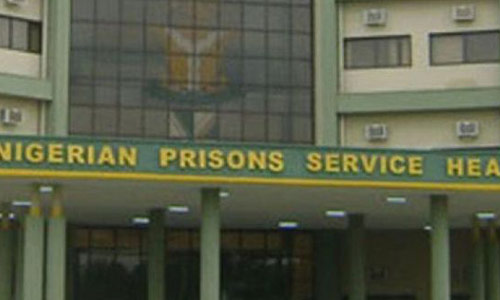
Nigeria is holding 80,812 people in its correctional centres. 51,955 of them, about 64 per cent, have not been tried.

The figures from the Nigeria Correctional Service put the convicted population at 24,913, with a further 3,850 in other detention categories.
They describe an institution whose statutory purpose is the reformation of convicted offenders, and which is now occupied in the main by people who have not been found guilty of anything.
Earlier figures from the National Bureau of Statistics showed unsentenced inmates rising from 47,610 in 2017 to 53,790 in the second quarter of 2025, with the total population rising from 69,946 to 81,710 over the same period.
The weight of the problem sits in the criminal justice system rather than in the prisons.
Stakeholders attribute the awaiting-trial population to delays in investigation, late issuance of legal advice, inadequate legal representation for indigent defendants, repeated adjournments and other bottlenecks in the administration of criminal justice.
On 15 May 2026, the ECOWAS Court of Justice held that the prolonged detention of awaiting-trial inmates, and the overcrowding that results from it, violated rights including liberty, dignity, fair hearing, the presumption of innocence and trial within a reasonable time.
The National Human Rights Commission has continued to identify prolonged pre-trial detention, arbitrary arrest, torture, denial of access to lawyers and poor detention conditions as persistent concerns, and said in its 2026 statement on torture prevention that reports of excessive use of force, arbitrary arrest and detention, prolonged pre-trial detention, poor conditions, denial of legal representation and allegations of torture and ill-treatment remained concerns.
Many facilities were built decades ago and operate beyond their original capacity. The House Committee on Reformatory Institutions has warned that some were built more than a century ago and have deteriorated significantly.
An independent investigative panel established by the Federal Government to examine allegations of corruption, abuse of power and human rights violations assessed 86 custodial facilities across 23 states and the Federal Capital Territory, and raised concerns about security risks and infrastructural decay in several, including facilities in Delta, Edo, Sokoto and Kaduna.
Dilapidated walls, inadequate ventilation, obsolete security systems, insufficient vehicles and weak perimeter protection create security vulnerabilities and obstruct rehabilitation. The Service itself has identified construction and rehabilitation, vehicles, security equipment, information technology, inmate biometrics and prison farms as needing substantial capital investment.
The federal panel found evidence of inmate malnutrition and alleged abuses in the administration of feeding contracts, and recommended that the daily feeding allowance be increased from N750 to N3,000.
An investigation in August found complaints from inmates and former inmates about the quantity and quality of food, although correctional authorities denied allegations of systemic starvation and defended the official arrangements.
The budget figures:
- In 2025, N27.28 billion, or 71.7 per cent of the Service’s overhead releases, went on inmate feeding.
- Outstanding food-ration obligations stood at N10.75 billion.
- For 2026 the Service proposed N14.83 billion to feed an estimated 91,100 inmates at N1,125 per inmate per day.
The panel examined allegations ranging from corruption and abuse of power to torture, illegal movement of inmates, drug trafficking, unauthorised visits and the smuggling of prohibited items. A report in April detailed allegations of inmates operating businesses from custodial centres, including point-of-sale operations, and alleged involvement of officials.
In May the Service publicly destroyed 1,167 confiscated mobile phones and other prohibited items recovered in nationwide searches, announced the recovery of N2.569 million in smuggled cash, and said 147 officers had been sanctioned over contraband-related infractions.
In August an inmate at the Ibara Medium Custodial Centre, Abeokuta, went live on TikTok using a prohibited phone. The Service removed the officer in charge and two other principal officers pending investigation and transferred the inmate.
On security, the Service has continued to list escapees, including the August 2025 escape of 16 inmates from the Medium Security Custodial Centre, Keffi, in Nasarawa State.
On capital funding, only N3.22 billion, or 22.2 per cent of the N14.50 billion appropriated capital allocation for 2025, was released, leaving N11.28 billion unreleased.
The Service has begun work on medical services, including nationwide distribution of essential medicines, greater attention to mental healthcare and plans for broader health insurance coverage for inmates.
In September, 37 suspected illegal miners died in the custody of the Nigeria Security and Civil Defence Corps in Niger State. The deaths did not occur in a correctional facility. The government suspended 20 personnel and constituted a 10-member committee to investigate, after 67 detainees were reportedly held in one cell. The Nigerian Bar Association called for a transparent and independent investigation.
The 2019 legislation that converted the Nigerian Prisons Service into the Nigeria Correctional Service created a mandate centred on reformation, rehabilitation and reintegration, requiring educational and vocational programmes, psychological and counselling services and opportunities for inmates to develop skills and earn income, and giving the Service responsibility for non-custodial measures including community service, probation, parole and restorative justice.
A 2026 study of medium-security facilities in Kwara State found vocational training present in the centres studied but fully functional in only one; digital learning infrastructure absent or non-functional across all three; and overcrowding constraining rehabilitation in two.
Nationally, Service figures reported in July showed that only 1,271 Nigerians were serving non-custodial sentences. The Service proposed N37.99 billion in 2026 to expand non-custodial measures across the 774 local government areas.
The Service proposed a total budget of N198.85 billion for 2026, including N138.30 billion for personnel and N50.40 billion for recurrent overhead, with an additional N90.38 billion requested for capital expenditure. It identified N30.38 billion in promotion arrears and N25.16 billion owed to contractors as outstanding liabilities.
[A MUST HAVE] Evidence Act Demystified With Recent And Contemporary Cases And Materials

Available now for NGN 40,000 at ASC Publications, 10, Boyle Street, Onikan, Lagos. Beside High Court, TBS. Email publications@ayindesanni.com or WhatsApp +2347056667384. Purchase Link: https://paystack.com/buy/evidence-act-complete-annotation
______________________________________________________________________ “Enhance Legal Practice With Authoritative Reports” — Alexander Payne Offers Comprehensive Law Reports, Spanning Over A Century Of Nigerian Jurisprudence Interested buyers are encouraged to place their orders and enquiries via:
0704 444 4777, 0704 444 4999, 0818 199 9888
Website: www.alexandernigeria.com
Interested buyers are encouraged to place their orders and enquiries via:
0704 444 4777, 0704 444 4999, 0818 199 9888
Website: www.alexandernigeria.com