No fewer than 141 million Nigerians are expected to live in poverty this year, PricewaterhouseCoopers (PwC) has revealed in its Nigeria Economic Outlook 2026 report.

The international accounting firm’s latest report titled “Turning macroeconomic stability into sustainable growth” projected deteriorating poverty levels of about 62 per cent of the Nigerian population in the year preceding the 2027 election.
“Despite macroeconomic gains, poverty is projected to rise to 62 per cent, affecting 141 million Nigerians by 2026,” PwC said.
The report further showed that Nigeria’s economy was expected to grow by 4.49 per cent in 2026, inflation to moderate at 12.94 per cent, and the naira to remain stable in the N1,440-N1,500 per dollar range.
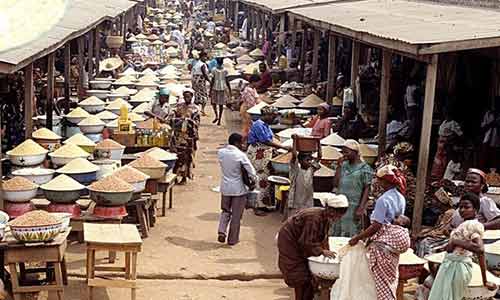
“Approximately 33.1 million Nigerians may face food insecurity due to economic hardship and violence in northern food-producing regions. Food accounts for up to 70 per cent of consumption among poorer households,” it added.
According to the report, recent economic reforms have yet to translate into improved household welfare, as weak real income growth and rising living costs are projected to push more families into poverty over the next two years.
PwC stressed that in the short term, most Nigerians were unlikely to experience income increases substantial enough to counter the pressure of rising living costs.
The firm described the consumption patterns of low-income Nigerians as a major driver of worsening poverty, warning that as hardship deepened, domestic consumption might weaken, productivity gains could slow, and pressure on public finances could mount.
Without aggressive job creation, productivity improvements, and effective social safety nets, PwC cautioned, the goal of reducing poverty might be elusive.
Reacting to the report, Dr. Muda Yusuf, Managing Director/CEO of the Centre for the Promotion of Private Enterprise (CPPE), acknowledged the serious poverty situation in the country.
“There is no doubt that we have a serious poverty situation on our hands in the country. But as to the specific number of Nigerians living in poverty, we need to have more insights into the methodology that has been used by PWC before we begin to adopt it as something that is either valid or official,” Yusuf said.
He noted that the poverty situation had been aggravated by recent cost of living challenges over the last two years.
“But one must say that those reforms were inevitable. But unfortunately, they have come at a cost. And one of the costs is the cost of living challenge that has been triggered,” he explained.
Yusuf called for policies that specifically target what the poor spend their money on, including food, transportation, education, health, and basic infrastructure that will enable productivity to be enhanced, especially among Small and Medium Enterprises.
Oluropo Dada, President of the Chartered Institute of Stockbrokers (CIS), said the apparent divergence between PwC’s poverty outlook and the National Bureau of Statistics’ inflation data was not a contradiction but rather a reflection of different dimensions of Nigeria’s macroeconomic reality.
“While inflation is moderating, this signals only a slowdown in the pace of price increases, not a reduction in the overall price level. Years of cumulative increases in food, energy, transport, and housing costs have entrenched a high cost of living, with severe implications for real incomes particularly for low-income and vulnerable households,” Dada explained.
He noted that poverty outcomes are influenced by a broader set of structural and distributional factors beyond inflation alone, including employment conditions, income and wage dynamics, productivity levels, exchange-rate movements, and the lagged effects of recent economic reforms.
“This highlights the policy imperative to complement price stabilization with targeted interventions that raise incomes, expand employment, and strengthen social protection, since sustainable poverty reduction ultimately depends on translating macroeconomic stability into tangible improvements in living standards,” he added.
David Adonri, Analyst and Executive Vice Chairman at Highcap Securities Limited, disputed official inflation figures, saying many people continue to question the official inflation rate due to its “unjustified rebasing in 2025.”
“While there is an element of truth in PwC’s forecast of about 62% poverty rate in 2026, I think that the rate was as high as 80% in 2025 but may decline in 2026 if the current push against insecurity is intensified and cost of energy continues to decline,” Adonri said.
Sola Oni, a Chartered Stockbroker and CEO of Sofunix Investment and Communications, explained that the apparent discrepancy arises because inflation and poverty, though related, measure different things and can move in opposite directions.
“A decline in inflation reported by the NBS only means that prices are increasing more slowly, not that prices are falling or that living costs have become affordable. After prolonged periods of high inflation, prices remain elevated relative to incomes for many Nigerians,” Oni stated.
He added that even with moderating inflation, poverty can worsen if wages lag, unemployment remains high, or social support is inadequate.
Clifford Egbomeade, an analyst and communications expert, said there was no contradiction between PwC’s poverty projection and NBS inflation data because both measure different economic realities.
“Inflation trending downward only means the pace of price increases is slowing, not that prices are falling. After cumulative inflation above 20–30 per cent in recent years, the cost of food, transport, rent, and energy remains structurally high for households,” he explained.
Egbomeade noted that data from the National Bureau of Statistics and the World Bank show that low-income households spend about 60–70 per cent of income on food, and food inflation remains elevated due to insecurity, logistics costs, energy prices, and exchange rate pass-through.
“Inflation and poverty operate on different timelines. Inflation captures short-term price movements, while poverty reflects accumulated welfare losses from earlier shocks such as naira depreciation and fuel subsidy removal. Slower inflation alone does not restore purchasing power or reverse poverty without strong income growth, job creation, and effective social protection,” he concluded.
 How to Order:
📞 Call, Text, or WhatsApp: 08034917063 | 07055285878
📧 Email: benadigwe1@gmail.com
🌎 Website: www.benadigwe.com
Ebook Version: Access it directly online at https://selar.com/prv626
______________________________________________________________________
[A MUST HAVE] Evidence Act Demystified With Recent And Contemporary Cases And Materials
How to Order:
📞 Call, Text, or WhatsApp: 08034917063 | 07055285878
📧 Email: benadigwe1@gmail.com
🌎 Website: www.benadigwe.com
Ebook Version: Access it directly online at https://selar.com/prv626
______________________________________________________________________
[A MUST HAVE] Evidence Act Demystified With Recent And Contemporary Cases And Materials

 _______________________________________________________________________