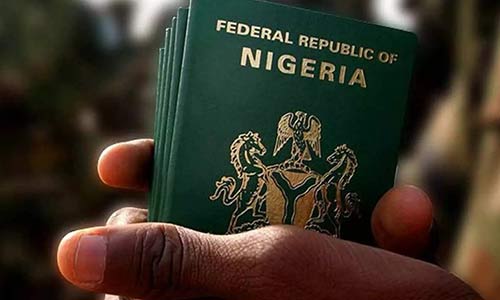
Nigeria’s inclusion in the United States’ expanded travel restriction framework has raised concerns among Nigerian travelers, students, professionals, and families with existing or planned ties to the U.S. While the policy stops short of a full travel ban, its practical impact differs significantly for current visa holders, those seeking renewals, and first-time applicants.

The restrictions were announced through a presidential proclamation signed by President Donald Trump. The White House said the policy was designed to “strengthen national security through common-sense restrictions based on data.” Nigeria was placed under partial restrictions, affecting both immigrant and non-immigrant visa categories.
According to the proclamation, the restrictions do not apply to lawful permanent residents or individuals who already hold valid U.S. visas. Nigerians with existing visas are therefore not automatically barred from traveling to the United States, subject to standard border screening.
For Nigerians who already hold valid U.S. visas, the proclamation provides some reassurance. The policy explicitly exempts existing visa holders from the new restrictions. This means Nigerians with valid B-1/B-2, F, M, J, work, or immigrant visas are not automatically barred from traveling to the United States.
The U.S. administration’s press release notes: “The Proclamation includes exceptions for lawful permanent residents, existing visa holders, certain visa categories like athletes and diplomats, and individuals whose entry serves U.S. national interests.”
Current visa holders can continue to travel, provided their visas remain valid and they meet standard entry requirements at U.S. ports of entry. However, immigration analysts warn that holders may face heightened scrutiny during border inspections, particularly regarding the purpose of travel and length of stay, as U.S. authorities intensify enforcement under the new policy.
The proclamation clarifies that exceptions apply to “lawful permanent residents, existing visa holders, and individuals whose entry serves U.S. national interests,” highlighting that the restrictions are forward-looking rather than retroactive.
Nigerians whose visas are expiring and fall under the affected categories such as B-1 (Business), B-2 (Tourism), B-1/B-2, F (Academic Studies), M (Vocational Studies), J (Exchange Programs), or any immigrant visas—will face significant hurdles. The U.S. has suspended new applications for these categories, effectively barring renewals from the effective date of January 1, 2026.
For those holding visas in unaffected categories (e.g., diplomatic or certain work visas), renewals remain possible, but consular officers have been instructed to reduce the validity period “to the extent permitted by law.” This could result in shorter approval durations, requiring more frequent renewals and increasing administrative burdens.
Case-by-case waivers may be available for urgent humanitarian needs, national interest, or other compelling reasons, but approvals are not guaranteed and require strong documentation.
First-time applicants from Nigeria are the most affected by the partial restrictions. Entry under the suspended visa categories is barred, meaning no new issuances for business, tourism, student, exchange, or immigrant visas. This could disrupt educational opportunities, business engagements, and family reunifications.
The U.S. cited security concerns, including challenges in vetting due to groups such as Boko Haram and ISIS in parts of Nigeria, as well as high overstay rates: 5.56% for B-1/B-2 visas and 11.90% for F, M, and J visas.
Family-based immigration is particularly affected, with suspensions on immigrant visas and limited exemptions due to fraud risks.
Not all Nigerians are equally affected. Exemptions include:
- Lawful permanent residents (Green Card holders)
- Holders of valid visas issued before January 1, 2026
- Diplomats and official government travelers (A, G, NATO visas)
- Athletes participating in major events
- Certain special immigrant visa categories
- Individuals whose entry serves U.S. national interests (via waivers)
Nigerians already in the U.S. on valid status remain unaffected and can continue their stay without interruption.
The restrictions are not intended to be permanent. The U.S. aims to encourage improved security cooperation, information-sharing, and reduced overstay rates from Nigeria. If these benchmarks are met, Nigeria could be removed from the list.
Those with upcoming travel plans should:
- Verify their visa status and category
- Contact the U.S. Embassy in Nigeria or a qualified immigration attorney for personalized guidance
- Avoid non-refundable bookings until clarity is obtained
- Explore waiver options if travel is urgent
Quick Overview of Affected and Unaffected Visa Categories
| Category | Visa Type | Status Under Restriction | Notes |
|---|---|---|---|
| Tourism & Business | B-1 (Business) | ✗ Suspended | New applications not allowed |
| B-2 (Tourism) | ✗ Suspended | New applications not allowed | |
| B-1/B-2 | ✗ Suspended | Combined business/tourism visas suspended | |
| Student & Exchange | F (Academic Studies) | ✗ Suspended | Includes university and college programs |
| M (Vocational Studies) | ✗ Suspended | Technical and vocational programs | |
| J (Exchange Programs) | ✗ Suspended | Including scholars, interns, trainees | |
| Immigration | All Immigrant Visas (Green Cards) | ✗ Suspended | Family-based and employment-based affected |
| Diplomatic & Official | A, G, NATO | ✔ Allowed | Diplomats and official government travel |
| Existing Visa Holders | Any valid visa issued before effective date | ✔ Allowed | Holders may still travel if visas not cancelled |
| Special Categories | National interest travel | ✔ Allowed | Case-by-case waivers possible |
| Permanent Residents | Green Card Holders | ✔ Allowed | LPRs are exempt from the restriction |
 How to Order:
📞 Call, Text, or WhatsApp: 08034917063 | 07055285878
📧 Email: benadigwe1@gmail.com
🌎 Website: www.benadigwe.com
Ebook Version: Access it directly online at https://selar.com/prv626
________________________________________________________________________
“Timely And Groundbreaking” — Babalola, Nnawuchi Release Casebook On Privacy & Data Protection In Nigeria
How to Order:
📞 Call, Text, or WhatsApp: 08034917063 | 07055285878
📧 Email: benadigwe1@gmail.com
🌎 Website: www.benadigwe.com
Ebook Version: Access it directly online at https://selar.com/prv626
________________________________________________________________________
“Timely And Groundbreaking” — Babalola, Nnawuchi Release Casebook On Privacy & Data Protection In Nigeria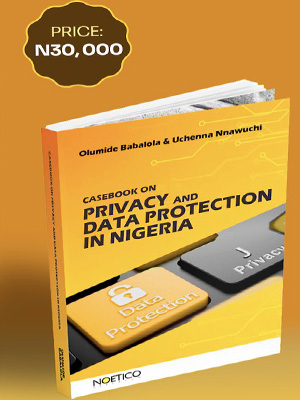 A timely new publication, Casebook on Privacy & Data Protection in Nigeria, co-authored by Olumide Babalola and Uchenna Nnawuchi, 📘 Casebook on Privacy & Data Protection in Nigeria is now available on Amazon: https://a.co/d/8TmFZrd
______________________________________________________________________
[A MUST HAVE] Evidence Act Demystified With Recent And Contemporary Cases And Materials
A timely new publication, Casebook on Privacy & Data Protection in Nigeria, co-authored by Olumide Babalola and Uchenna Nnawuchi, 📘 Casebook on Privacy & Data Protection in Nigeria is now available on Amazon: https://a.co/d/8TmFZrd
______________________________________________________________________
[A MUST HAVE] Evidence Act Demystified With Recent And Contemporary Cases And Materials