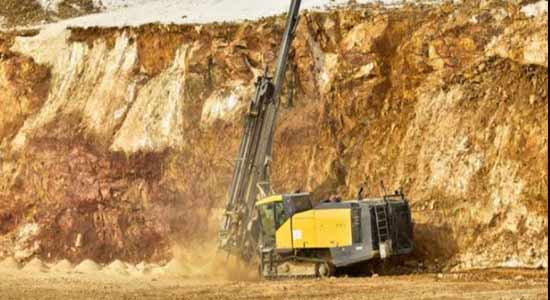
Taraba State is estimated to be losing more than ₦10 billion annually to illegal mining despite three executive orders issued within three years to suspend mining activities and dismantle unauthorised operations across the state.

The latest directive, signed by Governor Agbu Kefas in June 2026, represents the third major attempt by his administration to stop the illicit extraction and movement of gold, sapphire, quartz and other valuable minerals since he assumed office in 2023.
Although each order initially forced miners to abandon excavation sites and shut down temporary camps, the impact has reportedly been short-lived. Operators often return after enforcement teams withdraw, allowing valuable minerals to continue passing through informal networks without royalties, taxes or significant benefits to host communities.
The repeated return of the miners has raised questions about the effectiveness of the government’s enforcement strategy and the networks sustaining the trade despite arrests, equipment seizures and the establishment of special task forces.
Taraba’s experience reflects a broader national challenge. The House of Representatives Committee on Solid Minerals has estimated that Nigeria loses about $9 billion annually to illegal mining and mineral smuggling.
The Nigeria Extractive Industries Transparency Initiative has also reported that the solid-minerals sector generated about ₦401.87 billion in 2023 but continued to account for less than one per cent of Nigeria’s gross domestic product despite the country’s extensive mineral deposits.
In Taraba, earlier investigations revealed a thriving informal gemstone economy around Mayo Sina in Nguroje, Sardauna Local Government Area, where blue sapphire reportedly valued at between ₦60 million and ₦100 million was traded daily.
Much of the trade was allegedly controlled by middlemen and foreign buyers from countries including Senegal, Mali, Guinea and Cameroon, while the local miners operated without proper licences and received only a fraction of the international value of the gemstones.
Many residents of the affected communities nevertheless depend on artisanal mining as their primary source of income, making enforcement more complicated in areas where few alternative livelihoods exist.
Illegal mining has reportedly continued in Sardauna, Karim Lamido, Bali, Gashaka, Kurmi, Ussa and Yorro local government areas, among other parts of the state.
In December 2024, miners were found to have returned to Abujan Leda in Jamtari Ward of Gashaka Local Government Area months after security agencies dismantled their camps.
Labourers operating in the area alleged that they sometimes received advance information about impending raids, enabling them to abandon the sites temporarily and return after the enforcement officers had left.
Residents attributed the recurring activity to weak surveillance, the absence of clear guidelines for artisanal miners and suspected cooperation between illegal operators and individuals within the affected communities.
One of the government’s largest enforcement operations occurred in September 2023, when the Taraba State Environmental Protection Task Force raided a mining location at Mayo Sina.
The operation reportedly resulted in the recovery of 22,373 kilogrammes of blue sapphire, the arrest of more than 100 suspected illegal miners and the seizure of mining equipment.
Despite the scale of the operation, unauthorised extraction reportedly resumed in several locations, underscoring the difficulty of permanently securing mining sites hidden in forests, valleys and remote settlements.
The illegal mining network also extends beyond Taraba State. Court records relating to the January 2025 prosecution of suspects arrested at the Abujan Leda site identified defendants from Plateau, Bauchi and Niger states alongside residents of Taraba.
The Chairman of the Taraba State Task Force on Environmental Protection, Public Safety and Prohibition of Deforestation, Jeremiah Faransa, has also disclosed that nationals of Cameroon, Burkina Faso, Mali and Chad were among persons arrested during enforcement operations.
The involvement of individuals from other Nigerian states and neighbouring countries has strengthened concerns that illegal mining in Taraba is supported by organised interstate and cross-border networks rather than being limited to impoverished local labourers.
Although many artisanal miners rely on basic tools, task-force operations have also uncovered explosives, detonating cables and dynamite, suggesting that some groups have adopted more sophisticated and dangerous extraction methods.
Taraba’s terrain remains a major obstacle to enforcement. Many sites are located in forests and mountainous communities with limited road access, making sustained surveillance difficult and allowing miners to disappear quickly when security personnel approach.
The pattern was repeated in July 2026 when the state’s Anti-Illegal Mining Taskforce raided a gold-mining site at Mayo Kam in Gantu village, Bali Local Government Area.
The operation followed weeks of intelligence gathering, but most of the suspected miners reportedly escaped into surrounding forests before security personnel reached the site. Only two suspects were arrested.
Local miners also face an unequal relationship with foreign dealers. Many allegedly lack reliable information about the global value of the gemstones they extract, allowing buyers from Guinea, Senegal, Sri Lanka, Thailand, China and parts of Europe to determine prices before exporting the minerals for processing abroad.
The arrangement leaves host communities with little income compared with the value eventually generated from the minerals and deprives the state of potential revenue, employment and industrial development.
Shortly after assuming office in 2023, Kefas suspended mining activities through an executive order that cited environmental destruction, water pollution and the exploitation of local communities.
The directive established the Environmental Protection Task Force led by Faransa and created a Special Mobile Court to prosecute persons accused of violating the mining suspension.
Faransa said the task force had arrested more than 3,000 suspected illegal miners and identified over 20,000 legal and unauthorised mining locations across Taraba.
However, the continued operation of illegal sites prompted the government to issue two further executive orders.
The June 2026 order broadened the government’s justification for the crackdown by linking unauthorised mining to insecurity and other criminal activities in parts of the state.
It also led to the establishment of a separate Anti-Illegal Mining Taskforce headed by Emmanuel Jamu to strengthen enforcement and intelligence-led operations.
Kefas has maintained that the restrictions are directed at unauthorised operators whose activities threaten security, damage the environment and prevent Taraba residents from receiving the economic benefits of the state’s resources.
Enforcement efforts have nevertheless generated controversy. Questions were raised after excavators, generators and mineral-detection equipment allegedly belonging to the state government were destroyed during an operation in Akwana, Wukari Local Government Area.
The Permanent Secretary of the Bureau for Solid Mineral Resources, Matsai David, reportedly said he relocated the equipment to Wukari on the governor’s instructions but could not explain what subsequently happened to it.
Some civic groups criticised the destruction, arguing that the machinery should have been recovered and deployed to support lawful mining rather than being destroyed.
The state government has not publicly disclosed the outcome of any investigation into the incident or explained why equipment allegedly belonging to it was found at the mining location.
The suspension of mining has also affected residents who depend on artisanal operations for survival.
Members of the Women Miners and Multi-Purpose Association in Sardauna Local Government Area said the closure of the Mayo Sina site deprived them of their main source of income.
The association’s president, Bagu Kabri, said many of the affected miners were indigenous Mambilla women who relied on the proceeds to feed their families and pay their children’s school fees.
Licensed miners have equally complained that enforcement officials sometimes fail to distinguish between legitimate operators and criminal groups.
The North-East Zonal Secretary of the Association of Nigerian Miners, Salisu Maizare, criticised the arrest of miners operating around the Taraba-Adamawa border despite claims that they possessed valid licences.
While supporting action against illegal mining, Maizare urged the government to protect authorised operators and avoid measures capable of discouraging genuine investment in the sector.
The Taraba Government has described the suspensions as temporary measures pending the introduction of wider reforms.
Officials say a proposed Executive Order No. 6 will provide stronger protection for host communities, improve surveillance around the state’s borders, promote local processing of minerals and establish clearer procedures for licensing artisanal miners.
The proposed reforms are expected to address some of the conditions that have allowed illegal mining to survive successive governments, enforcement raids and three executive orders.
However, the effectiveness of another regulatory instrument will depend on the government’s ability to prevent advance warnings of raids, investigate alleged local complicity, monitor remote sites continuously and create lawful economic opportunities for communities dependent on mining.
Until those structural weaknesses are addressed, Taraba’s valuable mineral deposits may continue to enrich illegal operators and foreign dealers while the state loses billions of naira in potential revenue each year.
[A MUST HAVE] Evidence Act Demystified With Recent And Contemporary Cases And Materials

Available now for NGN 40,000 at ASC Publications, 10, Boyle Street, Onikan, Lagos. Beside High Court, TBS. Email publications@ayindesanni.com or WhatsApp +2347056667384. Purchase Link: https://paystack.com/buy/evidence-act-complete-annotation
______________________________________________________________________ “Enhance Legal Practice With Authoritative Reports” — Alexander Payne Offers Comprehensive Law Reports, Spanning Over A Century Of Nigerian Jurisprudence Interested buyers are encouraged to place their orders and enquiries via:
0704 444 4777, 0704 444 4999, 0818 199 9888
Website: www.alexandernigeria.com
Interested buyers are encouraged to place their orders and enquiries via:
0704 444 4777, 0704 444 4999, 0818 199 9888
Website: www.alexandernigeria.com