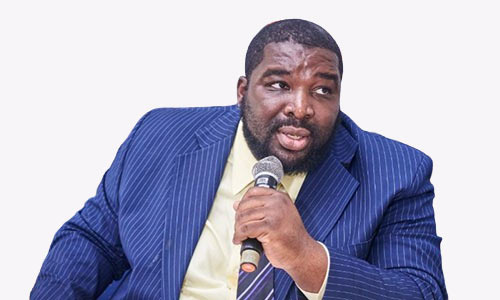
A Senior Advocate of Nigeria, Paul Babatunde Daudu, has waded into the controversy surrounding the courtroom confrontation between activist Omoyele Sowore and Senior Advocate Musibau Adetunbi SAN at the Federal High Court, Abuja, backing the senior lawyer’s intervention and stating that while Sowore may have committed no offence known to law by granting a media interview inside the courtroom, his conduct was nonetheless improper given the solemnity of the courtroom as a temple of justice.

Daudu SAN, a former Chairman of the NBA Bwari Branch, offered a nuanced legal and ethical analysis that distinguished between what the law expressly prohibits and what the traditions and conventions of the legal profession demand, concluding that Adetunbi SAN’s attempt to caution Sowore was not only justified but deserving of commendation.
Daudu acknowledged upfront that there is no express provision in the Federal High Court (Civil Procedure) Rules 2019 or the Federal High Court Act that either regulates or prohibits the granting of interviews within the premises of the court.
“Whilst admittedly there is no express provision in the Federal High Court (Civil Procedure) Rules 2019 or the Federal High Court Act regulating or prohibiting the grant of interviews within the premises of the Court,” Daudu stated.
He noted that any complaint regarding such conduct must therefore be grounded not in the Rules but in the general law of contempt or professional misconduct where applicable. He added that such conduct would only amount to contempt where it is shown to interfere with the administration of justice, particularly where the court is seised of the matter.
This concession effectively validates Sowore’s legal position during the confrontation — that he was committing no offence by speaking to the press inside the courtroom.
However, Daudu argued that the courtroom is regulated by far more than black-letter law. He pointed to long-standing conventions, traditions, and ethical norms which, though unwritten, are fundamental to the preservation of the dignity, decorum, and sanctity of judicial proceedings.
“These conventions form part of the living culture of the Bar and the Bench, and they guide conduct within the courtroom in ways that formal rules may not expressly capture,” Daudu stated.
He argued that Senior Legal Practitioners, as officers of the court, bear a heightened responsibility to uphold, model, and where necessary enforce these norms and values.
“The privilege of silk carries with it not only distinction, but also the duty to ensure that the courtroom remains a place of order, restraint, and respect — both in conduct and in public engagement relating to proceedings before the Court,” the Senior Advocate stated.
On this basis, Daudu came down firmly in support of Adetunbi SAN’s intervention during the confrontation with Sowore.
“The interventions of my Learned Brother Silk Musibau Adetunbi SAN in trying to caution a litigant from granting media interviews particularly while the court was about to sit was in order and must be applauded,” Daudu declared.
This endorsement reframes the incident from Sowore’s characterisation of it as an attempt to “intimidate” him into what Daudu portrays as a senior member of the Bar discharging his professional duty to maintain courtroom decorum.
Daudu was careful to maintain the distinction between legality and propriety in his assessment of Sowore’s conduct.
“Although Omoyele Sowore may have committed no offence known to law by engaging in a media interaction with members of the Fourth Estate prior to the Court sitting, such an act in itself is improper given the solemnity of the courtroom as a temple of justice, and the weight of the conventions that govern it,” Daudu stated.
He concluded that such interviews ought, as a matter of propriety, professional responsibility, and respect for institutional values, to be conducted outside the courtroom — not inside it, even when the judge is not yet on the bench.
Daudu’s intervention highlights a growing division within the legal community over the Sowore-Adetunbi clash.
On one side are those who, like former NHRC Chairman Professor Chidi Odinkalu, praised Sowore for “providing basic schooling to people who should know better” — arguing that the activist was within his rights to be in the courtroom and to speak to the press, and that the SAN had no authority to order him out.
On the other side are those who, like Daudu SAN, argue that while Sowore may not have broken any written rule, the conventions of the courtroom demand a higher standard of conduct, and that senior lawyers have both the right and the duty to enforce those standards even in the absence of express legal provisions.
The debate touches on fundamental questions about the nature of courtroom authority, the role of Senior Advocates as custodians of legal tradition, the rights of litigants and members of the public within court premises, and the tension between formal law and unwritten convention in the Nigerian legal system.
The confrontation occurred at the Federal High Court, Abuja, during proceedings in Sowore’s cyberbullying trial — the same case in which Justice Mohammed Umar had previously ordered Sowore’s defence counsel, Marshall Abubakar, to kneel down, an incident that drew condemnation from the NBA and the Uganda Law Society.
Sowore had been addressing the press inside the courtroom while waiting for the judge to sit. Adetunbi SAN intervened, attempting to get Sowore to leave the courtroom or cease the interview. Sowore refused, telling the SAN: “I am not in your living room. We are in a courtroom. Even if we don’t have a case here, we have a right to sit down in the gallery.”
A separate incident during the same proceedings saw a woman and a lawyer exchange insults, with the woman calling the lawyer “stupid” and the lawyer responding “Madam, you are mad.”
Daudu’s statement does not address the manner in which Adetunbi SAN conducted himself during the confrontation — including his alleged refusal to identify himself to the press and his ordering Sowore to “go out” — which some lawyers have criticised as exceeding the bounds of courteous correction. His analysis focuses instead on the principle that the courtroom demands a standard of conduct that goes beyond what the written law requires.
Sowore’s cyberbullying trial is adjourned to April 13, 2026, for a no-case submission.
 _______________________________________________________________________
[A MUST HAVE] Evidence Act Demystified With Recent And Contemporary Cases And Materials

Available now for NGN 40,000 at ASC Publications, 10, Boyle Street, Onikan, Lagos. Beside High Court, TBS. Email publications@ayindesanni.com or WhatsApp +2347056667384. Purchase Link: https://paystack.com/buy/evidence-act-complete-annotation
______________________________________________________________________ ARTIFICIAL INTELLIGENCE FOR LAWYERS: A COMPREHENSIVE GUIDE
Reimagine your practice with the power of AI “...this is the only Nigerian book I know of on the topic.” — Ohio Books Ltd
Authored by Ben Ijeoma Adigwe, Esq., ACIArb (UK), LL.M, Dip. in Artificial Intelligence, Director, Delta State Ministry of Justice, Asaba, Nigeria.
Bonus:
Get a FREE eBook titled “How to Use the AI in Legalpedia and Law Pavilion” with every purchase.
ARTIFICIAL INTELLIGENCE FOR LAWYERS: A COMPREHENSIVE GUIDE
Reimagine your practice with the power of AI “...this is the only Nigerian book I know of on the topic.” — Ohio Books Ltd
Authored by Ben Ijeoma Adigwe, Esq., ACIArb (UK), LL.M, Dip. in Artificial Intelligence, Director, Delta State Ministry of Justice, Asaba, Nigeria.
Bonus:
Get a FREE eBook titled “How to Use the AI in Legalpedia and Law Pavilion” with every purchase.
How to Order: 📞 Call, Text, or WhatsApp: 08034917063 | 07055285878 📧 Email: benadigwe1@gmail.com 🌐 Website: www.benadigwe.com
Ebook Version: Access directly online at: https://selar.com/prv626